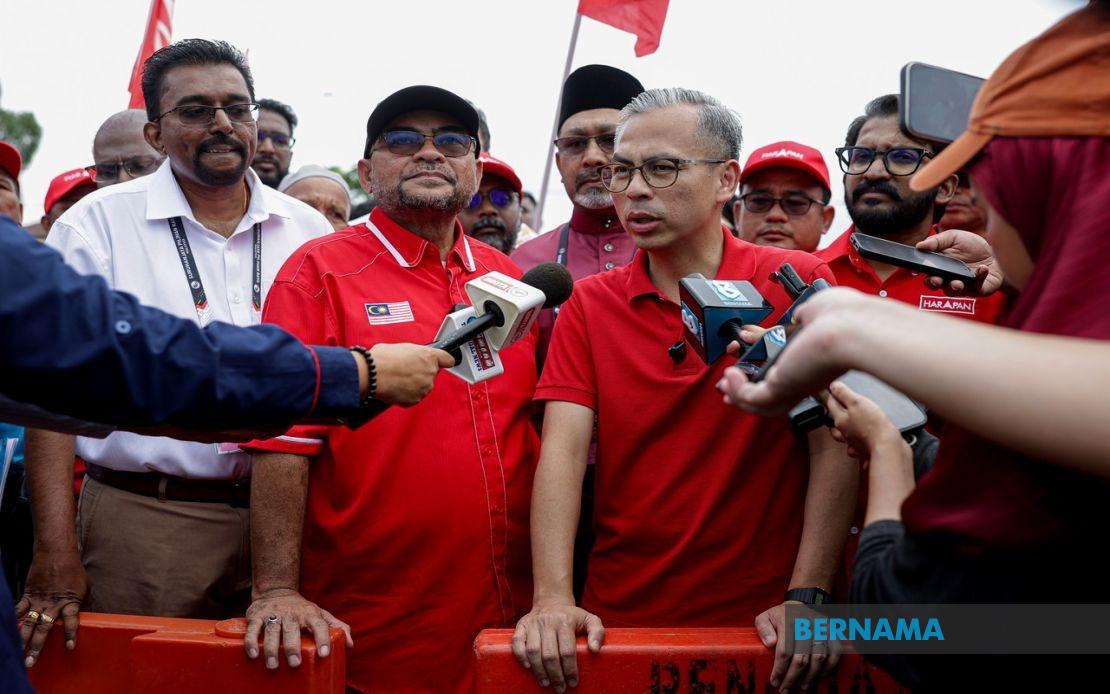
Pakatan Harapan has set its sights firmly on securing voter backing in the Negeri Sembilan state election by championing the economic and administrative achievements of Menteri Besar Datuk Seri Aminuddin Harun since 2018. The coalition's electoral strategy, articulated by Communications director and Minister Datuk Seri Fahmi Fadzil, positions the continuation of the current administration as essential to maintaining the state's economic momentum and prosperity. This approach reflects a deliberate pivot towards emphasising tangible outcomes rather than engaging in adversarial partisan messaging, a calculated move in a race where maintaining voter confidence in governmental competence could prove decisive.
Fahmi detailed specific achievements underpinning PH's campaign narrative during the nomination process for four state seats in the Jempol parliamentary constituency—Serting, Palong, Jeram Padang, and Bahau. The coalition points to measurable gains including enhanced zakat collections, improved state government revenue performance, and sustained foreign direct investment flows. Among these investments, the development of a new port facility stands as a flagship project symbolising the administration's capacity to attract major infrastructure ventures. These figures are intended to resonate with voters concerned about economic stability and employment prospects, particularly in rural constituencies where local development initiatives carry substantial weight.
The emphasis on Aminuddin's track record reflects a broader strategic calculation within PH's campaign architecture. By framing the election as a referendum on governance quality and administrative performance rather than ideological positioning, the coalition seeks to shield its campaign from the volatility of Malaysia's polarised political climate. This defensive posture is sensible given Negeri Sembilan's competitive political landscape and the coalition's need to consolidate support across diverse demographic groups. The messaging strategy essentially asks voters to evaluate their current circumstances and judge whether continued PH administration offers superior prospects compared to alternative governance arrangements.
In the high-stakes contest for the Jeram Padang seat, PH has fielded G. Manivannan, a lawyer serving as political secretary to Prime Minister Datuk Seri Anwar Ibrahim. This seat represents a four-cornered battle pitting Manivannan against Barisan Nasional incumbent Datuk Mohd Zaidy Abdul Kadir, Perikatan Nasional's R. Sri Sanjeevan, and Dayana Dal of Asli, notably the sole Orang Asli candidate in these contests. Fahmi indicated that PH's campaign in this constituency will prioritise employment and economic opportunity messaging, targeting younger voters whose concerns about job availability frequently dominate local discourse. The selection of Manivannan himself—a professional with proximity to national leadership—signals PH's confidence in leveraging high-profile candidates to appeal to constituencies seeking connection with centre-based decision-making structures.
The broader electoral configuration across the four Jempol seats illustrates the fragmented political landscape characterising this election. Serting will see a three-cornered contest between PH's Yaacob Mahmood, incumbent Perikatan Nasional member Mohd Fairuz Mohd Isa, and Bersatu's Muhammad Noraffendy Mohd Salleh. Palong similarly features three candidates: BN's incumbent Datuk Mustapha Nagoor, PH's Muhammad Zahin Zinal Abidin, and Bersatu's Rebin Birham. Only Bahau presents a straight fight, pitting PH's defending DAP member Teo Kok Seong against MCA's Chong Fui Ming from Barisan Nasional. These configurations create opportunities and vulnerabilities for all parties; while three-cornered contests can fracture opposition votes, they also heighten unpredictability and reduce incumbency advantages.
Fahmi's appeal for responsible campaigning and adherence to electoral standards reflects growing official concern about political rhetoric quality during Malaysian election cycles. His explicit injunction against politicising the three Rs—Religion, Race, and Rulers—and his warning against disinformation and defamatory content signal awareness that campaign discourse quality directly influences voter experience and institutional legitimacy. This positioning allows PH to project itself as a guardian of democratic norms while simultaneously making implicit criticisms of rivals' anticipated campaign approaches. The minister's commitment to monitoring media practitioner welfare throughout the campaign period underscores official recognition that journalists require protection during periods of heightened political intensity.
The Negeri Sembilan state election holds significance extending beyond the state's borders within Malaysia's federal system. As a coalition-ruled state where PH has successfully governed for six years, its retention or loss would carry implications for national political momentum and coalition credibility. A convincing PH victory would strengthen internal coalition unity and vindicate the focus on governance performance over partisan mobilisation. Conversely, significant losses could embolden opposition claims that voters are moving away from Anwar Ibrahim's political project. For Southeast Asian observers, the election also offers insights into whether Malaysian electorates reward administrative competence and economic outcomes sufficiently to overcome deeper partisan or identity-based voting patterns.
The compressed campaign timeline—with early voting scheduled for July 28 and polling day set for August 1—compresses the window for voter persuasion efforts. This abbreviated schedule favours parties with established ground machinery and name recognition while potentially disadvantaging smaller parties or independent candidates. PH's decision to lead with its administrative record rather than launching extended ideological campaigns suggests confidence in its organisational reach and resource advantages. The tight timetable also reduces exposure time for potentially damaging revelations or gaffes, potentially benefiting the governing coalition across all four seats.
From a Malaysian political economy perspective, PH's campaign centring on investment attraction and revenue growth reflects the coalition's ideological positioning as a technocratic, development-oriented alternative to previous administrations. By highlighting foreign direct investment and port development, the party appeals to voters who prioritise economic modernisation and integration with global supply chains. This contrasts with opposition framing that often emphasises communal solidarity, immediate cost-of-living relief, or cultural nationalist themes. The contest thus represents a fundamental disagreement about whether electoral coalitions should compete primarily on economic management credentials or on appeals to deeper social and cultural identities.
The nomination process completion for these four constituencies marks the formal commencement of the two-week campaign period leading to the August 1 polling day. All nominated candidates must now navigate the delicate balance between aggressive advocacy for their respective parties and maintenance of community harmony, particularly critical in constituencies with mixed ethnic and religious demographics. Fahmi's framing of responsible campaigning as a shared responsibility across parties, media, and online participants reflects recognition that political legitimacy increasingly depends on public perceptions of campaign conduct propriety. Whether all participants honour this implicit commitment will significantly influence the electoral atmosphere and post-election political cohesion in Negeri Sembilan.

