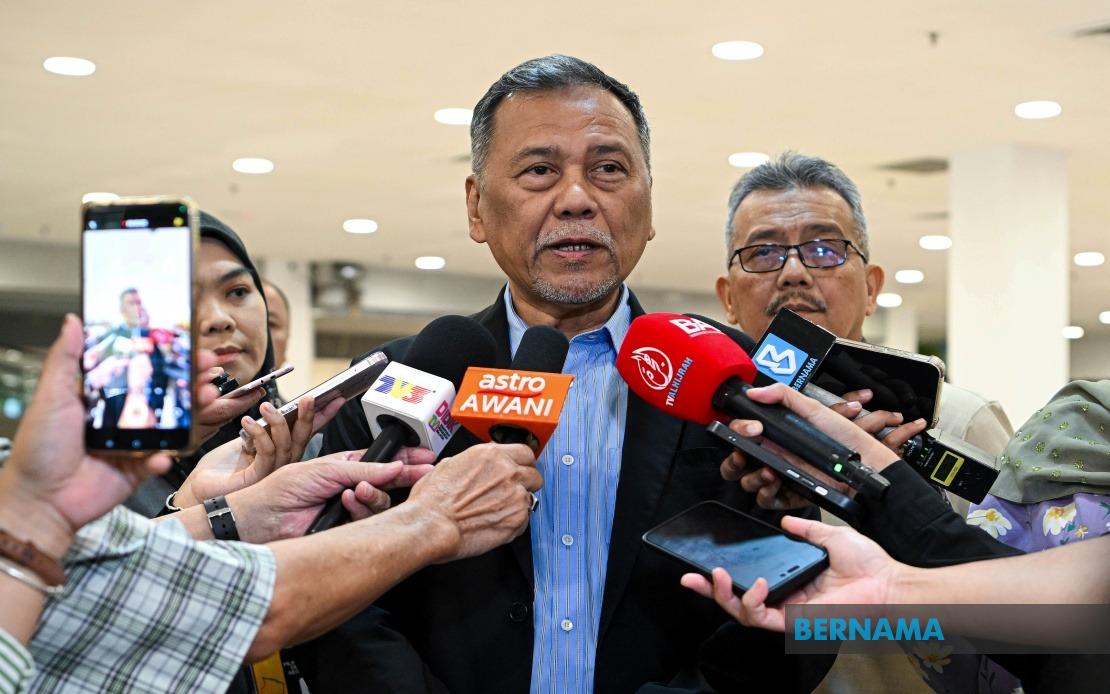
The Negeri Sembilan state election is entering a critical phase, with the Election Commission reporting that just 70 prospective candidates have secured their participation by paying deposits, despite 464 nomination forms being sold to date. Election Commission chairman Datuk Seri Ramlan Harun made the announcement during a visit to nomination centres in Seremban on Thursday, emphasising the need for candidates to finalise their financial commitments without delay. The deposit deadline coincides with tomorrow's nomination day, creating a time-sensitive window for the remaining interested candidates to complete their registration formalities.
The relatively modest number of confirmed candidates compared to forms distributed suggests that many prospective contenders are still deliberating their electoral participation or completing preliminary arrangements. Ramlan urged all interested candidates to process their deposits as soon as possible, cautioning against last-minute rushes that could overwhelm the nomination machinery. His appeal underscores the administrative challenges posed by compressed timelines in managing large-scale electoral operations across multiple constituencies simultaneously.
Preparations for the nomination process across all 36 state constituencies in Negeri Sembilan have been thoroughly completed, according to the EC chairman. Full rehearsal sessions were conducted at all nomination centres throughout the state to identify and address potential bottlenecks before the actual process begins. This preventive approach reflects lessons learned from previous state elections and represents the EC's commitment to operational efficiency during high-stakes electoral procedures.
The commission will deploy 761 electoral officers tomorrow to oversee proceedings at eight nomination centres, each corresponding to the state's parliamentary constituencies. This represents a departure from the methodology employed during the recent Johor state election, which operated on a state-constituency basis. Negeri Sembilan's centralised approach, organised around parliamentary divisions, was selected after considering local geography, infrastructure capacity, and the need to streamline coordination efforts. The structural choice demonstrates how electoral logistics must balance standardisation with regional specificity.
Nominations will commence at 9 am sharp and close exactly one hour later, with a compressed timeline designed to maintain momentum. Returning officers will subsequently announce which candidates have satisfied all eligibility requirements. This sequential structure creates a clear demarcation between registration and validation phases, allowing the EC to maintain procedural transparency while managing the large number of nomination documents that require scrutiny.
Ramlan issued an appeal to all political parties and their supporters to maintain discipline and avoid provocative conduct during tomorrow's proceedings and throughout the campaign period. He specifically called for early arrival by prospective candidates to prevent congestion at nomination centres, recognising that bottlenecks could generate frustration and inadvertently create opportunities for confrontation. The emphasis on security and orderly conduct reflects ongoing concerns about electoral integrity and social harmony during competitive political cycles.
The electoral roll, finalised as of June 4, 2026, encompasses 889,490 eligible voters across Negeri Sembilan. This total comprises 867,151 ordinary voters, alongside 16,884 military personnel and their spouses, and 5,455 police officers designated as early voters. The substantial proportion of security force personnel reflects Malaysia's institutional framework, wherein these groups vote on designated dates before general polling day to accommodate operational commitments. Early voting is scheduled for July 28, while the official polling day is set for August 1.
The Negeri Sembilan State Legislative Assembly was dissolved on June 5 following formal consent from Tuanku Muhriz Tuanku Munawir, the Yang Dipertuan Besar, initiating the formal election cycle. This dissolution followed the typical constitutional protocol and opened the campaign period leading toward the sixteenth state election. The previous 2023 election results provide context: Pakatan Harapan secured 17 of 36 seats, Barisan Nasional obtained 14 seats, and Perikatan Nasional won five seats. This configuration creates a competitive environment where multiple coalitions possess realistic prospects of forming government, depending on campaign momentum and voter sentiment shifts.
For Malaysian observers tracking state-level politics, the Negeri Sembilan election represents an important mid-term electoral test of coalition viability and voter preferences. The state has historically functioned as a political bellwether, with outcomes often providing early signals regarding broader national trends. The competition between the three major coalitions—Pakatan Harapan, Barisan Nasional, and Perikatan Nasional—reflects the fragmented political landscape characterising contemporary Malaysian electoral competition, where no single bloc commands overwhelming dominance. The nomination phase will reveal whether any faction has successfully recruited additional candidates or faces talent shortages, with candidate quality and profile often influencing voter calculations.
The moderate number of confirmed candidates at this stage may also reflect uncertainty among potential contenders regarding their electoral prospects or internal party selection controversies. In some constituencies, multiple aspirants from the same party may still be competing for official endorsement, delaying final commitment until party machinery confirms nominations. This dynamic is particularly relevant in Negeri Sembilan, where intra-coalition competition has occasionally proven contentious. The final nomination day turnout will provide the first concrete indication of campaign enthusiasm and organisational readiness among competing political forces.

