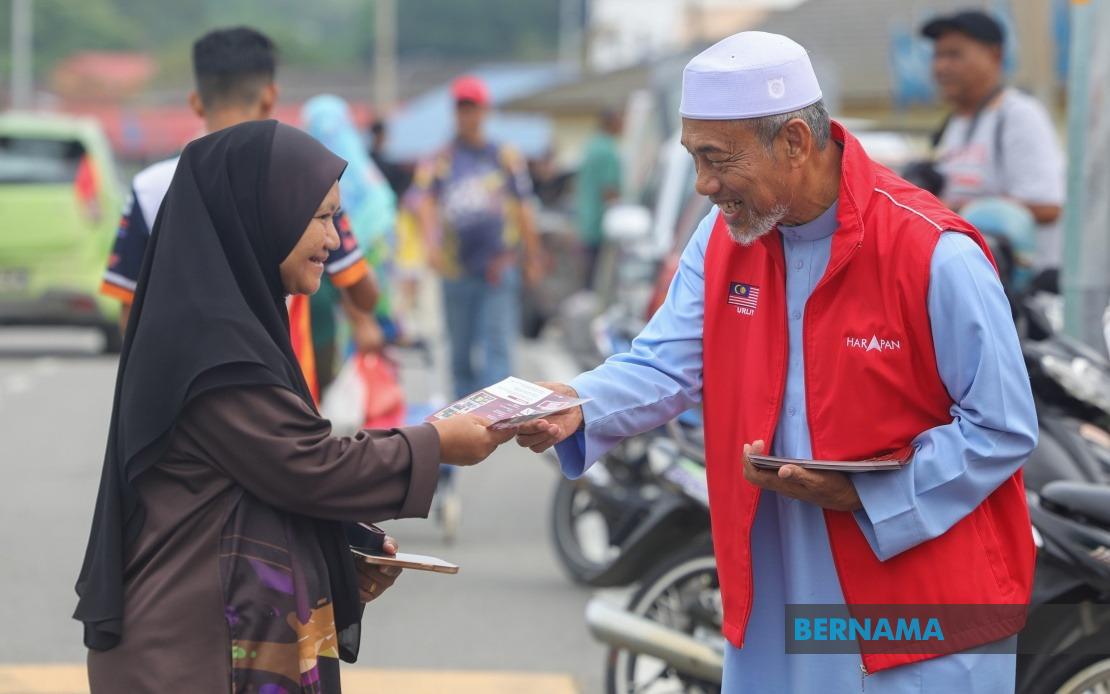
Candidates contesting the 16th Negeri Sembilan State Election have shifted into high gear as the campaign entered its second week, deploying intensive grassroots strategies to reach voters across their constituencies. On the second day of the formal campaign period, political hopefuls from all major coalitions orchestrated multiple engagement programmes, ranging from pre-dawn mosque gatherings to evening community dinners, demonstrating the competitive intensity surrounding the August 1 polling date.
The scale of the electoral exercise is substantial. Negeri Sembilan's state legislative assembly, dissolved on June 5, will see nearly 890,000 registered voters decide the composition of the state government. This figure comprises 867,151 ordinary voters alongside 16,884 military personnel and spouses, and 5,455 police officers eligible for early voting on July 28. The size of the electorate underscores why candidates are maximising their presence in communities, recognising that elections at the state level often turn on local concerns and personal connections between representatives and constituents.
Menteri Besar Datuk Seri Aminuddin Harun, seeking re-election in the Linggi state seat, exemplifies the intensive approach candidates are adopting. Beginning his day with Subuh prayers at Masjid Jamek Pasir Panjang, Aminuddin proceeded through a series of neighbourhood visits spanning Pasir Panjang town, Taman Setia, Taman Kekatong, and multiple villages. Such morning rituals serve dual purposes: they acknowledge the religious practices of Muslim voters while creating informal settings for political engagement. His walkabouts, interspersed with community breakfast sessions, allowed direct conversation with residents about their priorities. As Negeri Sembilan Pakatan Harapan chairman and PKR vice-president, Aminuddin's campaign reflects the coalition's strategy of leveraging incumbency while emphasising responsive governance. He characterised these interactions as essential to understanding voter aspirations and reinforcing his commitment to developmental projects benefiting the entire state.
The Democratic Action Party's presence in the state election is represented by secretary-general Anthony Loke, who is defending his Chennah state seat. Loke's campaign itinerary highlights a common pattern among opposition-aligned candidates: combining early-morning market visits—where voter foot traffic naturally congregates—with evening community events. His appearance at Seremban Central Market on the campaign's second day aligns with the practical necessity of reaching working voters during convenient hours. Such tactical choices reveal how candidates structure schedules around the rhythms of daily life in their constituencies.
Other Pakatan Harapan aspirants are similarly ambitious in their scheduling. The candidate for Seri Menanti, Kamarul Ariffin Wafa, had arranged eight programmes in a single day, including targeted visits to Pekan Ahad market and surrounding Tanjong Ipoh areas. Yaacob Mahmood, contesting the Serting seat for PH, adopted comparable tactics by conducting informal breakfast sessions at Felda Raja Alias 3 and mingling at business establishments in Bandar Seri Jempol. Such approaches deliberately emphasise accessibility and informality, creating environments where voters feel comfortable raising specific local grievances and personal concerns. Campaign organisers frame these interactions as distinct from formal rallies or staged events, positioning them instead as genuine community dialogue in relaxed settings.
Barisan Nasional's campaign machinery, attempting to maintain its traditional strongholds in Negeri Sembilan, demonstrates comparable commitment to grassroots mobilisation. Datuk Seri Mohamad Hasan, the incumbent Rantau assemblyman and BN deputy chairman, spent campaign time engaging residents at the BN Polling District Centre in Mambau, leveraging existing party infrastructure to maintain voter contact. Negeri Sembilan UMNO's liaison committee chairman Datuk Seri Jalaluddin Alias, meanwhile, connected with both youth populations through a sepak takraw tournament in Pertang and subsequently engaged Orang Asli communities in Kampung Utara Putra. This bifurcated approach—targeting youth sporting interests alongside indigenous community concerns—reveals how BN candidates are attempting to maintain electoral coalition cohesion across diverse demographic segments.
The intensity of these campaigns reflects the political stakes in Negeri Sembilan, a state where results have historically influenced national political trajectories. State elections frequently serve as barometers for voter sentiment regarding federal governments, and Negeri Sembilan's electoral outcome could carry implications for how prime ministerial leadership and coalition performance are perceived regionally. For Malaysian voters observing these contests, state elections often feel more directly connected to local service delivery than federal politics, making candidate visibility and demonstrated commitment to community concerns particularly consequential.
With twelve days remaining before polling, the campaign rhythm appears set to accelerate further. Candidates operating nine-programme daily schedules reflect resource-intensive campaigns that demand substantial volunteer mobilisation, transportation coordination, and media attention. Such intensity is sustainable only through organised party structures and motivated campaign teams, factors that themselves become predictors of electoral performance. The geographic spread of activities—from wet markets to informal settlements to religious institutions—indicates candidates are pursuing comprehensive voter mapping rather than focusing exclusively on core support bases.
The early voting arrangement for military and police personnel on July 28, two days before general polling, adds another temporal dimension to campaign strategy. Candidates must complete critical voter contact activities before this early voting window, as military and police votes, comprising over 22,000 ballots, could prove decisive in marginal constituencies. This logistical reality shapes the intensity of the second week onwards, as candidates recognise that two weeks of intensive campaigning must accomplish what would ordinarily extend across longer timeframes in larger electoral contests.
For Negeri Sembilan voters, these packed campaign schedules present both opportunity and challenge. The abundance of candidate appearances and community engagement events enables direct constituent-representative contact, yet voters must navigate substantial information flows and marketing messages to distinguish substantive policy commitments from campaign rhetoric. The emphasis on informal community settings—rather than formal policy presentations—suggests candidates are prioritising emotional connection and personal reputation over detailed programmatic articulation, a pattern increasingly characteristic of Malaysian electoral campaigns across all levels.

