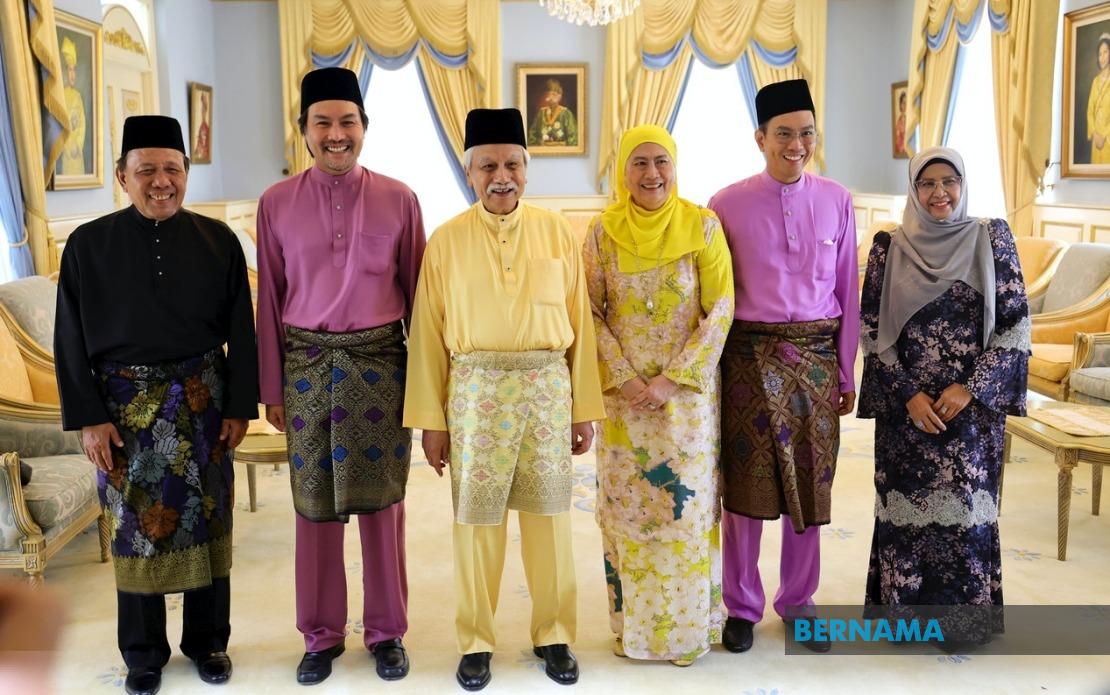
Newly appointed Menteri Besar Datuk Ismail Lasim has outlined an ambitious timeline for constructing Negeri Sembilan's next administration, pledging to complete the formation of the state executive council by the end of this week. Speaking during his inaugural press conference following his swearing-in ceremony before the Yang Dipertuan Besar Tuanku Muhriz Tuanku Munawir, the Juasseh Assemblyman indicated that a Friday deadline would be pursued, provided circumstances permit the necessary consultations to conclude on schedule.
The formation process is being shaped by multiple stakeholder considerations that reflect the complex political landscape in Negeri Sembilan following the recently concluded state election. Ismail has committed to conducting formal discussions with the Barisan Nasional leadership before presenting any proposed executive council composition to the Sultan for formal approval. These preliminary consultations are essential, as they establish the political framework within which individual appointments and portfolio allocations will be determined. The Sultan himself has indicated a preference for swift resolution of the matter, creating additional impetus for the administration to work expeditiously.
A significant element of the cabinet formation process involves potential coordination with the federal UMNO leadership. Ismail indicated his intention to meet with UMNO president Datuk Seri Dr Ahmad Zahid Hamidi to solicit the party's perspective on the composition of the state executive council. This consultation carries particular weight given the possibility that Perikatan Nasional representatives elected to the State Assembly may be incorporated into the executive structure. Such an arrangement would represent a coalition government combining not only UMNO's strength but also contributions from the MCA and MIC component parties within the broader BN framework.
The question of the executive council's overall size remains undetermined at this preliminary stage, though Ismail has expressed a preference for maintaining the traditional ten-member structure that has characterised the Negeri Sembilan administration in previous terms. He believes this configuration would prove most suitable for managing state affairs efficiently while maintaining appropriate political representation across the coalition partners. The final decision on council size will emerge only after detailed discussions with party leadership regarding the allocation of positions and the distribution of specific ministerial portfolios among eligible candidates.
The political arithmetic underpinning Negeri Sembilan's new government reflects a decisive electoral outcome with substantial implications for governance stability. Barisan Nasional captured eighteen seats in the recent state election, while Perikatan Nasional secured seven seats from the thirty-six total contested positions. This combined strength of twenty-five seats provides the two coalitions with a commanding two-thirds majority in the State Legislative Assembly, establishing a solid parliamentary foundation for the new administration's legislative agenda. Such a substantial majority significantly exceeds the simple majority required to sustain government, offering considerable resilience against potential political challenges during the term ahead.
The formation of this coalition government itself reflects broader patterns visible across Malaysia's political landscape, where different coalitions have found themselves collaborating at state level despite competing interests at the federal arena. The incorporation of Perikatan Nasional representatives into the executive framework, if ultimately approved, would require careful negotiation to ensure equitable treatment of coalition partners and maintain cohesion around a shared governance platform. Such arrangements demand political maturity and consensus-building capacity from leadership across both coalitions, particularly given the different ideological perspectives they occasionally represent on national issues.
Ismail's emphasis on the welfare and well-being of the state's population as the central pillar of his administration reflects a deliberate pivot toward substantive governance concerns following the electoral campaign. He has articulated that as a government mandate by popular vote, the administration's legitimacy rests fundamentally on its capacity to deliver tangible improvements in living standards and public services. This framing establishes a framework against which his government's subsequent performance will be assessed by Negeri Sembilan's electorate and by observers monitoring governance outcomes across Malaysia's thirteen states.
The swearing-in ceremony at Istana Besar Seri Menanti formalised the constitutional transfer of executive authority in the state, marking a significant transition in Negeri Sembilan's political administration. The choice of venue and the ceremonial framework underscored the constitutional role of the Yang Dipertuan Besar as guardian of proper governmental processes and arbiter of fundamental constitutional principles. This ceremony represents more than mere formality; it establishes the new Menteri Besar's formal accountability to the Crown and binds him to constitutional obligations that constrain executive discretion and anchor governance to established legal frameworks.
The timeline established by Ismail for cabinet finalisation, while ambitious, reflects recognition that prolonged uncertainty regarding ministerial appointments could undermine administrative efficiency and delay implementation of the new government's policy agenda. State governments across Malaysia have occasionally struggled with extended cabinet formation processes, creating interim periods during which crucial decisions face postponement and administrative initiatives lack clear leadership direction. By targeting a Friday completion, Ismail seeks to minimise this transition period and establish operational clarity rapidly across state government structures.
For Malaysian observers and political analysts, the Negeri Sembilan government formation offers a case study in how different coalitions navigate practical cooperation at the state level while maintaining their respective identities and policy positions. The incorporation of Perikatan Nasional into an executive structure alongside Barisan Nasional components demonstrates that Malaysia's political landscape continues to evolve in pragmatic directions, driven by electoral mathematics and the imperative of delivering effective governance. The success or failure of this coalition's cohesion over the coming term will provide important lessons for state-level political management across the country.
The relationship between the federal UMNO leadership and the Negeri Sembilan administration warrants close attention, as Ahmad Zahid's guidance on executive council composition may reflect broader strategic considerations extending beyond state concerns alone. Federal parties increasingly view state governments as components within integrated national political strategies, and consultation patterns between state and federal leadership illuminate these interconnected calculations. The consultation process Ismail has initiated thus represents not merely a procedural nicety but a substantive alignment of the state administration within wider party and coalition structures that will shape its policy directions and political options throughout its term.

