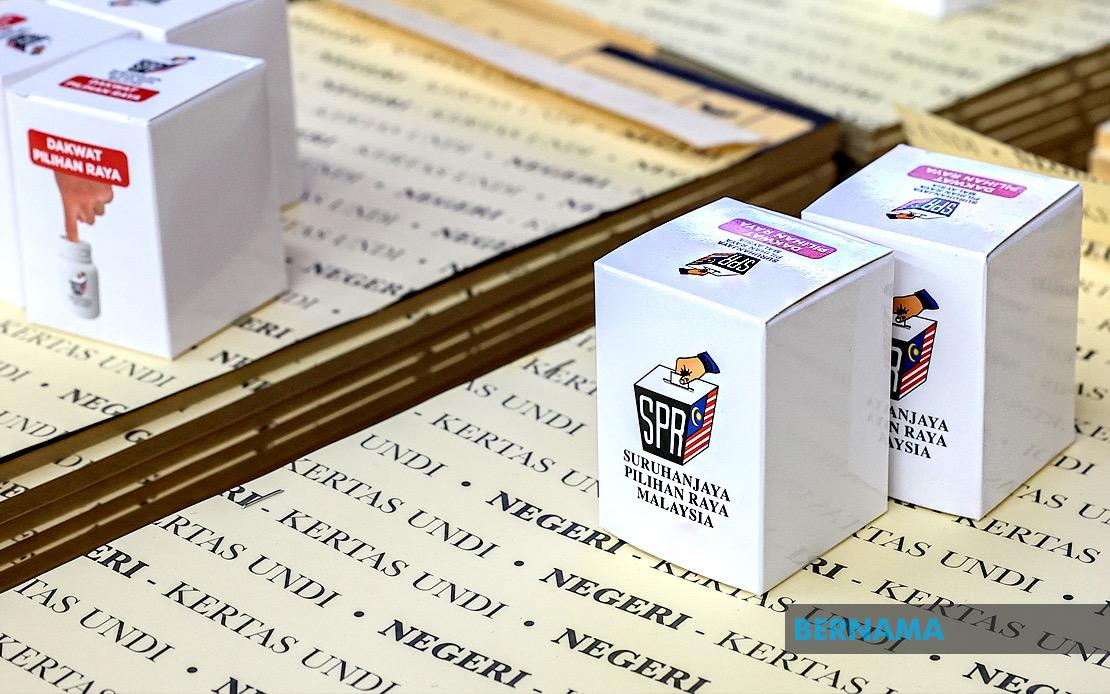
The first wave of voting in Johor's 16th state election unfolds tomorrow as more than 24,000 security force members and their families prepare to exercise their franchise at early polling stations spread across the state. This advance voting arrangement accommodates the schedules of military and police personnel who face operational constraints during the scheduled election date of July 11, ensuring their democratic participation while maintaining institutional readiness.
The 24,751 registered early voters divide almost equally between two groups: 12,041 from the military and their immediate family members, and 12,710 from the police force with spouses. This bifurcation reflects the standard provision extended to uniformed services in Malaysian elections, recognising their critical roles in maintaining public order and security. The distribution demonstrates substantial representation from both defence and law enforcement agencies, indicating the significant presence of these institutional personnel within Johor's voting population.
Administrative arrangements for tomorrow's voting span 64 designated centres—53 dedicated to police voters and 11 for military personnel. All stations will commence operations simultaneously at 8 am, establishing a coordinated opening that reflects electoral commission planning aimed at preventing congestion and ensuring systematic vote collection. The simultaneous opening also symbolises equal treatment across the two security branches, underscoring institutional parity in electoral processes.
Police voters present a mixed submission pattern: 12,067 will personally attend polling centres tomorrow to cast their ballots, while another 643 have opted for postal voting—a provision that accommodates those stationed in locations distant from designated centres. This bifurcated voting method provides flexibility particularly valuable for personnel deployed to remote postings or those with unavoidable operational duties that conflict with voting times. The postal arrangement, though smaller in scale, nonetheless demonstrates the election commission's responsiveness to logistical realities affecting uniformed personnel.
Maintaining orderly voting procedures will require substantial security deployment. The police authority will station 3,565 personnel throughout the voting process, encompassing 647 officers, 2,806 rank-and-file members, and 112 civilian administrators. This considerable mobilisation underscores the logistical intensity of managing early voting across geographically dispersed locations. Beyond mere polling centre administration, these deployed personnel will manage multiple simultaneous responsibilities: entry security screening, ballot box movement with protective escorts, traffic management in surrounding areas, preventative patrols targeting election-related disruptions, centralised operations coordination, and oversight of strategically important locations to prevent unauthorised interference.
Voting centre closures tomorrow will stagger between noon and 6 pm depending on voter registration levels at individual locations. Smaller stations serving between six and 28 registered voters—including Buloh Kasap Police Station in Segamat, Tenang Police Station in Labis, and Bandar Penawar Police Station—will conclude operations at midday. This variable closure schedule reflects procedural efficiency, allowing centres with minimal voters to conclude rapidly while maintaining full operations where larger voter populations require extended availability.
Conversely, the heaviest voter concentrations centralise at strategic institutional locations. The Federal Reserve Unit Hall No 2 at Johor Police Headquarters serves the Stulang constituency and will process 1,338 police voters—the single largest early polling venue. The KEMAS Preschool facility at the 6th General Operations Force Battalion in Bakri follows with 927 registered voters from the Bukit Naning constituency. These major hubs necessitate extended operations and substantially more administrative resources than smaller satellite centres, reflecting natural concentration patterns when institutional facilities aggregate personnel from wide geographical areas.
Weather considerations may influence voter turnout and mobility patterns across selected districts. The Malaysian Meteorological Department forecasts morning rainfall affecting Batu Pahat, Muar, Pontian, and Tangkak districts, while remainder territories anticipate fair conditions. Rain in these regions could potentially reduce foot traffic at early voting centres, though unlikely to substantially depress turnout among scheduled security personnel who typically demonstrate higher voting discipline. Regional variation in weather also underscores the geographical diversity characterising Johor, a sprawling state spanning considerable longitudinal distance with correspondingly variable climatic patterns.
The broader electoral context frames tomorrow's early voting as prelude to the principal election event scheduled for Saturday, July 11. The 16th Johor state election involves 172 candidates competing across 56 state assembly constituencies—a substantial field generating significant electoral competition. This contest attracts considerable political attention given Johor's substantial population, economic importance within Malaysia's southern corridor, and historical political significance. Early voting for security personnel represents merely the opening phase of a comprehensive electoral exercise extending across the entire eligible voter population.
From a regional perspective, the Johor election carries implications beyond state boundaries. Electoral outcomes in this populous southern state influence national political configurations and signal voter sentiment regarding incumbent administrations. The security forces' early participation enables their subsequent availability for broader election-day duties supporting the ballot process statewide, ensuring personnel can simultaneously fulfil institutional responsibilities while exercising voting rights—a critical operational consideration in major electoral exercises affecting millions of voters across diverse constituencies.

