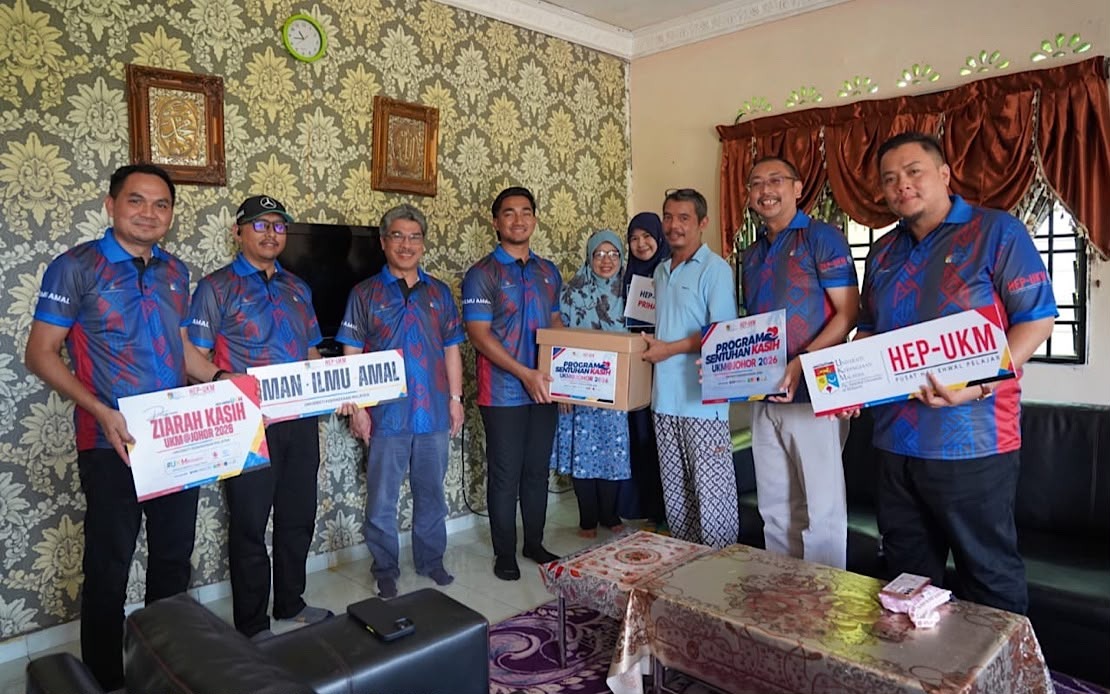
Universiti Kebangsaan Malaysia has demonstrated its dedication to community integration through a large-scale outreach programme that brought together nearly 1,000 local residents across multiple Johor municipalities over a weekend event. The Sentuhan Kasih UKM@Johor initiative, coordinated by the university's Student Affairs Centre, exemplified how Malaysian tertiary institutions are increasingly stepping beyond academic walls to forge meaningful connections with the populations they serve. The campaign unfolded simultaneously across Kota Masai in Pasir Gudang, Kampung Baru Sri Aman, and Taman Jaringan in Skudai, with 78 UKM community members participating as facilitators and organisers.
Operating under the banner "From Campus to Community, Spreading Love and Service," the programme represents a deliberate institutional strategy to redefine the university's social role in an era when public expectations of higher education increasingly extend beyond credential-granting. The timing of the weekend event proved strategic, allowing working residents and families in industrialised zones to participate despite their weekday commitments. Higher Education Minister Datuk Seri Dr Zambry Abd Kadir's attendance underscored government backing for such initiatives, reflecting broader policy recognition that universities should function as active community anchors rather than isolated knowledge repositories.
The activities deployed during the outreach were deliberately diverse, targeting different community needs simultaneously. Gotong-royong sessions harnessed collective labour for neighbourhood improvement, while "ziarah kasih" welfare visits personalised the university's presence by reaching vulnerable households. Mental health screening addressed growing awareness of psychological wellbeing as a critical public health priority, particularly relevant given Malaysia's rising mental health awareness campaigns. Concurrent sports activities created informal social spaces where younger residents could interact with university students, building familiarity that transcends formal institutional hierarchies. This multifaceted approach recognised that authentic community engagement requires meeting populations where their actual needs and interests lie, rather than imposing predetermined activities.
Associate Professor Dr Darfizzi Derawi, directing both the Student Affairs Centre and this specific outreach initiative, articulated an educational philosophy increasingly prevalent in Malaysian universities: that genuine learning extends far beyond classroom instruction. His remarks emphasised that student participation in real-world community contexts develops practical competencies—adaptability, communication, and interpersonal finesse—that remain unavailable through lecture halls and textbooks alone. This pedagogical reorientation reflects international trends in experiential learning, yet Darfizzi's emphasis on universities breaking "campus walls" carries particular significance in the Malaysian context, where some perceive tertiary institutions as somewhat removed from grassroots realities. By positioning community work as integral to student development rather than peripheral charity, UKM frames social engagement as academically enriching.
The expansion strategy outlined for Sentuhan Kasih signals institutional ambition beyond one-off programming. UKM's commitment to periodic rollouts across additional states suggests a vision of systematic community presence spanning Malaysia's geography. This expansion template distinguishes between episodic community service—common in many institutions—and strategic, sustained institutional outreach. For Malaysian universities operating under financial pressures and competing for relevance amid shifting higher education landscapes, this approach offers a replicable model that simultaneously advances institutional mission, student development, and social responsibility.
Local participation dynamics merit particular attention, especially regarding industrial-zone residents. Herman Ismadi Ismail, representing the Kota Delima Zone leadership, noted that approximately eighty percent of residents work in manufacturing or related sectors, creating significant weekend constraints. Despite these structural barriers to participation, community response remained robust. This persistence suggests genuine interest in university engagement, but also hints at deeper community desires for institutional connection and recognition. For working-class residents in industrial areas, university presence may carry symbolic weight beyond the immediate activities, representing pathways, opportunities, and social mobility that extend to their families and neighbours.
Complementing the public-facing programme, UKM simultaneously conducted targeted household visits to seven families of enrolled students in Tiram and Puteri Wangsa areas. This dual-track approach—simultaneous community-wide and student-family engagement—reveals sophisticated understanding of how universities can support enrolled students while strengthening broader community ties. For families whose children attend university, direct institutional contact often proves reassuring and validating, signalling that their children's educational journey matters at institutional levels beyond individual academic advisors. These welfare visits simultaneously strengthen student retention by demonstrating holistic institutional care.
UKM Vice-Chancellor Prof Datuk Dr Sufian Jusoh's framing positioned student support as extending beyond financial assistance into comprehensive wellbeing architecture. His emphasis on developing "holistic human capital" reflects evolving university missions that increasingly encompass student flourishing rather than mere credential production. This philosophical stance carries implications for Malaysian higher education broadly, suggesting that institutional competitiveness increasingly depends on demonstrating commitment to graduate wellbeing, social values, and community integration, not solely on research outputs or academic rankings. For prospective students and families evaluating university choices, such holistic approaches increasingly influence decisions.
The initiative's emphasis on compassion and social responsibility represents an explicit values-based positioning that carries cultural resonance in Malaysian contexts. Sentuhan Kasih—literally "touch of care"—invokes values deeply embedded in Malaysian social consciousness around communal obligation and mutual support. By deploying culturally familiar framing alongside modern community development methodologies, UKM demonstrates how institutions can authentically connect with populations through culturally-grounded language rather than imported Western models. This cultural translation proves particularly important in an era when foreign university models often dominate aspiring Malaysian institutions seeking international standing.
For broader Malaysian higher education policy, UKM's approach offers instructive lessons about institutional positioning within rapidly changing social landscapes. As public universities navigate budget constraints, declining government funding ratios, and international competition, strategic community engagement offers simultaneous advantages: strengthening community legitimacy and political support, enriching student learning experiences, and advancing genuine social contribution. The Sentuhan Kasih model suggests that Malaysian universities needn't choose between academic excellence and community service—rather, authentic engagement with surrounding communities can constitute integral components of educational quality.
The programme's reception in Johor's industrial communities carries particular relevance for Southeast Asian context, where similar manufacturing-dependent regions exist across the region. The model's demonstration that working-class communities will participate in university initiatives despite time constraints, when those initiatives genuinely address community needs rather than displaying institutional charity, offers guidance for regional institutions seeking renewed social purpose. As Malaysian universities increasingly position themselves within global hierarchies while maintaining local relevance, initiatives like Sentuhan Kasih suggest that meaningful community integration remains not merely possible but strategically essential for institutional sustainability and social legitimacy.

