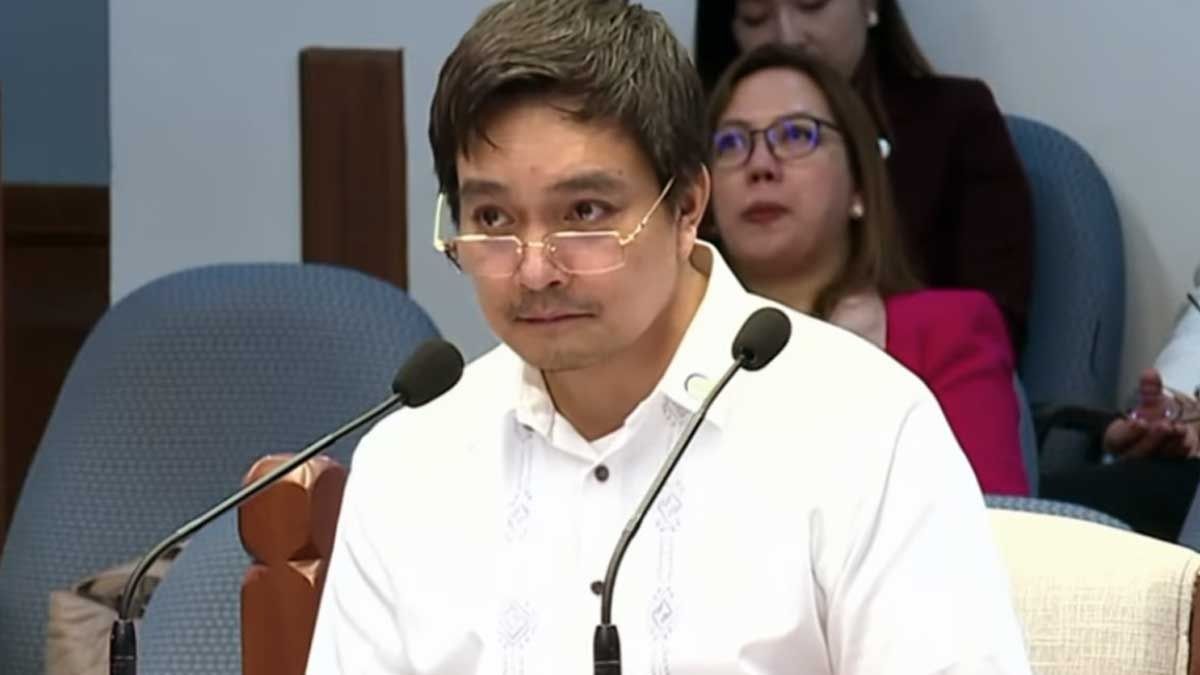
The National Bureau of Investigation's lead investigator in a high-stakes impeachment proceeding against Philippine Vice President Sara Duterte has acknowledged possessing no first-hand evidence that she personally hired an assassin, yet maintains that circumstantial evidence from his agency's inquiry supports such a conclusion. Jeremy Lotoc, the NBI's Regional Director who headed the Crime Division investigation, made this nuanced assertion during the continuation of his cross-examination on July 14, pushing back against defence counsel's attempts to distinguish between investigative belief and concrete proof during the tense impeachment hearing in Manila.
The contentious exchange illuminated the evidentiary challenges prosecutors face in a case centred on alleged threats Duterte made publicly during an online briefing on November 23, 2024. In that digital appearance, the Vice President purportedly declared her intention to contract an assassin targeting President Ferdinand Marcos Jr., First Lady Liza Araneta-Marcos, and former House Speaker Martin Romualdez. Those remarks now form the foundation of a fourth article of impeachment lodged against her, representing one of the most serious charges in the constitutional proceeding.
Lotoc's testimony grew increasingly fraught as defence lawyer Mark Vinluan methodically challenged the investigator's certainty, pressing him to distinguish between what the NBI believed versus what it could prove. When Vinluan asked directly whether Lotoc possessed personal knowledge that Duterte had contracted someone for assassination, the investigator replied that whilst he lacked such direct knowledge, the gathered evidence supported this conclusion. This formulation proved pivotal: Lotoc was essentially arguing that investigative inference from compiled materials pointed toward contractual engagement, even without documentary or testimonial proof of the actual arrangement itself.
The proceedings devolved into procedural friction when defence and prosecution counsels began quarrelling over the interpretation of Duterte's statements in the videotaped briefing. Presiding officer Senator Francis "Chiz" Escudero felt compelled to intervene, reminding both legal teams that the impeachment trial was not a collegiate debate forum. The tension escalated when Vinluan initially questioned whether corruption allegations Duterte levelled against certain individuals in the same video were factually grounded, drawing objections from private prosecutor Amando Ligutan, who accused the defence of deliberately distorting the witness's responses. Escudero directed Lotoc to provide more complete and precise answers to forestall further misinterpretation.
When Lotoc later attempted to anchor his belief in Duterte's contractual statement to evidence the NBI had compiled, Vinluan cut him short, demanding a simple yes-or-no response. This tactical manoeuvre sought to isolate the investigator's admission of lacking direct knowledge from any contextualising explanation. After Escudero's intervention, Lotoc answered affirmatively that he did not possess personal knowledge of Duterte contracting an assassin, yet he immediately emphasised his conviction derived from "pieces of evidence" the NBI had gathered. This formulation characterised the investigator's position as one of reasoned professional opinion based on investigative findings rather than eyewitness testimony.
The question of capability presented another avenue for cross-examination. Senate President Sherwin Gatchalian queried what evidence demonstrated Duterte's capacity to carry out such threats, prompting Lotoc to cite her position as Vice President. Gatchalian's counter-argument—that holding high office does not automatically confer the ability to execute such plans—forced the investigator to retreat from that justification. Pressed further on what concrete evidence existed, Lotoc then pivoted to Duterte's family background, specifically referencing her father, former President Rodrigo Duterte, and his ongoing International Criminal Court case concerning alleged extrajudicial killings during the administration's drug war.
This invocation of the elder Duterte's ICC proceedings represented a significant analytical leap in the NBI's reasoning. By highlighting the former president's alleged involvement in systematic extrajudicial operations, Lotoc appeared to be constructing an inferential bridge: that proximity to such a documented pattern of lethal operations somehow elevated the Vice President's capability and credibility regarding assassination threats. The logic suggested that familial exposure to extrajudicial methods and state resources indicated greater practical means and willingness to pursue violent elimination of political opponents. Whether such inference constitutes probative evidence or mere association remains contested.
For Malaysian observers and Southeast Asian political analysts, this case exemplifies the profound challenges confronting parliamentary inquiries into allegations of serious criminal intent by high state officials. The Philippine impeachment proceeding reveals tensions between investigative conviction—grounded in circumstantial patterns and associative reasoning—and the stringent evidentiary standards required for constitutional removal. Unlike criminal proceedings, impeachment trials operate within their own procedural frameworks, yet the underlying question persists: at what threshold does accumulated circumstantial evidence justify removing a sitting vice president from office?
The impeachment trial also underscores deeper institutional questions within Philippine governance. The presence of the sitting Senate President as presiding officer, combined with the formal prosecution and defence teams, creates a quasi-judicial structure designed to evaluate evidence with constitutional gravity. Yet Escudero's repeated interventions suggest procedural tensions and the difficulty of maintaining impartiality when political stakes are extraordinarily high. The trial will likely hinge less on any smoking-gun documentary evidence and more on whether senators interpret the totality of circumstantial evidence, investigative findings, and alleged threats as sufficiently probative for removal.
The unfolding proceedings carry implications extending beyond the immediate political drama in Manila. They test the resilience of constitutional mechanisms intended to hold executive officials accountable whilst protecting them from politically motivated removal. Southeast Asian democracies, many navigating similar institutional vulnerabilities, will observe whether the Philippine Senate can navigate this constitutional minefield with sufficient credibility to legitimise its ultimate judgment, whatever that may be. The case also highlights how family histories and state violence patterns intersect with current allegations in ways that complicate simple evidentiary analysis.
Looking forward, Lotoc's testimony establishes investigative findings regarding Duterte's threats as foundational to the impeachment case, though it simultaneously exposes the investigative team's reliance on inferential reasoning rather than direct proof of contractual assassination arrangement. The defence has successfully highlighted this evidential gap, whilst prosecutors contend that the totality of circumstances suffices. As the trial progresses through additional testimony and argument, this fundamental tension between investigative belief and legal proof will likely prove decisive in determining the Vice President's political fate.

