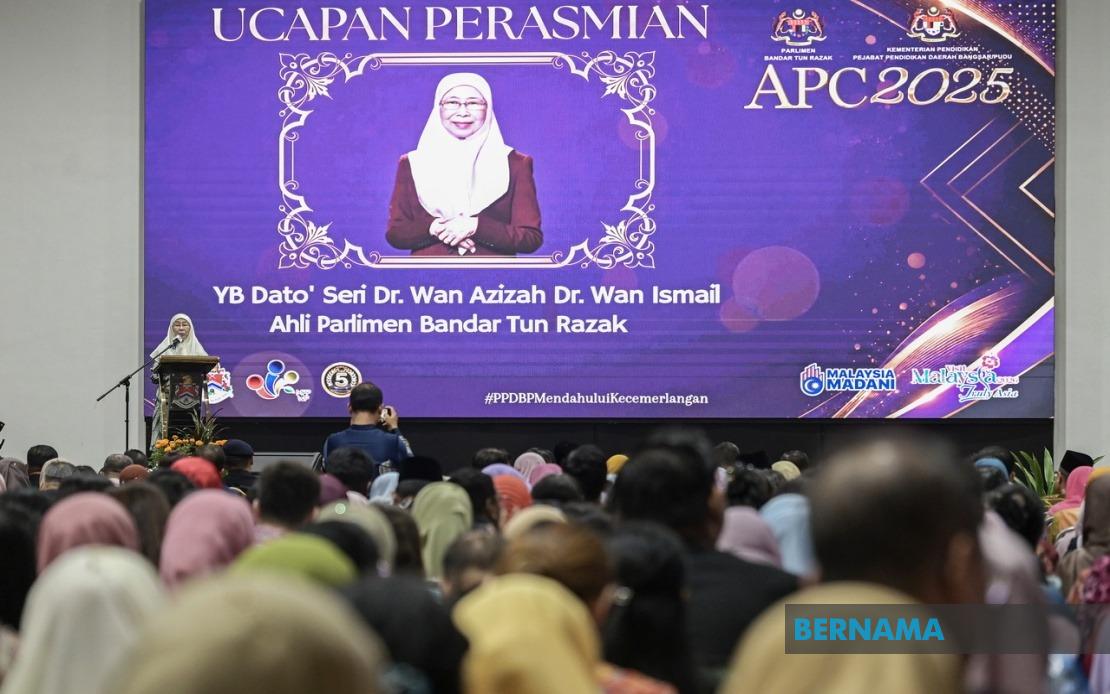
Datuk Seri Dr Wan Azizah Wan Ismail, the Prime Minister's wife and Member of Parliament for Bandar Tun Razak, has stressed that a nation's true power emerges from its capacity to develop citizens who embody knowledge, ethical conduct, and compassionate values—rather than from economic expansion, technological progress, or infrastructure alone. Her remarks, delivered at the 2025 Excellent Service Award ceremony in Kuala Lumpur, underscore a philosophical shift in how policymakers envision Malaysia's development trajectory beyond conventional measures of prosperity.
The education system bears the primary responsibility for this character-building mission, Dr Wan Azizah explained, particularly because schools serve as formative environments where children invest substantial hours each day. This reality holds special significance in urban centres like Kuala Lumpur and Selangor, where parental employment commitments often limit the time families can dedicate to direct supervision and moral guidance. Teachers, in this context, function as extended custodians of young Malaysians during their developmental years.
Educators must recognise that their role transcends the traditional transmission of academic content. Rather than operating as repositories of information, schools should function as institutions dedicated to cultivating individuals of integrity, refined conduct, and genuine concern for others. Dr Wan Azizah characterised teachers as architects of the nation's most valuable resource—its young people—suggesting that their influence shapes not merely individual futures but the collective trajectory of Malaysian society across decades.
The contemporary information landscape presents unprecedented challenges to values-based education. The artificial intelligence age and the torrential flow of digital content have created environments where distinguishing credible information from falsehoods demands increasingly sophisticated cognitive skills. Dr Wan Azizah highlighted that curricula must therefore incorporate robust critical thinking competencies, enabling students to evaluate sources, identify bias, and navigate moral ambiguities rather than passively accepting external narratives.
This emphasis on critical thinking intersects directly with Southeast Asia's broader developmental needs. As Malaysia positions itself as a regional technology hub and knowledge economy, maintaining ethical foundations becomes paradoxically more essential, not less. Nations that prioritise commercial innovation without simultaneous investment in moral development risk creating professionals skilled in technical domains but adrift in ethical judgment—a vulnerability that has proven costly across multiple societies and sectors.
The 2025 Excellent Service Award ceremony, organised by the Bangsar/Pudu District Education Office and held at the Kuala Lumpur City Hall Training Institute, recognised the contributions of 746 teachers and school administrators representing 143 schools across the district. This recognition of approximately one thousand attendees represented official acknowledgment that sustained excellence in education depends on dedicated professionals maintaining commitment despite resource constraints, evolving student demographics, and shifting societal expectations.
Dr Wan Azizah expressed confidence that honouring these educators would reinforce their motivation to maintain high standards while simultaneously inspiring colleagues throughout the system to strengthen their contributions to Malaysia's educational agenda. The visibility afforded to award recipients carries symbolic weight—indicating that governmental leadership values teaching as a profession worthy of celebration and reward, not merely as administrative necessity.
The presence of the Prime Minister's Political Secretary, Datuk Azman Abidin, and Kuala Lumpur Federal Territory Education Department Director Megat Affandi Ismail underscored the institutional significance attached to the ceremony. This representation across multiple levels of governance reflected alignment between executive leadership and educational administration regarding the strategic importance of recognising teaching excellence.
The Bangsar/Pudu district, encompassing portions of Kuala Lumpur's inner urban core, represents a microcosm of Malaysia's educational challenges and opportunities. Schools in this region serve diverse socioeconomic backgrounds, linguistic communities, and family structures. Educators operating in these contexts navigate complexity that extends well beyond curriculum delivery—addressing poverty-related barriers to learning, language development disparities, and varying levels of parental capacity to support academic progression.
Recognising district-level excellence carries practical significance beyond ceremonial acknowledgment. Such programmes generate local data about effective teaching practices, identify schools demonstrating noteworthy results despite resource limitations, and create models for peer learning across the system. When 143 schools participate in a structured recognition framework, the underlying evaluation processes generate intelligence about implementation challenges and successes that educational policymakers can leverage for system-wide improvements.
Dr Wan Azizah's framing of education as fundamentally concerned with developing character rather than accumulating credentials challenges conventional approaches that emphasise examination performance and university entrance rates. This philosophical positioning aligns with global educational discourse questioning whether standardised testing adequately captures the competencies required for contemporary citizenship and professional success. Malaysian educators increasingly recognise that adaptability, ethical reasoning, and emotional intelligence often prove more decisive than raw academic achievement in determining long-term life outcomes.
The award ceremony ultimately reflected an emerging consensus within Malaysia's educational leadership that national development strategies must integrate moral and civic education alongside technical skill acquisition. As economic competition intensifies across Southeast Asia and artificial intelligence transforms labour market demands, the differentiating factor for Malaysia increasingly depends on whether its workforce can contribute ethical leadership, innovative problem-solving grounded in humanistic values, and adaptive capacity in rapidly changing environments—precisely the qualities Dr Wan Azizah emphasised educators should cultivate.

