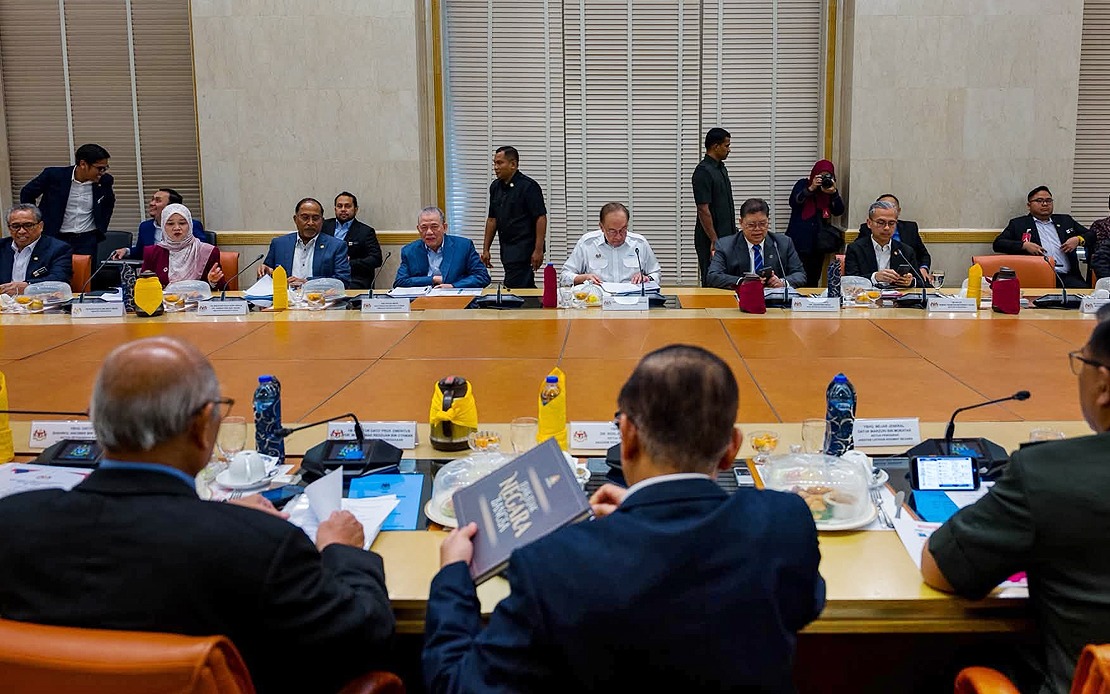
Prime Minister Datuk Seri Anwar Ibrahim has called for a sustained commitment to embedding nationhood values across Malaysian society, arguing that such efforts form the bedrock of effective nation-building and international competitiveness. Addressing the Dewan Kenegaraan Board of Governance Meeting, Anwar stressed that fostering a robust sense of national identity and shared values remains vital for producing citizens with strong character, moral foundation and unwavering commitment to the country's progress.
The Prime Minister's emphasis reflects a broader strategic pivot towards strengthening the social and cultural fabric that binds Malaysia together. By focusing on nationhood values—encompassing principles of unity, integrity, service and resilience—the government appears to be targeting the human dimension of development, recognising that economic and infrastructural gains alone cannot sustain a cohesive nation. This approach holds particular resonance for Malaysia, a multi-ethnic, multi-religious society where shared identity and mutual respect remain essential antidotes to divisive tendencies that periodically emerge.
Central to this agenda is the National Service Training Programme (PLKN), which Anwar highlighted as a cornerstone initiative showing considerable momentum. According to the Prime Minister, the programme has garnered encouraging feedback from both participants and their families, suggesting it is achieving its intended objectives of instilling discipline, unity and a sense of collective purpose among young Malaysians. The PLKN's role in bringing together youth from diverse backgrounds creates structured opportunities for cross-cultural bonding and shared experience, outcomes increasingly recognised as vital for social cohesion in pluralistic societies.
Anwar's remarks indicate the government views the PLKN not merely as a training initiative but as a transformative platform capable of reshaping generational attitudes towards nation and community. The programme's emphasis on discipline and resilience addresses concerns about values erosion among young people, while its national service component reinforces the principle that citizenship carries reciprocal obligations. For Malaysia, where youth constitute a significant demographic segment, the strength and effectiveness of such programmes carry outsized implications for the country's trajectory over the coming decades.
Another institutional mechanism highlighted by the Prime Minister is the Nationhood Fellows, a initiative designed to convene prominent personalities and elder statesmen from varied professional and ethnic backgrounds. This forum ostensibly functions as a think-tank of sorts, tasked with generating strategic ideas and policy recommendations to advance the nation-building agenda. The deliberate inclusion of figures across ideological and sectoral divides suggests an intention to broaden consensus around core national values and reduce the scope for parochial or divisive interpretations of Malaysian identity.
The concept of bringing together accomplished figures from disparate fields reflects a recognition that nation-building requires intellectual capital and moral authority beyond traditional government structures. By creating platforms for cross-sector dialogue, the initiative aims to generate homegrown frameworks for understanding nationhood that resonate with diverse Malaysian communities. This approach stands in contrast to purely top-down mandates, potentially enhancing the legitimacy and effectiveness of values-based messaging.
Anwar's consistent reiteration of the need to cultivate love for country suggests an underlying concern that patriotic sentiment may be waning or becoming fragmented along communal lines. By positioning nationhood values as unifying rather than divisive—capable of transcending ethnic and religious boundaries—the government seeks to redirect national discourse away from zero-sum competition and towards collaborative nation-building. This messaging becomes particularly important in periods of political flux or economic uncertainty, when centrifugal forces may tempt various groups to prioritise narrow interests over collective welfare.
The timing of these statements also merits consideration. Regional dynamics, economic pressures and internal political developments have sustained attention on Malaysia's social cohesion and strategic positioning. Anwar's emphasis on strengthening national identity and institutional mechanisms to reinforce shared values appears designed to address concerns about social fragmentation while simultaneously projecting a government committed to foundational principles. For neighbouring Southeast Asian nations grappling with similar pluralism challenges, Malaysia's approach may offer lessons in institutional design and values communication.
Implementing nationhood values at scale presents formidable practical challenges. Translating abstract principles into concrete educational curricula, workplace practices and community engagement requires sustained coordination across government agencies, civil society, educational institutions and private sector entities. The effectiveness of initiatives like PLKN and the Nationhood Fellows will ultimately depend on consistent resource allocation, political will and the ability to adapt messaging for diverse audiences without diluting core principles.
Moreover, critics might argue that emphasising values risks appearing disconnected from material concerns—employment, housing, education costs—that dominate public discourse in Malaysia. Successfully bridging this gap requires demonstrating that stronger national cohesion and shared identity facilitate better governance and economic outcomes for ordinary citizens. The government's challenge lies in weaving together cultural, institutional and economic narratives into a coherent vision of progress.
For Malaysian observers and policymakers, Anwar's statements underscore a strategic recognition that sustainable national development requires attending to the less tangible but equally consequential domain of collective identity and shared purpose. Whether these initiatives translate into meaningful changes in how Malaysians relate to one another and their nation will depend on implementation quality, genuine inclusivity and demonstrated commitment across multiple political and economic cycles.

