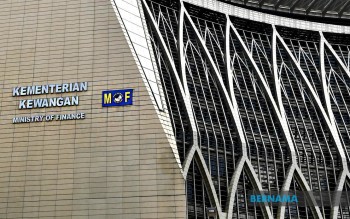
Malaysia's parliament has endorsed the National Trust Fund Bill 2026, marking a watershed moment in the country's approach to preserving national wealth across generations. The legislation, which secured parliamentary support on July 17, represents the most significant overhaul of the National Trust Fund since its creation nearly four decades ago, introducing legally enforceable safeguards designed to insulate Malaysia's long-term financial reserves from the pressures of short-term fiscal needs. The government framed the reform as integral to its broader economic reformation agenda, demonstrating a commitment to protecting the nation's asset base for the benefit of citizens yet to be born.
The current National Trust Fund, known locally as KWAN, has accumulated RM22.43 billion in assets under the stewardship of Bank Negara Malaysia, which has administered the fund since its 1988 establishment. The new legislation transforms KWAN from an administratively managed entity into a formally incorporated statutory body with an independent board responsible for investment decisions and day-to-day operations. This institutional redesign responds to concerns that without a dedicated governance structure, the fund remained vulnerable to political pressure during economic downturns or fiscal crises. During the transition to the new structure, the central bank will maintain administrative responsibility, ensuring no disruption to existing investments or contractual arrangements while assets transfer to the newly created entity.
A cornerstone of the Bill's reforms centres on establishing mandatory, legally binding contribution mechanisms that remove discretion from the budgeting process. The Federal Government must now contribute a minimum of 0.1 per cent of projected annual revenue into the fund, supplemented by 2.0 per cent of Petronas dividends and 2.0 per cent of depletable resource export duties after state allocations. These percentages represent floor targets rather than ceilings; the government retains flexibility to contribute additional sums whenever fiscal circumstances permit. The architecture reflects lessons from commodity-dependent economies worldwide, where resource wealth has historically dissipated through misallocation rather than being preserved for future stability.
Equally significant are the restrictions imposed on fund withdrawals, which carry particular weight given Malaysia's history of drawing on special reserves during economic strain. The new framework limits annual withdrawals to no more than 50 per cent of the fund's expected long-term real rate of return, a discipline mechanism designed to ensure the principal capital grows even as income distributions support current priorities. More restrictively, the Bill confines permitted uses to three domains: education, healthcare, and climate change mitigation and adaptation. Any withdrawal proposal exceeding the 50 per cent threshold demands explicit parliamentary approval, institutionalising public scrutiny of fund depletion decisions. Finance Minister II Datuk Seri Amir Hamzah Azizan articulated the philosophical underpinning of these constraints, emphasising that natural resource wealth and fiscal surpluses constitute a trust held for unborn Malaysians rather than assets available for current consumption.
The investment governance framework outlined in the legislation introduces strategic discipline to asset management, with the Bill directing that KWAN deploy funds across approved asset classes within parameters set by a Strategic Asset Allocation framework requiring ministerial approval. This approach contrasts with purely passive custodial models, enabling the fund to generate returns sufficient to offset inflation and allow real capital growth. For Malaysia specifically, this matters considerably; as a middle-income economy facing demographic ageing and pressure on future pension and healthcare systems, the compound growth of intergenerational reserves offers a fiscal stabiliser against future shocks.
The Bill's passage followed debate involving 14 Members of Parliament and secured majority support in the Dewan Rakyat before proceeding to the Dewan Negara for further consideration. The legislative journey reflects broader acceptance across political divides that protecting long-term wealth requires institutional constraints that transcend individual administrations or electoral cycles. This consensus, while not universal, indicates recognition that Malaysia's development aspirations depend upon preserving fiscal space for future investments in human capital and climate resilience.
From a regional perspective, Malaysia's intergenerational fund reform aligns with emerging patterns across Southeast Asia and beyond, where countries including Singapore, Norway, and the Gulf states have established sovereign wealth vehicles explicitly designed to insulate resource revenues from short-term pressures. The design of KWAN under the new Bill borrows selective elements from these models while accommodating Malaysia's particular constitutional and fiscal architecture. The emphasis on mandatory contributions tied to resource revenues acknowledges that petroleum wealth and commodity export proceeds represent temporary endowments that require deliberate preservation mechanisms.
The educational and healthcare expenditure categories designated for fund withdrawals reflect developmental priorities aligned with the government's long-term vision. By ring-fencing KWAN resources for these domains, the legislation creates a dedicated financing stream for human capital investments, potentially insulating health and education budgets from the fiscal compression that often accompanies economic downturns. Climate change adaptation funding represents a comparatively newer addition to Malaysian fiscal frameworks, recognising the country's vulnerability to rising seas, extreme weather, and temperature variability. Designating KWAN as a potential source for climate resilience investments signals integration of environmental sustainability into Malaysia's intergenerational equity philosophy.
The transition period during which Bank Negara Malaysia continues managing fund operations carries practical significance for market stability. KWAN's RM22.43 billion portfolio represents a material participant in Malaysian financial markets, and ensuring continuity of investment approaches avoids disruption to asset values or counterparty arrangements. The transfer of assets by operation of law—rather than requiring physical reallocation—minimises transaction costs and preserves the portfolio's strategic positioning. The central bank's continued role during transition also leverages institutional expertise and technical capacity, avoiding the delays and complications that sometimes characterise transitions of large public funds.
Critical observers have noted that the 0.1 per cent of projected annual revenue contribution represents a modest commitment in absolute terms, potentially yielding only RM300-400 million annually depending on federal revenue performance. However, the Petronas dividend and resource duty components provide substantially larger contributions during commodity boom periods, when fiscal discipline typically erodes and the political pressure to spend rather than save intensifies. The design thereby channels windfalls toward long-term preservation precisely when such discipline proves most difficult to maintain.
The legislation's progression to the Dewan Negara represents the final legislative hurdle before implementation commences. Upper house consideration will likely focus on technical amendments and may include discussions regarding the optimal transition timeline from the existing panel structure to the new statutory body. The government has not specified a precise implementation date, suggesting that detailed regulatory frameworks and operational protocols will require months to develop. This measured approach, while potentially frustrating those eager to see rapid institutional transformation, reflects prudent recognition that large public funds warrant careful foundational work.
For Malaysian households and businesses, the Bill's passage offers assurance that significant national wealth will be protected from depletion despite fiscal pressures. Over decades, compounding returns on the growing principal could accumulate substantial resources supporting future education, healthcare and climate investments, indirectly benefiting multiple generations. The legislation thereby embodies a profound statement about Malaysian values: that citizens accept modest constraints on current spending to preserve opportunities and security for descendants. This intergenerational compact, encoded now in binding legal form, represents a notable achievement in a region where fiscal discipline and long-term institutional commitment frequently succumb to electoral pressures and immediate demands.

