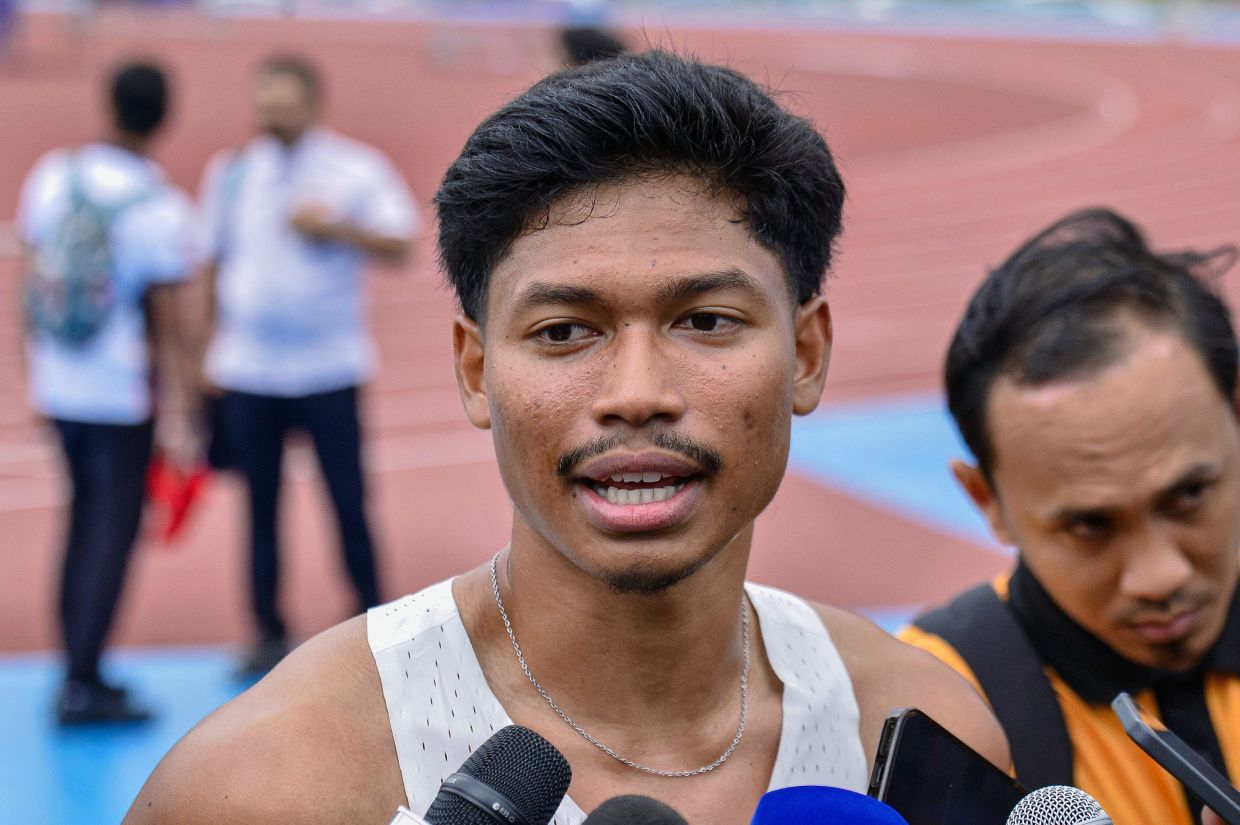
Mohd Azeem Fahmi, one of Malaysia's most promising track and field talents, is embarking on the next chapter of his academic and athletic journey by enrolling in a master's programme at Universiti Malaya. The 21-year-old sprinter, fresh from completing his undergraduate studies at Auburn University in Alabama, has been formally welcomed to the institution as he prepares to balance elite-level competition with postgraduate research. His decision to return home for further education represents a significant milestone for both the athlete and Malaysia's sporting development ecosystem.
The formal announcement came through a courtesy visit to UM's campus in Petaling Jaya, where Azeem was received by vice-chancellor Prof Datuk Seri Dr Noor Azuan Abu Osman. The meeting underscored the university's proactive commitment to supporting elite athletes in their pursuit of academic excellence alongside competitive sport. In attendance were Associate Prof Dr Zulkarnain Jaafar, dean of the Faculty of Sports and Exercise Sciences, and Afizal Abu Othman, director of the university's Sports Centre. This high-level reception illustrates UM's strategic investment in athletes who demonstrate both sporting prowess and intellectual ambition.
The vice-chancellor explicitly pledged institutional support to facilitate Azeem's transition into the master's programme, signalling UM's determination to create conducive conditions for his academic progression. Such commitments are crucial for elite performers who must juggle demanding training schedules with rigorous coursework. The university's proactive stance suggests a deliberate effort to position itself as the preferred destination for Malaysian athletes seeking to further their qualifications while maintaining competitive standards.
Azeem's decision to pursue advanced studies reflects a broader maturation in how Malaysian athletes approach their careers. Rather than viewing education and sport as mutually exclusive pursuits, he is leveraging his experience and knowledge gained at Auburn to deepen his understanding of exercise science. His choice of institution carries particular significance, given Universiti Malaya's established reputation for fostering elite sporting talent across multiple disciplines.
The university boasts an impressive roster of distinguished athletic alumni who have excelled at international level. Diving champions Datuk Pandelela Rinong, Ooi Tze Liang and Bryan Nickson Lomas all benefited from UM's sporting infrastructure and academic resources. More recently, former national women's doubles shuttler Vivian Hoo graduated with a Bachelor of Sports Science degree in 2019, demonstrating the institution's capacity to support athletes across different sporting domains. This track record positions UM as an institution equipped to nurture Azeem's continued development.
Azeem's credentials as a sprinter were reinforced during the Malaysian Open, held recently at Universiti Putra Malaysia's Serdang campus. Competing at the national championship, he secured gold medals in both the men's 100 metres and the 4x100 metres relay, running alongside Danish Iftikhar Mohd Roslee, Pengiran Aidil Auf Hajam and Mohd Armin Zahryl. These performances underscore his status as a pillar of Malaysia's sprint programme and demonstrate his readiness to compete at the highest domestic level.
The sprinter's trajectory over the past two years has been marked by strategic relocation and specialised training. In January 2023, at just 19 years old, Azeem relocated to the United States to pursue a degree in exercise physiology and kinesiology at Auburn University. This move represented a calculated investment in both his academic credentials and competitive development. Under the tutelage of renowned coach Ken Harnden, Azeem benefited from exposure to world-class coaching methodologies and cutting-edge training facilities available at the American university.
His time at Auburn has been transformative, providing access to training environments and coaching expertise that remain limited in Malaysia. The experience has not only refined his technical abilities but has also expanded his understanding of sports science principles. Now, bringing that knowledge back to Universiti Malaya, Azeem is positioned to contribute to raising standards in sprint coaching and athlete development across the nation. His master's studies will likely focus on translating international best practices into the Malaysian context.
The return of talent-developed athletes like Azeem carries implications beyond individual achievement. When elite performers choose to further their studies domestically, they help build local expertise in sports science and coaching. Their presence on campus enriches the academic environment and provides younger athletes with accessible role models. This creates a virtuous cycle where institutional capacity improves, attracting more talented athletes and generating greater investment in sports programmes.
Azeem's master's programme will position him uniquely at the intersection of athlete and researcher. His lived experience competing at international standards, combined with formal academic training in sports science, could enable him to contribute meaningfully to Malaysian sports development once his studies conclude. Whether through coaching, sports management, or research roles, his advanced qualifications will open diverse career pathways beyond competition.
The sprinter's journey also reflects changing attitudes within Malaysian sport towards the value of tertiary education. Increasingly, elite athletes recognise that building intellectual capital enhances their long-term prospects and ability to contribute to the sport ecosystem beyond their competitive careers. Azeem's choice to prioritise both excellence and scholarship sends an important message to younger athletes about the sustainability of sports careers and the importance of educational foundations.
Looking ahead, Azeem's performance at Universiti Malaya will be closely monitored by both the academic and sporting communities. His ability to maintain competitive standards while pursuing postgraduate studies will demonstrate whether the university's support systems are genuinely conducive to dual achievement. Should he succeed, his example will likely inspire other national athletes to consider similar pathways, ultimately strengthening Malaysia's human capital in sports-related fields.

