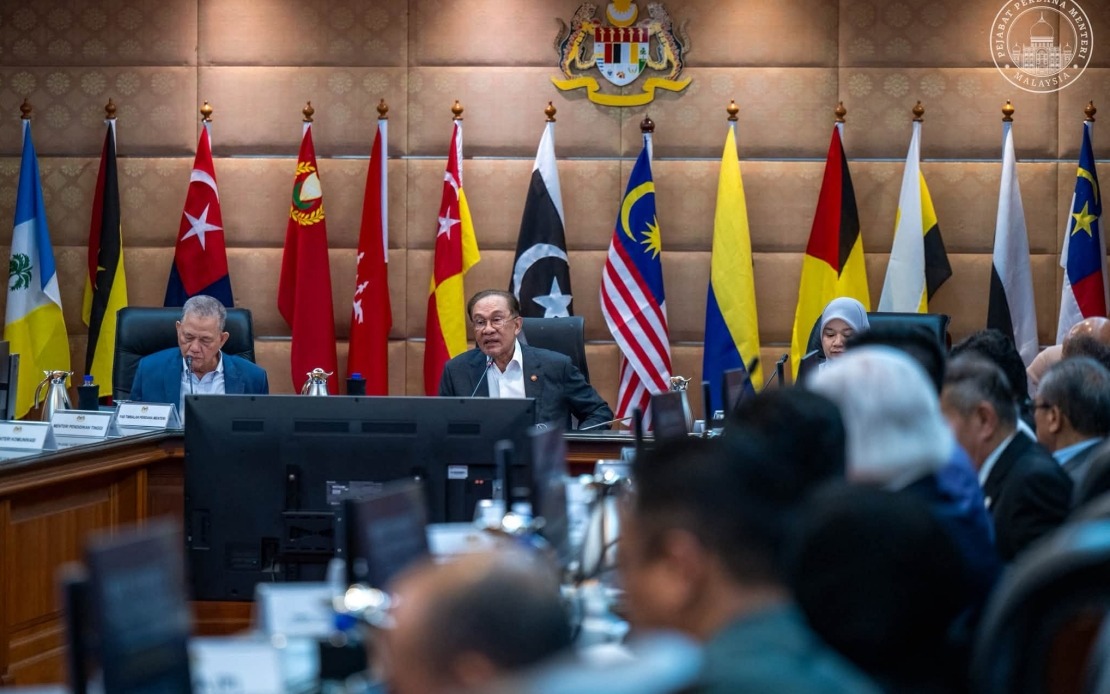
Prime Minister Datuk Seri Anwar Ibrahim has announced the establishment of the National Education Council as a strategic vehicle to overhaul the country's education framework, ensuring its continued relevance in an increasingly complex global environment. Speaking after presiding over the inaugural National Education Council Meeting No. 1 of 2026, Anwar outlined an ambitious agenda that extends across both school-level and tertiary education, reflecting the administration's commitment to fundamental structural improvements rather than incremental adjustments.
The council's mandate encompasses a multifaceted approach to educational enhancement, beginning with substantive upgrades to curriculum content and pedagogical frameworks. This initiative appears designed to address persistent concerns about whether current educational offerings adequately prepare Malaysian students for contemporary economic realities and the demands of a rapidly evolving global marketplace. By centralising these reform efforts under a dedicated council structure, the government seeks to move beyond fragmented departmental initiatives toward cohesive, evidence-based policy implementation.
A particularly noteworthy dimension of the council's remit involves strengthening English language capabilities among Malaysia's student population, positioning English as an essential second language competency. This strategic emphasis reflects international trends showing correlations between English proficiency and economic mobility, particularly in technology, finance, and professional services sectors that increasingly dominate middle-income and upper-middle-income economies. For Malaysia's regional competitiveness within ASEAN and global knowledge economies, enhanced English capacity among graduates represents a tangible competitive advantage.
Crucially, the government has signalled that its educational modernisation agenda will not come at the expense of Malaysia's cultural foundations and national identity. The council's framework explicitly prioritises the maintenance of constitutional values, Bahasa Malaysia as the national language, and moral education as central pillars. This balancing act reflects the delicate political and social equilibrium that Malaysian policymakers must navigate when reforming education—innovation and relevance on one hand, preservation of national character and constitutional commitments on the other. This positioning appears calibrated to address potential concerns from traditionalist constituencies while still pursuing substantive improvements.
The broader reform trajectory outlined by Anwar includes deliberate efforts to enhance educational quality at the district level, a recognition that systemic improvements must translate into tangible benefits across Malaysia's geographically and socioeconomically diverse regions. Centralised curriculum standards mean little without corresponding improvements in teaching quality, infrastructure, and resource availability in peripheral areas. This district-focused approach suggests the government recognises that educational inequality between well-resourced urban centres and under-resourced rural regions remains a persistent structural challenge requiring targeted intervention.
An equally significant priority identified involves advancing the Bumiputera education agenda, an initiative that seeks to ensure equitable educational opportunities and outcomes for indigenous populations and Malays. This component reflects constitutional commitments while acknowledging persistent disparities in educational achievement and access among these demographics. The council's attention to this dimension indicates that reform efforts will encompass not merely curriculum modernisation but also equity and inclusion metrics that address historical inequities embedded within Malaysia's education system.
The establishment of a systematic pipeline for STEM talent development represents perhaps the most forward-looking element of the reform programme. As digital transformation, artificial intelligence, and advanced manufacturing reshape labour market requirements globally, Malaysia's capacity to produce graduates with strong science, technology, engineering, and mathematics foundations will determine its ability to capture high-value economic opportunities. This strategic emphasis acknowledges that demographic factors and global competition for talent make such workforce development imperative for maintaining Malaysia's position as a regional economic centre.
Anwar's framing of the council's work emphasises the necessity for rigorous, objective evaluation of the existing education system, drawing upon expertise from diverse stakeholders. This commitment to evidence-based policymaking and consultation stands in contrast to more ideologically driven approaches and suggests the administration's intention to ground reforms in research and professional expertise rather than political expediency. The involvement of multiple viewpoints should, theoretically, produce more robust and widely accepted recommendations than might emerge from narrower consultative processes.
The Prime Minister also articulated a philosophical stance against what he characterised as complacency with existing institutional arrangements, arguing that meaningful progress requires willingness to undertake substantive systemic changes and continuous iterative improvement. This rhetoric suggests some acknowledgment that previous education reforms, while well-intentioned, may not have produced anticipated outcomes or may have stalled due to institutional resistance or implementation gaps. The emphasis on sustained, continuous elevation of standards implies the government views educational reform not as a discrete project with defined endpoints but as an ongoing commitment requiring institutional flexibility and adaptive management.
For Malaysian stakeholders—parents, educators, employers, and students—the council's establishment signals a potentially significant period of educational policy activity. The comprehensiveness of the reform agenda suggests multiple policy announcements, curriculum revisions, and implementation initiatives will likely emerge over the coming months and years. Educators may face retraining requirements, schools could experience resource allocations and structural reorganisations, and students may encounter modified curriculum frameworks and assessment methodologies. Success will ultimately depend on translation of high-level policy commitments into effective classroom implementation and genuine measurable improvements in learning outcomes and graduate preparedness.

