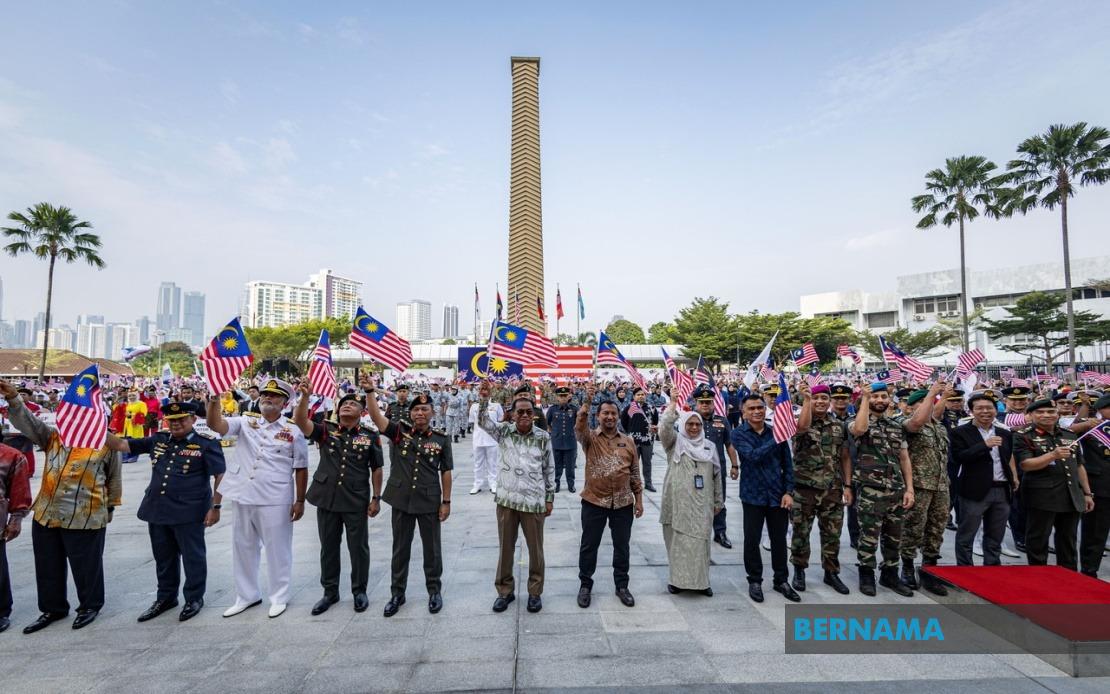
Defence Minister Datuk Seri Mohamed Khaled Nordin has warned Malaysians against weaponising National Day and Malaysia Day festivities as platforms for airing political grievances and emotional sentiments, urging the nation instead to harness these occasions as moments for reaffirming collective love and pride in the country. Speaking at the launch of the Defence Ministry-level National Month and Fly the Jalur Gemilang celebration in Kuala Lumpur on August 27, Mohamed Khaled directly addressed recent calls from certain quarters to boycott the celebrations, arguing that such moves undermine the deeper purpose of these commemorative periods.
The Defence Minister's remarks come at a time of heightened social and political tensions within Malaysia, where various groups have mooted boycott campaigns over different issues affecting the nation. His intervention signals the government's concern that rather than serving as unifying national occasions, these celebrations risk becoming flashpoints for political contestation and divisive discourse. Mohamed Khaled's position reflects a longstanding government narrative that emphasises national cohesion and cautions against what authorities characterise as the politicisation of patriotic occasions.
In his address, Mohamed Khaled articulated a vision of National Day that transcends immediate policy disputes. He contended that Malaysians should leverage the celebratory period to demonstrate to both domestic and international audiences that the nation stands firm against attempts to convert it into a battleground for competing political narratives. The concept of patriotism, he suggested, should serve as a binding force that supersedes disagreements over specific contentious matters. This framing positions love of country as a value that ought to encompass and temper responses to controversial policies or events.
The Defence Minister specifically referenced the Rohingya humanitarian crisis as an example of an issue that should not prompt boycotts of National Day celebrations. This explicit mention underscores the government's stance that Malaysia's international obligations and domestic sensitivities, particularly around migration and refugee matters, should be addressed through appropriate channels rather than through protest expressions tied to patriotic occasions. The reference suggests that civil society organisations advocating for Rohingya aid have considered using boycotts as a form of pressure, prompting the Defence Ministry to issue this cautionary statement.
Central to Mohamed Khaled's argument is the assertion that Malaysia represents an independent, peaceful, and sovereign nation deliberately constructed on foundations of interracial and interfaith understanding. He emphasised that these constitutional and philosophical pillars must remain actively embraced and defended by all segments of Malaysian society if national peace and sovereignty are to endure. This invocation of Malaysia's foundational social contract appears designed to remind citizens that divisive discourse during national celebrations potentially erodes the delicate equilibrium upon which the nation was built.
The Defence Minister called upon all Malaysians to display the Jalur Gemilang with genuine pride and gratitude during the national month celebrations. Beyond the symbolic gesture of flag-flying, he urged citizens to accompany their patriotic expressions with prayers for the nation's wellbeing and specific remembrance of military and security personnel stationed at Malaysia's borders. This appeal to spiritual and emotional dimensions of patriotism seeks to elevate National Day observance beyond mere ritual, positioning it as a moment for introspection and recommitment to national values.
Malaysia's approach to National Day celebrations exists within a regional context where several Southeast Asian nations have grappled with balancing freedom of expression against national unity imperatives. The government's sensitivity to potential boycotts reflects awareness that in an increasingly connected world, protest movements can gain traction rapidly through digital platforms. By addressing boycott movements preemptively, Mohamed Khaled attempts to shape the narrative around national celebrations before alternative commemorative voices become too prominent.
The distinction Mohamed Khaled drew between sentiment-driven responses and expression of patriotic love represents a key rhetorical strategy. He posits that while individual grievances and concerns merit attention, National Day observances should operate on a different plane—one devoted to transcendent national values rather than immediate political calculations. This framing risks dismissing legitimate public concerns by characterising them as mere sentiments, though it simultaneously attempts to create space for those concerns to be addressed outside the context of patriotic occasions.
For Malaysian civil society organisations and activist groups, Mohamed Khaled's statement presents a clear message about government expectations regarding public demonstrations and boycott campaigns during the national month. The Defence Ministry's visible engagement in this discourse signals that the government views challenges to consensus around National Day celebrations as matters of some political significance. Organisations considering protest strategies must now factor in official warnings and the reputational costs of being characterised as undermining national unity.
The statement also carries implications for how Malaysia positions itself internationally during a period of significant geopolitical and humanitarian challenges affecting the region. By emphasising sovereignty and peaceful independence, Mohamed Khaled indirectly addresses concerns that Malaysia's handling of issues like refugee management or regional conflicts might be perceived as wavering. The invocation of security personnel at borders serves as a subtle reminder of threats and challenges that transcend domestic political divisions.
Looking forward, the Defence Ministry's National Month celebration under this messaging will likely emphasise traditional symbols and narratives of national unity rather than space for critical reflection on contemporary challenges. This approach reflects a particular conception of patriotism that privileges consensus and harmony over contestation and debate, a tension that will likely persist in Malaysian public life as civil society becomes increasingly diverse and vocal in its concerns.

