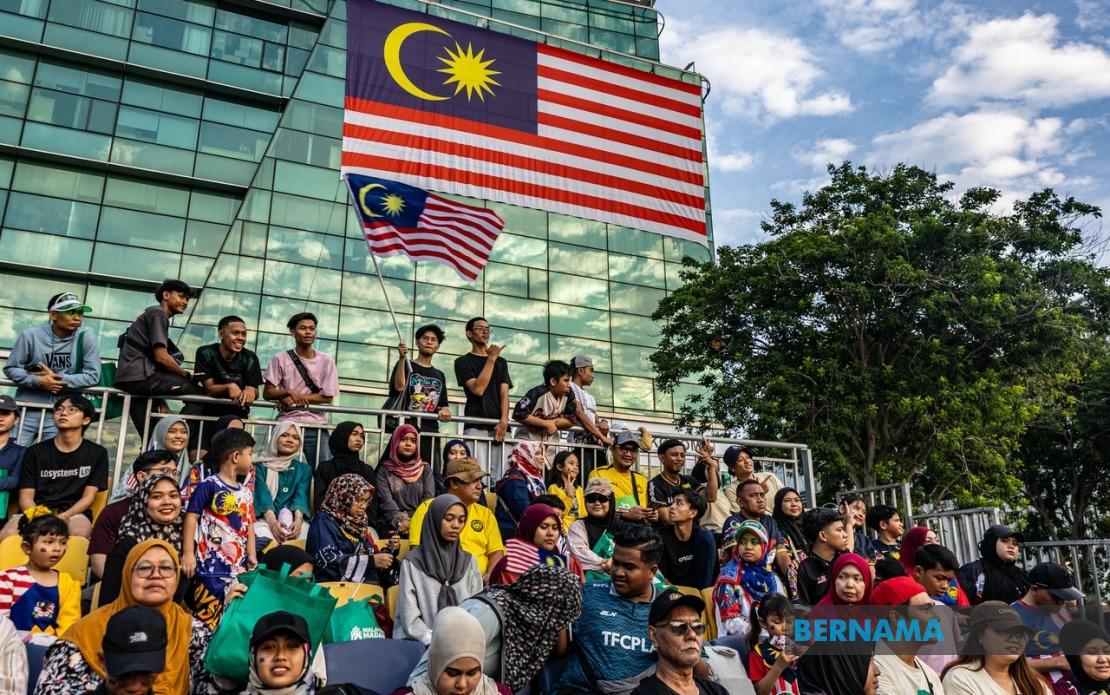
The 69th National Day celebration held in Putrajaya on August 31 proved to be a major success, attracting more than 100,000 attendees and decisively surpassing the organising committee's original projection of 80,000 participants. Communications Minister Datuk Seri Fahmi Fadzil, who chairs the 2026 National Day and Malaysia Day Main Committee, announced the higher-than-expected turnout following the conclusion of festivities, underscoring strong public enthusiasm for the nation's most significant civic occasion.
The impressive attendance reflected nationwide interest, with visitors travelling from across Malaysia to participate in the commemoration. Fahmi specifically highlighted the journey undertaken by attendees from distant locations including Sandakan in Sabah, Johor Bahru in the southern peninsula, and Jeli in Kedah, demonstrating the celebration's pull as a unifying national event. This geographical diversity of participants illustrated how the National Day functions as a gathering point for Malaysians from every region, reinforcing bonds across the country's diverse population.
The flawless execution of such a large-scale public event depended fundamentally on meticulous planning and institutional coordination. Fahmi acknowledged the instrumental roles played by the Department of Environment, Malaysian Meteorological Department, and National Disaster Management Agency in enabling the celebration to proceed without complications. These agencies worked in concert to monitor atmospheric conditions throughout the day and remained positioned to implement cloud seeding measures if weather deteriorated, thereby securing the clement conditions that prevailed.
Weather management proved particularly crucial given Malaysia's equatorial climate and the August monsoon season. The cooperation between meteorological authorities and disaster management officials ensured that organisers could adapt swiftly to any atmospheric changes, demonstrating how inter-agency coordination transforms large public gatherings from logistical risks into managed successes. The absence of reported weather-related incidents underscored the effectiveness of this preparatory framework.
Beyond the formal parade component, the celebration integrated multiple recreational and cultural dimensions designed to engage families and sustain public participation throughout the day. Attendees accessed displays of national defence equipment at Anjung Floria, participated in interactive performances at Riuh Merdeka near Monumen Alaf Baru, and enjoyed commercial food services supplied by numerous food trucks positioned throughout the venue. This diversified programming converted what might otherwise have been a ceremony into an accessible festival atmosphere.
The parade itself demonstrated the institutional breadth of Malaysian society, incorporating 76 separate contingents representing government ministries, security and uniformed services, government-linked companies, educational institutions from primary to tertiary levels, and organised civil society groups. These entities mobilised 10,819 participants collectively, accompanied by 22 marching bands and 11 specially decorated vehicles that processed through Putrajaya's ceremonial spaces. The sheer logistical undertaking of coordinating such diverse organisations illustrated how National Day functions as an annual exercise in institutional coordination and collective national purpose.
The 2026 celebration introduced several inaugural elements that reflected contemporary Malaysian priorities and regional engagement. The inclusion of the Royal Johor Military Force marked heightened coordination with state-level security apparatus, while the dedicated SEA Games 2027 contingent signalled Malaysia's readiness to host the upcoming regional sporting competition. A further innovation involved the Orange Economy Sustainability cluster contingent, representing the government's integration of environmental and social responsibility messaging into national celebrations, aligning civic commemoration with sustainable development frameworks.
The artistic and cultural programming showcased Malaysia's accumulated heritage and evolving contemporary expression. The "Gema Inovasi MADANI" percussion performance brought together 150 percussionists deploying traditional instruments including Rebana Inovasi and Kompang Inovasi, while 1,500 human graphic performers created visual narratives reflecting national diversity. The closing performance, "Rentak MADANI, Paluan Tradisi", mobilised 2,350 participants in a concluding artistic statement combining rhythmic innovation with cultural continuity. These segments functioned as expressions of Malaysia's claimed trajectory toward developed-nation status while retaining connection to traditional artistic foundations.
The celebration's thematic framework, "Malaysia MADANI: Kesejahteraan Dinikmati" (Malaysia MADANI: Enjoyed Prosperity), articulated the government's policy positioning around inclusive development and shared wellbeing. This messaging attempted to anchor National Day commemorations within broader governance narratives about equitable prosperity distribution and harmonious national development transcending communal and socioeconomic divides. The theme's prominence across parade elements and performances functioned as continuous reinforcement of official policy priorities during the ceremonial occasion.
Fahmi's post-celebration remarks emphasised both the event's success as a logistical achievement and its putative role in strengthening Malaysian national consciousness. He framed the celebration as generating atmospheric conditions conducive to renewed commitment to national unity and territorial preservation. This rhetorical positioning reflected the conventional function of National Day celebrations as occasions for political leadership to articulate and reinforce national identity narratives, particularly surrounding themes of cohesion and shared patriotic commitment.
The substantial attendance and incident-free execution position the 2026 National Day celebration as a benchmark for successful mass public gatherings in Malaysia. The demonstrated capacity to accommodate over 100,000 participants while maintaining order and enabling positive experiences provides a template for future large-scale civic events. For Malaysian political leadership, the event's success offered opportunities to project governmental competence and public confidence in national institutions during a period when political stability and institutional trust carry particular significance.
Looking forward, the celebration's success may influence planning for subsequent National Day iterations, potentially establishing expectations for similar or expanded participation levels. The integration of contemporary themes like sustainability and regional sporting preparation alongside traditional ceremonial elements suggests evolving approaches to how Malaysia's primary civic commemoration articulates national identity and policy priorities. The 2026 event thus serves not merely as a retrospective marking of national independence but as a forward-facing expression of institutional capacity and national aspirations.

