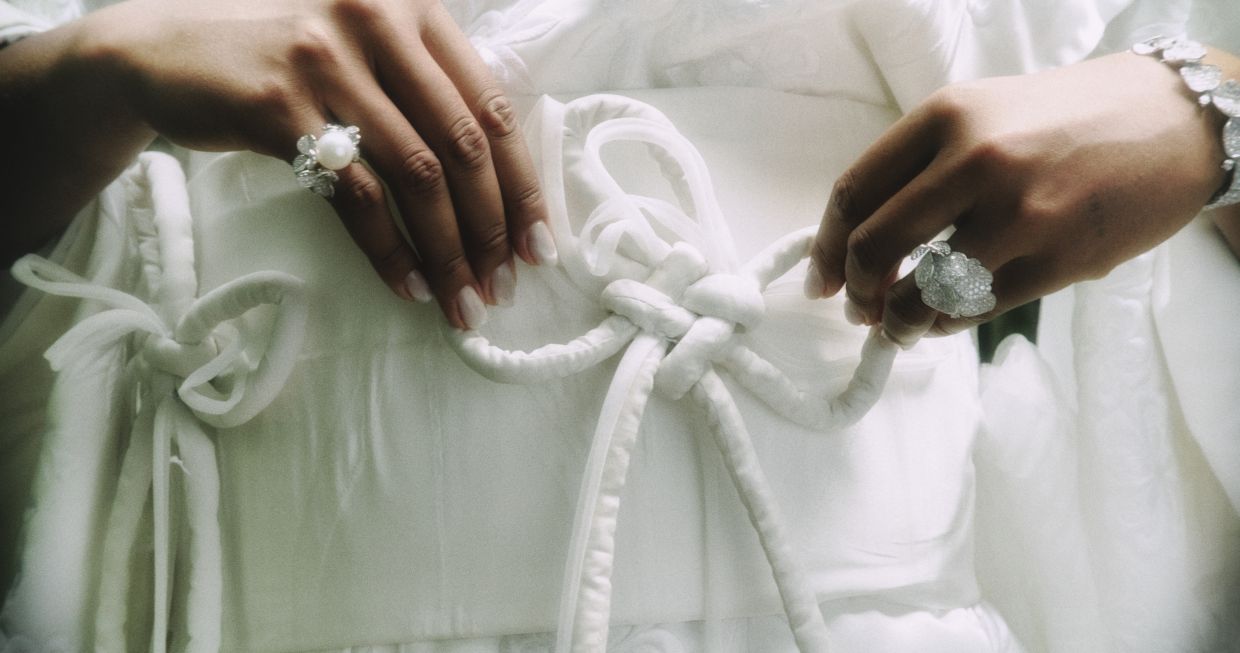
Naomi Osaka has become tennis's most inventive fashion strategist, using her tournament entrances as carefully orchestrated moments that rival the on-court drama itself. At Wimbledon on June 29, the 14th-seeded former world number one appeared in an all-white ensemble by Hana Yagi, a Tokyo-based Japanese designer, that drew inspiration from traditional Japanese ceremonial dress to create what she calls her "Evolving Ceremony" aesthetic. Despite concerns about a foot injury that threatened her participation, Osaka delivered another masterclass in how contemporary athletes can use clothing as a vehicle for cultural expression, sustainability messaging, and strategic brand-building.
The Wimbledon look represents the culmination of an emerging pattern that began at the Australian Open in January, when Osaka unveiled a jellyfish-inspired Robert Wun gown complete with a butterfly hat. That was followed by a Kevin Germanier creation at the French Open—a black corset ballgown skirt constructed from upcycled Nike materials that nodded to the Eiffel Tower. These three consecutive tournaments reveal a deliberate artistic arc that goes far beyond typical athlete endorsement deals. Each entrance tells a story about sustainability, cultural identity, and the deliberate elevation of underrecognised talent.
The Yagi dress itself demonstrates remarkable technical sophistication beneath its elegant exterior. Constructed from seven different textiles salvaged from vintage kimonos, a traditional shiromuku wedding dress, and a deconstructed bridal gown, the garment channels the 12-layer junihitoe worn by Heian period noblewomen from 794 to 1185. Yet this historical reverence is filtered through a distinctly modern lens, with the dress featuring nine detachable segments held together with Velcro, allowing Osaka to transition from ceremonial entrance to competition-ready athlete in under sixty seconds. The accompanying Nike performance dress beneath continues the thematic exploration, incorporating Japanese kirigami patterns with floral appliques and micro-pleated hems.
What distinguishes Osaka's approach from traditional sports fashion is her explicit commitment to sustainability and emerging design talent. Hana Yagi, still in her twenties, founded her company in Tokyo after becoming a finalist in the International Talent Support competition in Italy in 2019. By selecting Yagi instead of an established luxury house, Osaka's styling team—led by Marty Harper—has created a powerful statement about amplifying "new voices on the block." This strategy offers something rare in professional sports: genuine support for independent creators rather than transactional sponsorship arrangements. The dress also features jewellery from Mikimoto, the legendary Japanese pearl house, creating a cohesive narrative of Japanese craftsmanship across every visible detail.
The logistics underlying these entrances reveal the meticulous planning required to execute such concepts at the world's most prestigious tournaments. Stadium visibility and rapid costume removal present competing demands that force designers to think in entirely new ways. With only three minutes to dress Osaka and less than sixty seconds to undress her before play begins, traditional construction methods prove inadequate. Yagi's innovative solution involved engineering the dress to evolve throughout the tournament—the outer segments can be recombined in different configurations as Osaka progresses deeper into competition. The dress also includes an adjustable ten-foot train that can be modified depending on the court location, a necessary precaution because outer courts at Wimbledon sit far enough from the players' lounge that unnecessary dragging could damage the delicate upcycled materials.
This meticulous attention reflects a broader shift in how elite athletes leverage appearance as strategic asset. Serena Williams pioneered this territory, using her competition wear to project personality and cultural identity more openly than anyone else in tennis history. More recently, players like Jannik Sinner, leveraging his role as a Gucci ambassador, have demonstrated that fashion can be integral to an athlete's public presence. Yet Osaka has moved beyond simple endorsement into genuine creative partnership, where the clothes themselves become part of the competitive narrative. By appearing in garments that require specialist engineering and represent months of collaboration, she communicates that her presence matters in ways that extend beyond match results.
For Malaysian and Southeast Asian audiences, Osaka's approach holds particular resonance. Her deliberate celebration of Japanese heritage through contemporary fashion speaks to the region's growing cultural confidence and the increasing recognition that Asian design traditions can be reinterpreted for global stages without dilution or exoticification. The emphasis on upcycling and sustainability also aligns with growing environmental consciousness across Southeast Asia, where fashion waste has become a significant policy concern. Moreover, her elevation of independent designers like Yagi demonstrates how athletes can use their visibility to reshape creative industries, potentially inspiring similar patronage patterns among Malaysian and regional sporting figures.
The commercial implications are equally significant. The Nike dress sold out before Wimbledon even began, indicating that Osaka's fashion choices drive measurable consumer demand. More importantly, she has effectively created a secondary narrative within the tournament itself—one where her entrance becomes an event worth photographing, discussing, and analysing independently of her on-court performance. This bifurcation of attention between the ceremonial entrance and the athletic competition itself has precedent in other sports, but nowhere is it executed with such apparent intentionality and artistic coherence as in Osaka's recent appearances.
There remains a question about whether this elaborate entrance strategy risks overshadowing her actual competitive performance. Yet Osaka herself seems to have resolved this tension by framing the clothes as an extension of her athletic identity rather than a distraction from it. She describes the Yagi creation as "designed around movement," emphasising that function and form are integrated rather than opposed. The dress's rapid transformability ensures that she transitions from ceremonial presence to pure athlete without awkward delay. In this sense, her fashion choices represent not a departure from competitive seriousness but a reconceptualisation of what competitive presence means for contemporary athletes.
Ultimately, Osaka has demonstrated that the tournament walk-on—a moment that lasted perhaps thirty seconds a generation ago—can become a significant vehicle for cultural expression, sustainability advocacy, and independent designer support. Whether she advances through Wimbledon's brackets or exits early, she has already won what might be called the attention championship. Her clothes announced her arrival before her serve, created talking points that will extend far beyond sports coverage, and established a template that other athletes may seek to emulate. In doing so, she has rewritten the unwritten rules of professional tennis fashion, proving that grand entrances can matter just as much as grand slam victories.

