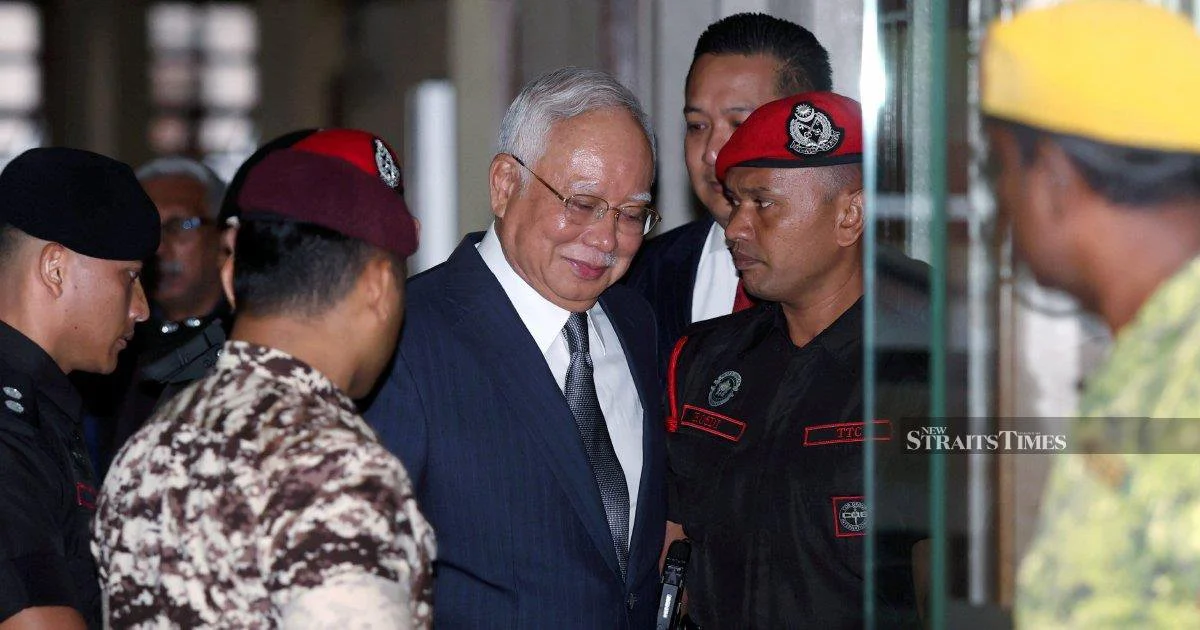
A Malaysian court has determined that former Prime Minister Datuk Seri Najib Razak and fugitive businessman Low Taek Jho operated in close coordination to systematically drain billions of ringgit from 1Malaysia Development Bhd, the state investment vehicle that became synonymous with one of the world's most audacious financial frauds. The judicial finding establishes a direct operational link between Malaysia's former leader and the financier who orchestrated the scheme from international safe havens, casting the 1MDB affair as a deliberate conspiracy rather than an isolated case of individual malfeasance.
The court's conclusion carries immense significance for Malaysia's long struggle to hold accountable the architects of a scandal that depleted the national treasury of approximately USD4.5 billion and exposed fundamental weaknesses in the nation's financial oversight mechanisms. By establishing that Najib and Jho Low functioned as collaborators in a unified enterprise, the judgment reinforces the narrative that the former prime minister exercised decisive control over 1MDB's operations and deliberately authorized diversions of public capital. This finding undermines any lingering suggestions that Najib remained ignorant of improprieties or was manipulated by subordinates without his knowledge.
The relationship between Najib and Jho Low had always formed the emotional core of the 1MDB investigation, yet proving their direct collusion demanded meticulous reconstruction of communication patterns, financial flows, and decision-making authority. Over the course of multiple investigations and trials spanning several years, Malaysian authorities compiled evidence demonstrating how the two men communicated directly, with Jho Low proposing schemes and Najib providing the governmental authorization necessary to execute them. The businessman's ability to operate with such latitude depended entirely on his access to a sitting prime minister willing to subordinate national interests to private enrichment.
The scale of the alleged theft reflected the audacity of the operation and the vulnerability of Malaysia's governance structures during the period from 2009 to 2015. Rather than exploiting obscure regulatory gaps, the perpetrators simply bypassed oversight mechanisms altogether by leveraging Najib's position to authorize irregular transactions that flagrantly violated standard financial procedures. Banks received instructions that circumvented their internal compliance systems, foreign regulators received false documentation, and auditors faced pressure or were kept deliberately compartmentalized from relevant information. The scheme's success depended not on technical sophistication but on institutional capture.
Jho Low's status as a fugitive has complicated the pursuit of justice, as Malaysian authorities have struggled to apprehend him for trial despite international cooperation efforts. The businessman's continued freedom highlights the persistent challenges in extraditing suspects from jurisdictions with opaque legal systems or political sympathies toward the accused. However, his absence from the courtroom has not prevented Malaysian prosecutors from marshaling evidence of his role, allowing the judicial system to proceed with convictions and determinations even in the absence of his physical presence or cooperation.
The implications of the court's finding extend beyond the immediate criminal liability of Najib and Jho Low. The judgment implicitly indicts an entire ecosystem of enablers, including financial institutions, international advisors, and government officials who facilitated the operation by either actively participating or negligently ignoring obvious red flags. Many of these secondary actors have faced consequences ranging from regulatory sanctions to criminal charges, yet the primary perpetrators' case remains the most symbolically significant for Malaysian society's response to institutional corruption at the highest levels.
For Malaysian investors and international observers monitoring governance reform in Southeast Asia, the court's determination reaffirms that senior political figures remain subject to legal accountability for financial misconduct, even after leaving office. The case has become a touchstone for debates about executive oversight, state-owned enterprise management, and the institutional independence of investigating agencies. Unlike many comparable scandals in the region where senior figures escape meaningful consequences, Malaysia's judicial system has demonstrated capacity to pursue prosecutions against former heads of government, signaling institutional resilience despite the political pressures inherent in such cases.
The 1MDB scandal fundamentally reshaped Malaysian politics by contributing to the 2018 electoral defeat of Najib's coalition government after 60 years in power. Voter revulsion at revelations of systematic plunder at the national level created political space for electoral alternatives to emerge, though the machinery of government proved sluggish in translating political change into comprehensive legal accountability. Subsequent trials and convictions have proceeded at a measured pace, testing public patience while the legal system methodically constructs its case against multiple defendants across numerous related charges.
Moving forward, the court's finding that Najib and Jho Low operated in tandem establishes a framework for understanding subsequent prosecutions of other individuals implicated in the theft, as subordinates face charges for their roles as participants in a conspiracy directed from the apex of power. The determination vindicates Malaysian civil society organizations and international commentators who insisted that the theft represented conscious policy choices rather than incidental byproducts of bureaucratic dysfunction, validating the broader reform agenda that emerged in response to the scandal's exposure.