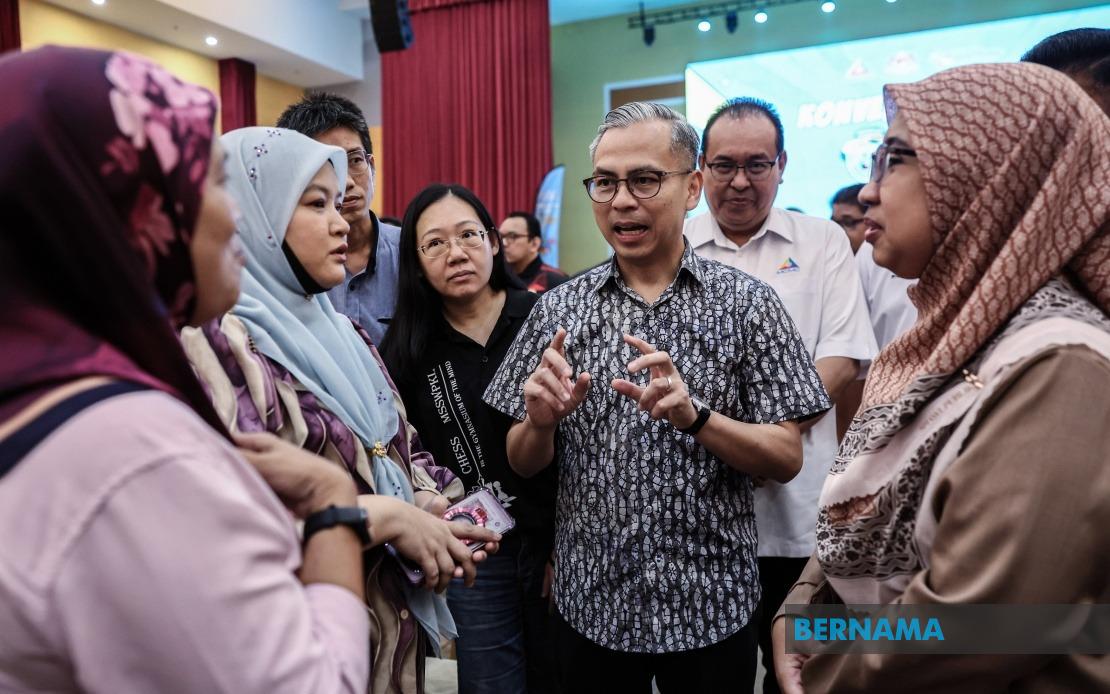
The Malaysian government has moved to clarify the purpose and administration of MyKhas, emphasising that the fund operates as a mechanism to serve constituent needs rather than as a personal benefit for elected representatives. Communications Minister Datuk Seri Fahmi Fadzil made the pronouncement during a press conference in Kuala Lumpur on August 8, underscoring Prime Minister Datuk Seri Anwar Ibrahim's position that all government allocations exist primarily to improve the lives of ordinary citizens.
Fahmi, who serves as the spokesperson for the MADANI Government, explained that MyKhas functions under the Prime Minister's direct purview and has been formally enshrined within Malaysia Plan and Budget documentation as a special provision. This administrative structure means that decisions regarding fund disbursement rest with the Prime Minister's office rather than with individual MPs, regardless of their party affiliation or electoral standing. The distinction proves significant in the context of Malaysia's political landscape, where concerns about equitable resource distribution across constituencies remain a persistent concern among voters and civil society organisations.
In articulating the government's stance, Fahmi stressed that the mechanism was deliberately designed with constituent welfare as its sole objective. He reinforced this point by noting that even ministers and MPs themselves cannot access MyKhas for personal purposes, illustrating the fund's strict constituency-focused mandate. This assertion reflects broader efforts by the current administration to reshape public perception around how government resources flow to local communities and to establish clearer boundaries between personal political advantage and public service obligations.
The clarification carries particular resonance given ongoing debates across Southeast Asia regarding the distinction between government development funds and political patronage. In Malaysia's federal system, where parliamentary constituencies serve as the primary unit for resource allocation, such distinctions become increasingly important for maintaining public trust in democratic institutions. The government's emphasis on the Prime Minister's central role in MyKhas distribution suggests a deliberate move toward greater accountability and standardised procedures rather than allowing individual MPs discretionary authority over significant public resources.
Anwar Ibrahim had previously articulated this philosophy, noting that government allocations directed toward parliamentary constituencies represent a collective responsibility rather than an exclusive right belonging to any single elected official. The Prime Minister indicated that funds can address diverse constituency needs including educational infrastructure, religious facilities, mosques, and essential utilities such as drainage systems. This expansive definition of eligible expenses reflects recognition that community development needs vary widely depending on local demographics, geography, and existing infrastructure conditions.
For opposition-controlled constituencies, the government has established a formal mechanism enabling resource access through the Implementation Coordination Unit under the Prime Minister's Department. This procedural approach demonstrates an apparent commitment to ensuring that resource allocation transcends partisan political boundaries, though the practical effectiveness of such arrangements remains subject to scrutiny. The existence of a formal application process suggests an intention toward transparency, yet observers will likely monitor whether opposition constituencies receive equitable treatment compared to government-aligned areas.
The institutional separation between MyKhas administration and individual MP control represents a significant structural feature distinguishing it from other government assistance programmes. By placing authority within the Prime Minister's office rather than delegating it to parliamentary representatives, the arrangement theoretically reduces opportunities for resources to be distributed according to personal political calculations or factional interests. This centralisation of authority, while potentially enhancing consistency and preventing abuse, may simultaneously complicate responsiveness to rapidly emerging local needs that MPs are ordinarily well-positioned to identify and advocate for.
Fahmi's explicit statement that he personally cannot access MyKhas carries symbolic weight in establishing boundaries between government service and individual benefit. Such declarations matter particularly in institutional contexts where clear norms around resource use remain actively contested. By publicly affirming that holding ministerial office does not confer privileged access to public funds, senior government figures attempt to establish new standards for political conduct and public resource management. Whether such statements translate into sustained institutional practice ultimately depends on consistent implementation across multiple administrations and electoral cycles.
The emphasis on MyKhas as a constituent-serving mechanism reflects broader global trends toward depersonalising government resource distribution and embedding it within rules-based systems. Malaysia's experience with this approach will likely generate lessons relevant to other Southeast Asian democracies grappling with similar governance challenges. The comparative success or failure of MyKhas in achieving its stated objectives of equitable constituency development while maintaining political legitimacy could influence how neighbouring countries structure their own government assistance programmes and allocation mechanisms.
The clarification also acknowledges the tension inherent in Malaysia's electoral system, where individual MPs serve as important intermediaries between constituents and government resources, yet centralising allocation decisions limits their discretionary authority. This inherent tension between decentralised representation and centralised resource control requires careful institutional management to prevent either excessive concentration of power or fragmentation of assistance delivery. How effectively the current arrangement balances these competing pressures will significantly influence both the practical outcomes for constituencies and the broader political acceptance of government resource allocation processes among Malaysian voters.

