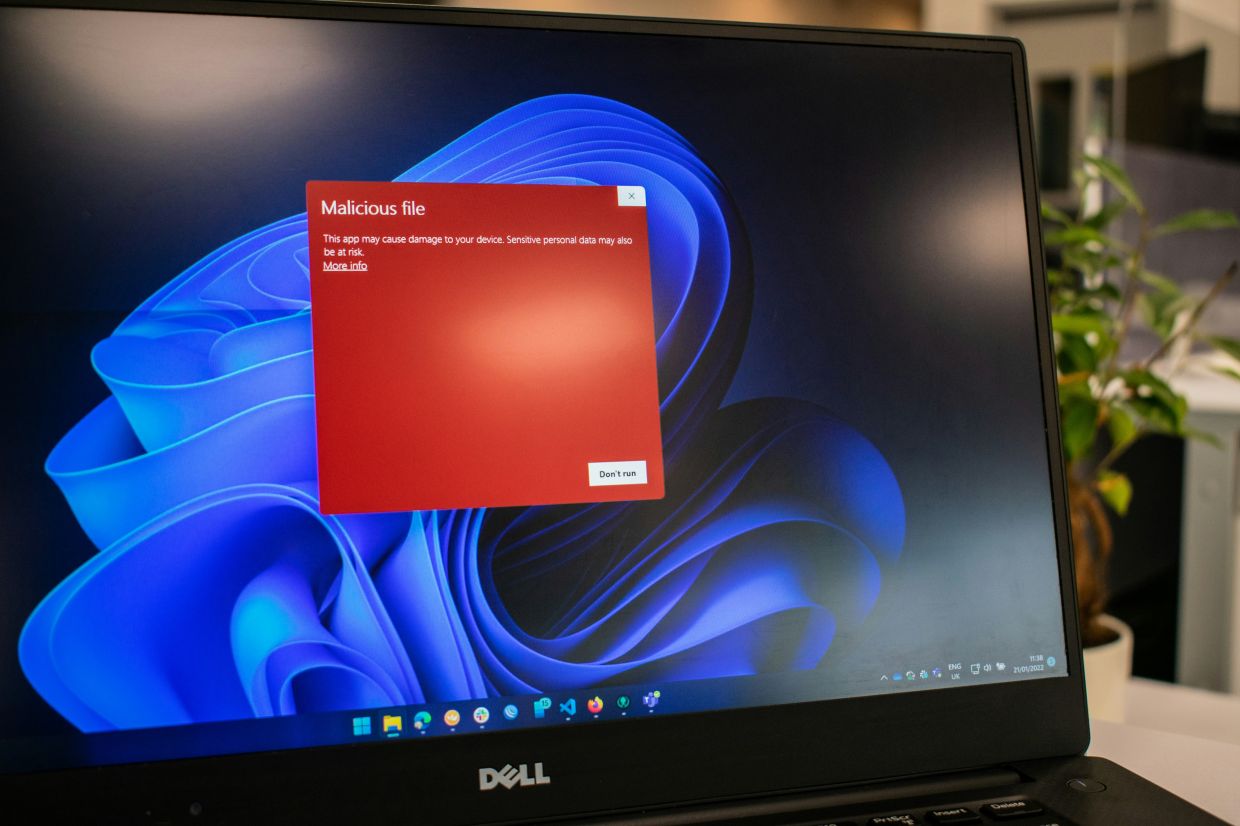
Malaysia's cybersecurity certification authority MyCert has sounded the alarm over a sophisticated malware campaign actively circulating through WhatsApp Web and Desktop platforms, with attackers specifically targeting Windows-based computers through carefully orchestrated social engineering schemes. The threat leverages psychological manipulation to trick users into opening seemingly innocuous files that, once executed, grant cybercriminals complete remote control over compromised devices.
The attack methodology relies on a deception strategy that exploits users' trust in common business communications. Perpetrators dispatch WhatsApp messages containing file attachments disguised as routine financial and legal paperwork, employing file names designed to appear legitimate and urgently actionable. Examples circulating in the wild include "Acknowledgment of Debt.vbs", "Sila semak bil anda.vbs" (which translates to "Please check your bill"), "December statement of account.vbs", and "Reconciliation.vbs". The naming convention deliberately invokes documents that recipients would naturally expect to receive, lowering their guard against closer inspection.
The critical deception lies in the file format itself. Despite appearing to be standard PDF documents based on their names, these are actually Visual Basic Script files bearing the .vbs extension. This misdirection proves catastrophic when users open what they believe to be innocuous statements or notices. The moment the file launches, it automatically executes embedded instructions without further user intervention, initiating a chain reaction that deploys malicious software onto the victim's system. The seamless execution occurs silently in the background, often leaving users unaware that their computer has been compromised.
Once activated, the malware installs a Remote Access Trojan, commonly abbreviated as RAT, onto the infected device. This particular class of malicious software functions as a digital skeleton key, granting attackers unfettered ability to access and manipulate the compromised computer remotely. The persistence of RAT infections presents an especially insidious threat, as the malware maintains its foothold and connection even after the device undergoes a complete restart or reboot. This ensures that cybercriminals retain ongoing leverage over victims' systems for extended periods, potentially facilitating multiple waves of exploitation.
Among the most dangerous capabilities this malware possesses is its ability to suppress and disable standard security warnings and prompts that typically alert users to suspicious activity. By neutralizing these protective mechanisms, the RAT operates covertly, conducting its nefarious activities without triggering alarms or drawing attention. This stealth functionality proves particularly effective at evading conventional antivirus software that relies on recognizing known threat signatures or monitoring system behaviour changes. Users of infected computers often remain completely unaware that their devices are being monitored and controlled by external actors.
The information theft potential of such infections extends to highly sensitive personal and financial data. Once a device falls under an attacker's control, any information displayed on screen or typed into the keyboard becomes vulnerable to capture. This includes passwords for email and social media accounts, online banking credentials, personal identification numbers for financial transactions, and one-time passwords generated by two-factor authentication systems. The convergence of multiple authentication factors in a single compromised environment creates a perfect storm for account takeovers and financial fraud.
MyCert's response emphasizes prevention as the paramount strategy, advising all users to exercise extreme caution regarding unexpected file attachments in messaging applications. The authority explicitly recommends that recipients avoid opening or executing any suspicious files received through WhatsApp or similar platforms, and crucially, refrain from sharing these files with others, which could extend the attack's reach. Additionally, replying to messages from the attacker should be avoided, as such responses effectively confirm to the perpetrator that the phone number is active and monitored by a human, making that account an even more valuable target for future exploitation attempts.
For users who have already compromised their vigilance and opened or executed these malicious files, MyCert advises treating their devices as thoroughly compromised and taking immediate protective action. The first critical step involves physically disconnecting the infected device from internet connectivity to sever the attacker's remote access channel. In workplace environments, affected individuals must immediately notify their organization's IT security team, as corporate devices may have access to sensitive business systems and data that could enable lateral attacks across the entire network infrastructure.
The password recovery process requires particular attention and careful execution. All credentials associated with accounts accessed on the compromised device must be changed entirely, using a separate device that the user is confident has not been infected. This precaution prevents attackers from leveraging password recovery processes or stored browser credentials to maintain access to online accounts. Any password, PIN, security question answers, or other sensitive information entered on the infected system should be presumed exposed and therefore subject to immediate reset and monitoring.
MyCert's guidance recognizes that conventional antivirus tools prove insufficient against RAT infections of this sophistication. Users confronting this threat are advised to seek professional cybersecurity assistance rather than relying solely on consumer-grade security software. Specialized malware removal services possess the technical expertise and forensic capabilities necessary to identify and completely eradicate deeply embedded remote access trojans that automated scanners often miss or fail to fully remove.
Users who have fallen victim to this attack scheme are encouraged to report their experience to MyCert through the Cyber999 email address at [email protected], providing detailed documentation including screenshots of the malicious messages, exact timestamps of receipt, and the sender's phone number. This information feeds into MyCert's threat intelligence operations, helping the organization track the campaign's progression and warn the broader Malaysian public about emerging variants. As cybercriminals continuously evolve their deception tactics and targeting approaches, community reporting and awareness represent essential defensive tools in protecting Malaysia's digital ecosystem.

