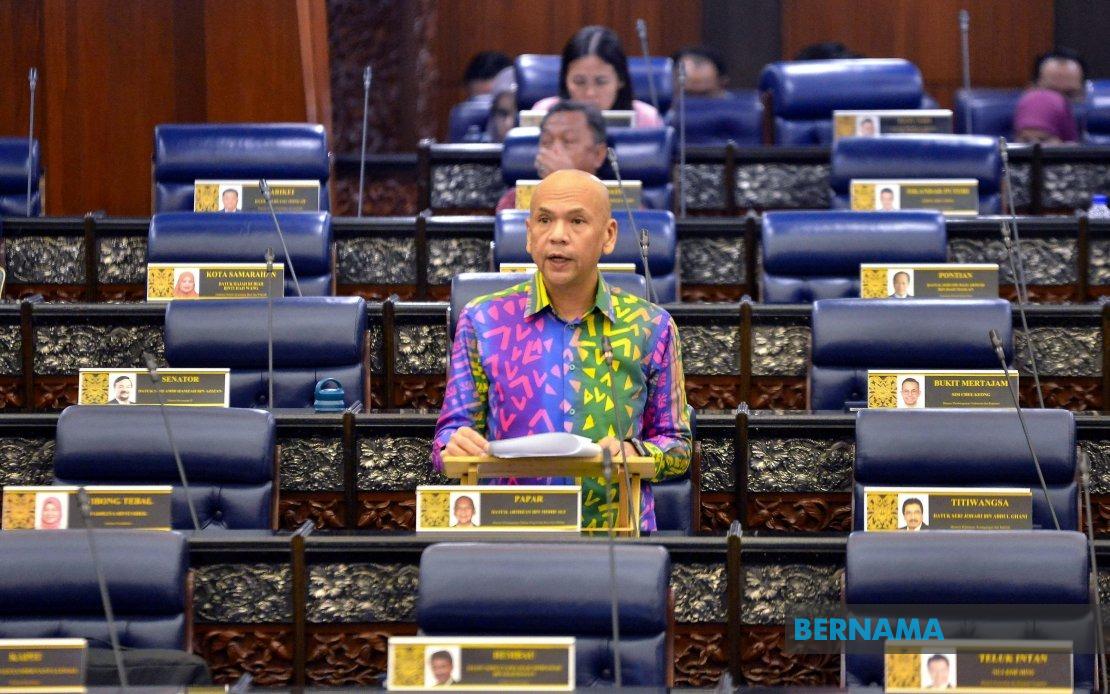
Malaysia's competition watchdog is set to wield significantly stronger weapons in its arsenal against cartel behaviour, following government backing for sweeping legislative amendments that introduce financial incentives for those who expose anti-competitive conduct. The Competition (Amendment) Bill 2026, which passed its policy stage in parliament this week, represents a watershed moment in the country's approach to tackling price-fixing schemes and market-sharing arrangements that harm consumers and legitimate businesses alike.
Domestic Trade and Cost of Living Minister Datuk Armizan Mohd Ali unveiled the centrepiece of the reforms during parliamentary debate: a new whistleblower rewards programme administered by the Malaysia Competition Commission. Under the proposed Section 64B framework, individuals or organisations providing information that leads to the detection of cartel arrangements will receive direct financial compensation. This departure from existing practice acknowledges that monetary incentives can prove more effective than legal protections alone in encouraging insiders to come forward with evidence of anti-competitive conduct.
Equally transformative is the introduction of a Settlement Offer mechanism through Section 38A, which creates a powerful inducement for enterprises caught engaging in prohibited conduct to admit their wrongdoing at an early juncture. Companies that acknowledge liability before the conclusion of MyCC's investigation can secure penalty reductions of up to 40 per cent—a substantial discount that reflects the administrative and financial savings accrued when protracted enforcement procedures are shortened. The minister emphasised that this approach optimises the commission's resources, a critical concern for any regulatory body managing limited investigative capacity whilst confronting sophisticated corporate misconduct.
The legislative gap that prompted these reforms is noteworthy for Malaysian competition law. The existing Whistleblower Protection Act 2010, whilst comprehensive in shielding individuals who expose criminal offences or disciplinary breaches within public bodies, does not extend to civil competition matters. Since cartel activity falls within the civil regulatory sphere rather than the criminal domain, whistleblowers in competition cases have operated without statutory protection specifically tailored to their circumstances. The new Sections 64A and 64B address this anomaly directly, establishing a dedicated protective framework applicable exclusively to civil competition cases and ensuring that individuals providing information about cartels cannot face retaliation or discrimination.
Beyond whistleblower protections, the amendments fundamentally expand MyCC's investigatory remit by redefining "enterprise" to encompass all economic activities rather than merely commercial transactions. This semantic shift carries profound practical consequences. It grants the commission explicit legal authority to investigate decisions made by industry associations that function as vehicles for anti-competitive coordination. Trade associations frequently serve as forums where competing firms interact, and whilst many operate legitimately, some have historically been used to facilitate price-fixing, territory allocation, or production quotas among members. The widened definition ensures MyCC can pursue cases involving collusion orchestrated through these collective bodies without facing arguments that associations fall outside the Competition Act's scope.
The timing of these reforms reflects growing recognition among Malaysian policymakers that cartels impose substantial hidden costs on the economy. Consumer prices for everything from cement to pharmaceuticals can be artificially elevated when competitors collude, and businesses that refuse to participate in cartels may be excluded from markets. Southeast Asia has witnessed several high-profile cartel prosecutions in recent years, from shipping cartels affecting regional trade to cartels affecting construction materials. Malaysia's enhancement of its competition enforcement toolkit positions the country as increasingly serious about rooting out such arrangements, signalling to both domestic and international markets that anti-competitive conduct carries genuine consequences.
The settlement mechanism deserves particular scrutiny for its strategic implications. By offering substantial penalty reductions in exchange for early admission, MyCC creates a prisoner's dilemma dynamic that incentivises cartel members to defect and confess before their collaborators do. In practice, this can rapidly destabilise cartels, as participants recognise that remaining silent whilst others receive settlement discounts exposes them to maximum penalties. The United States Department of Justice and European Commission have deployed similar leniency programmes with considerable success, making this borrowing of international best practice sensible for Malaysian authorities.
Implementation challenges remain, however. MyCC will require adequate resources to manage whistleblower programmes, including secure channels for receiving information, protocols for verifying claims, and mechanisms for distributing rewards fairly. The commission must also develop clear guidance on settlement negotiations, ensuring that companies understand the conditions under which they qualify for penalty reductions and that the process does not devolve into opaque deal-making. Transparency in how settlement offers are evaluated and approved will be essential for maintaining public confidence in the system.
For Malaysian businesses operating in industries historically prone to cartel conduct—such as construction, road transport, and manufacturing—these amendments signal that compliance with competition law is increasingly non-negotiable. Companies should audit their practices for potential cartel exposure and ensure that industry association participation does not cross into coordination on prices or markets. Simultaneously, employees and business partners with knowledge of cartel arrangements now possess a legal pathway to report such conduct confidentially whilst potentially receiving financial rewards, fundamentally altering the risk calculus for those contemplating or maintaining collusive arrangements.
The Competition (Amendment) Bill 2026 will proceed to committee stage and second reading in the coming weeks, where further refinements may occur. Nonetheless, the core framework appears stable, with cross-party parliamentary support evident from the debate. Once enacted, the legislation will position the Malaysia Competition Commission as a more formidable enforcer capable of dismantling cartels more efficiently and with stronger incentives encouraging whistleblower participation. For consumers and law-abiding businesses, that prospect represents a meaningful step towards more competitive, transparent markets across the region.

