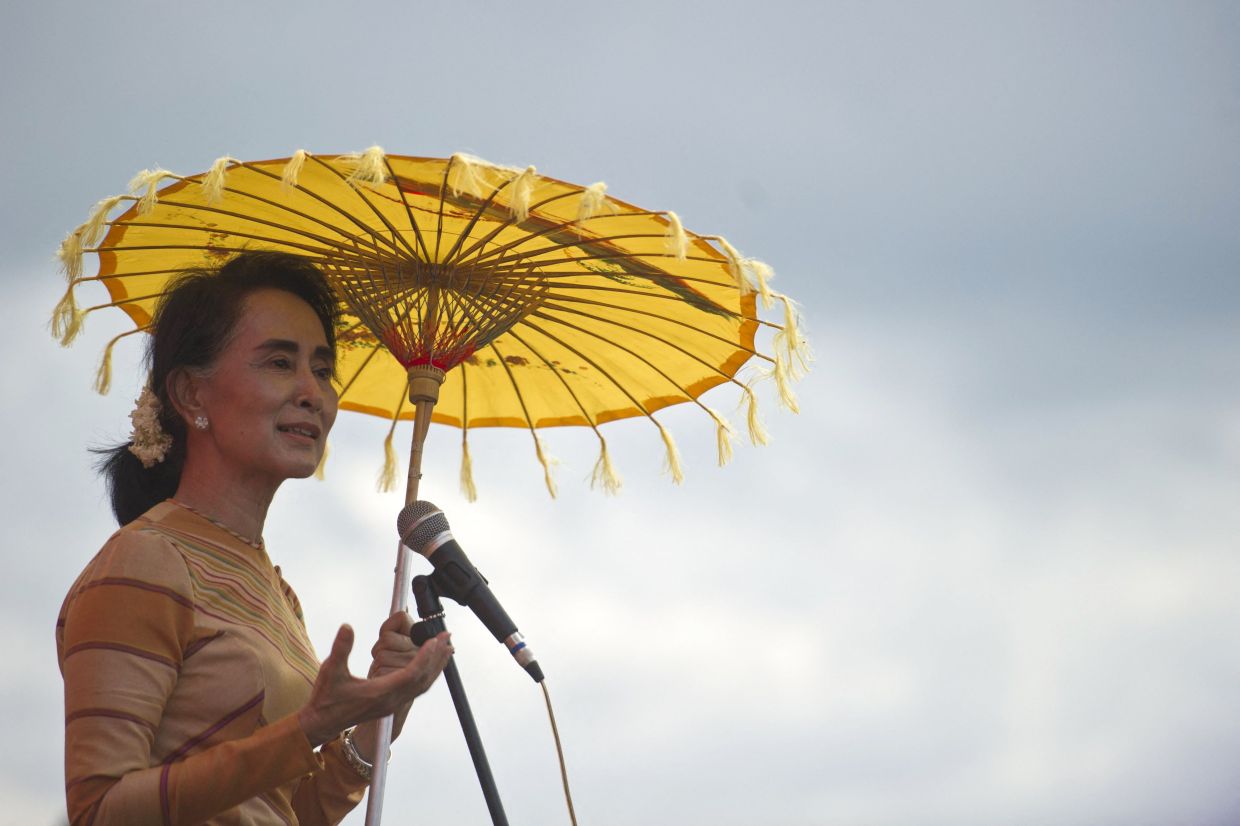
The Myanmar military junta's latest rebuff of Asean's request to visit imprisoned former leader Aung San Suu Kyi, now 81, underscores a fundamental shift in power dynamics within Southeast Asia's most influential regional organisation. When Manila's Foreign Secretary Maria Theresa Lazaro sought an audience with Suu Kyi during her visit to Naypyitaw at the end of June, Myanmar's regime spokesperson Khaing Khaing Soe dismissed the request outright, declaring that Suu Kyi's status as a convicted prisoner precluded any such meetings with international representatives. This categorical refusal marks the second failed attempt by the Asean chair to secure access to Myanmar's most prominent political detainee, with Lazaro having previously encountered the same barrier during a January visit to the capital.
The junta's consistent stonewalling of Asean represents far more than a simple procedural obstruction. According to Hunter Marston of the Lowy Institute's South-East Asia programme, Naypyitaw's unyielding stance reflects a calculated assessment that Myanmar's strategic importance to the bloc outweighs any leverage Asean might wield. "Asean needs Myanmar more than Min Aung Hlaing deems Myanmar needs Asean," Marston observed, articulating a power imbalance that has steadily widened since the February 2021 coup. The Myanmar regime's leader appears convinced that Asean lacks the institutional teeth or collective resolve to enforce its will, a judgement that gains credence from the bloc's broader track record of failing to enforce its own consensus mechanisms on member states.
What distinguishes Myanmar's approach to diplomatic access is its selective permissiveness toward certain nations whilst maintaining an impenetrable wall against multilateral scrutiny. The junta has granted visits from former Thai Foreign Minister Don Pramudwinai and Chinese Foreign Minister Wang Yi—Pramudwinai meeting Suu Kyi in July 2023 and Wang in April 2024—a transparency that starkly contrasts with its categorical denial to Asean representatives. This asymmetry is deliberate. Marston notes that the pattern of permitted visitors reveals the regime's true hierarchy of international relationships, with Bangkok and Beijing occupying positions of trust and influence that Asean as a collective institution has failed to achieve. The message is unmistakable: bilateral relationships with sympathetic powers matter far more than multilateral appeasement.
The regime's refusal to grant access to Suu Kyi functions as a critical instrument of political control and diplomatic leverage. Analysts characterise the restricted access as a calculated retention of bargaining power, a card the junta continues to hold in negotiations over Myanmar's political trajectory. Amara Thiha, a non-resident fellow at the Washington-based Stimson Centre, describes this posture as "largely a diplomatic card the regime continues to hold," suggesting that Suu Kyi's isolation itself constitutes a form of negotiating capital. By determining precisely who may visit the deposed leader and under what circumstances, the junta simultaneously asserts dominion over Myanmar's political space and signals to external actors that it alone determines the terms of Myanmar's engagement with the international community. This calculated isolation serves multiple strategic purposes: maintaining domestic control, demonstrating regime strength to potential challengers, and extracting concessions from those desperate to verify Suu Kyi's condition.
Underlying the junta's defiance lies a fundamental rejection of Asean's right to supervisory authority over Myanmar's internal affairs. Historian Phyo Win Latt argues that the regime's stonewalling reflects a deeper ideological position: the junta "rejects access to Aung San Suu Kyi precisely because such access would imply that Asean has some legitimate supervisory role over Myanmar's internal political settlement." The distinction is crucial. Naypyitaw desires Asean's recognition of the regime's legitimacy but adamantly refuses to accept the accompanying scrutiny and conditionality that Asean has repeatedly attached to that recognition. This represents a direct challenge to the foundational principles of the bloc's Non-Interference doctrine, which the junta interprets not as a mutual protection but as a shield against external oversight of its governance choices.
The standoff crystallises the failure of Asean's Five-Point Consensus, the peace framework adopted immediately after the 2021 coup. The plan explicitly called for dialogue with all relevant stakeholders, humanitarian access, and a cessation of violence—provisions that logically encompassed meeting with Suu Kyi, then the country's most significant political voice outside the military hierarchy. Min Aung Hlaing, now serving as president after relinquishing his military chief position in April 2024, has demonstrated consistent indifference to these stipulations. The regime's violence has continued unabated, with independent conflict monitors recording at least 100,000 deaths since the coup, whilst humanitarian access remains severely restricted. By maintaining Suu Kyi's incommunicado status—and reportedly placing her under house arrest since April—the junta simultaneously violates the spirit of Asean's consensus framework and demonstrates its contempt for the bloc's enforcement capacity.
Suu Kyi herself has become a symbol of this broader dysfunction. Serving a remaining sentence of approximately 18 years following multiple rounds of reduced jail time from an original 33-year sentence, she was convicted on charges widely dismissed by international observers as politically motivated fabrications, including alleged violations of Myanmar's official secrets act and corruption. The lack of independent verification of her condition since April—when the regime reportedly transitioned her to house arrest—has deepened international concerns about her physical wellbeing and the regime's transparency. Her son, Kim Aris, 48, has expressed profound frustration that Asean's request was summarily rejected, noting that the junta's isolation of his mother for five consecutive years "raises serious questions about what they are trying to hide." The regime's refusal to grant him visiting or communication rights with his mother compounds the sense of political weaponisation surrounding her detention.
The junta's intransigence also reflects its assessment of asymmetric vulnerability. Min Aung Hlaing appears to believe that Asean's own internal contradictions—particularly ongoing disputes among member states such as the Thailand-Cambodia territorial disagreement—undermine the bloc's moral authority to impose standards on Myanmar. According to Thiha, the junta views Asean's invocation of the Five-Point Consensus as selectively applied and therefore unfair, asking rhetorically why Myanmar should face consequences for internal political arrangements when other member states' similar disputes remain unresolved. This argumentum tu quoque deflects Asean pressure by highlighting the inconsistent application of the bloc's principles, a rhetorical manoeuvre that carries particular force given Asean's documented reluctance to criticise powerful member states or intervene in their internal matters.
For Malaysian observers and policymakers, Myanmar's behaviour toward Asean carries troubling implications for the bloc's future cohesion and effectiveness. If a military regime can unilaterally disregard a consensus decision adopted by all ten member states, and if the bloc lacks mechanisms to enforce compliance or exact meaningful costs, then Asean's institutional authority becomes essentially advisory rather than binding. Malaysia, as a moderate voice within the grouping and a nation with significant Muslim populations watching developments in Myanmar with deep concern, faces a strategic dilemma: whether to accept the bloc's marginalisation on Myanmar or to advocate for strengthened enforcement mechanisms that could fundamentally alter Asean's traditional consensus-based, non-interventionist approach. The stakes extend beyond Myanmar's borders; the precedent being set will determine whether Asean remains a consequential regional arbiter or devolves into a consultative club without teeth.
The exclusion of Min Aung Hlaing from Asean summits since the coup, maintained now for over five years, represents the bloc's primary enforcement tool—a measure singularly inadequate to the scale of Myanmar's humanitarian catastrophe or the regime's systematic rejection of regional consensus. Whether this isolation strategy will eventually coerce compliance or merely entrench the regime's conviction that it can dismiss Asean with impunity remains an open question. What is certain is that each refusal to grant access to Suu Kyi represents another demonstration of the junta's contempt for regional norms, another signal that Myanmar's military leadership believes it can pursue its chosen course regardless of Asean's preferences or pronouncements.

