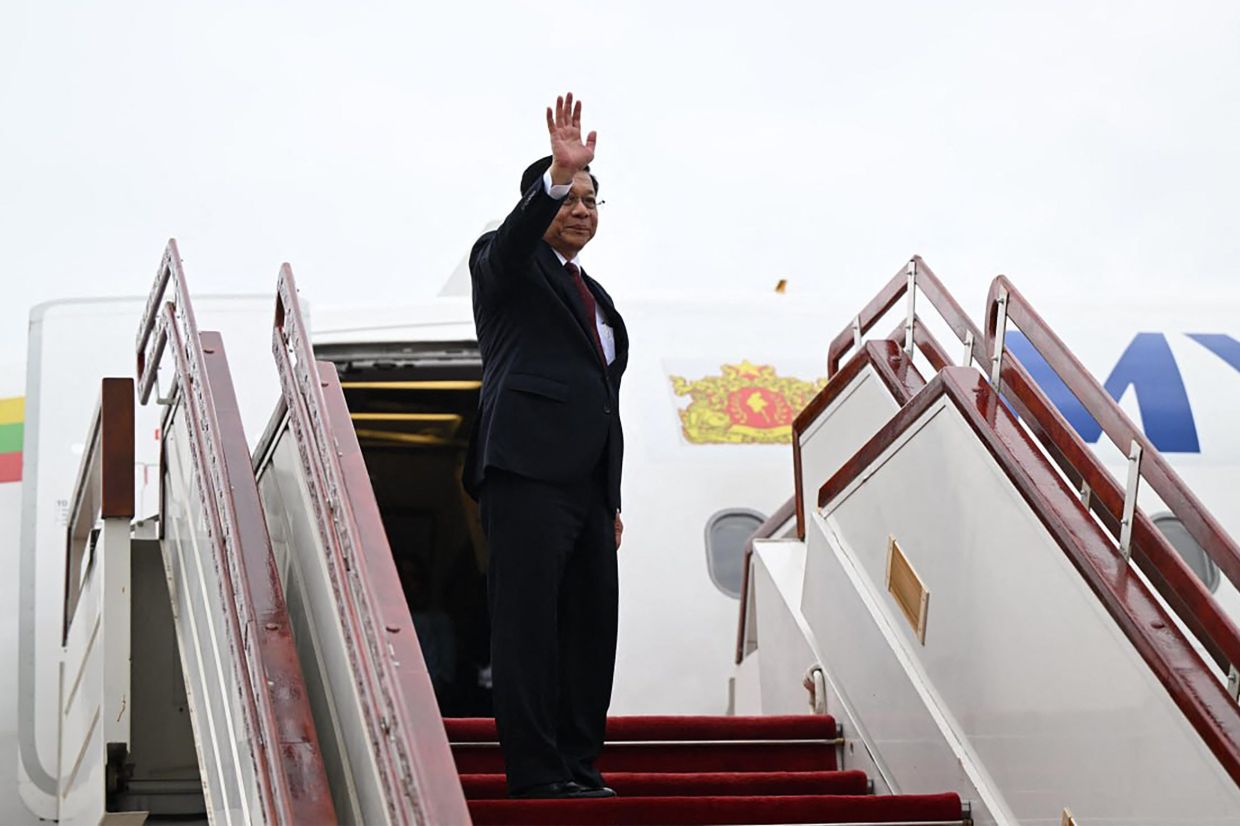
Myanmar's military leader Min Aung Hlaing departed for Russia on Monday for high-level discussions with President Vladimir Putin, representing the first time the ex-junta chief has visited Moscow since transitioning to a civilian presidential role following the 2021 coup. The visit, confirmed by Myanmar's government through official channels, signals deepening strategic engagement between Naypyidaw and Moscow at a critical juncture for both nations.
Russia has emerged as one of Myanmar's most steadfast diplomatic allies since the military seized power in February 2021, toppling the democratically elected government led by Aung San Suu Kyi. At a time when Western nations condemned the coup and imposed diplomatic and economic sanctions, Moscow declined to censure the military takeover and maintained robust engagement with Myanmar's new leadership. This positioning has proven invaluable for the Myanmar regime as it navigates international pariah status and faces mounting pressure from democracy advocates globally.
The 2021 coup unleashed widespread civil unrest and armed conflict that has devastated Myanmar's population. Estimates suggest the violence has claimed over 100,000 lives, with civilians bearing the brunt of indiscriminate military operations. Multiple human rights organizations have documented allegations of war crimes, including attacks on residential areas and the targeting of non-combatants. The protracted instability has created one of Southeast Asia's most serious humanitarian crises, driving mass displacement and economic collapse.
Min Aung Hlaing secured his current presidential position through elections held in April that Western governments and international observers dismissed as fundamentally illegitimate and divorced from democratic norms. The military-controlled poll offered no genuine electoral competition and allowed the junta to consolidate power through procedural legitimacy while maintaining authoritarian control. This electoral charade exposed the Myanmar regime's strategy of adopting institutional trappings of democracy while preserving military supremacy.
The presidential statement framed the Moscow visit as an opportunity to strengthen Myanmar-Russia relations across multiple dimensions. Officials emphasized the longstanding historical ties between the two countries while highlighting intentions to deepen strategic partnerships, particularly in security cooperation and economic development. Such framing reflects Myanmar's broader rehabilitation strategy, wherein military leaders attempt to normalize their position through sustained engagement with friendly powers.
Military cooperation between Myanmar and Russia constitutes a particularly sensitive dimension of their relationship. Myanmar's armed forces rely substantially on Russian-made military equipment, including combat aircraft deployed against various insurgent and ethnic armed organizations throughout the country. Credible reports indicate these Russian-supplied jets have been used in operations targeting civilian populations, supporting allegations that Myanmar's military has committed systematic war crimes. International investigators and conflict monitors have documented patterns suggesting deliberate strikes against non-military targets.
In February, Myanmar and Russia finalized a comprehensive five-year military cooperation agreement that promises expanded defence collaboration, though authorities have disclosed minimal substantive details about the pact's specific provisions. The secretive nature of the arrangement underscores the sensitive security dimensions involved and suggests possible provisions concerning advanced weaponry, training, intelligence sharing, or joint strategic planning. Such military deepening would further entrench Myanmar's dependence on Russian support while complicating potential international accountability mechanisms.
Min Aung Hlaing travels to Moscow accompanied by senior Myanmar officials, reflecting the delegation's high-profile status. During his stay, he will engage with Russia's Prime Minister, meet with the Speaker of the State Duma, Russia's lower parliamentary chamber, and participate in a Myanmar-Russia economic forum designed to explore bilateral commercial opportunities. These varied engagements suggest a comprehensive bilateral agenda extending well beyond security matters to encompass trade, investment, and institutional exchange.
Since assuming the presidency in April, Min Aung Hlaing has undertaken multiple international visits aimed at rehabilitating Myanmar's global standing despite sustained internal repression. Journeys to China, India, and Thailand demonstrate systematic efforts to engage neighbouring powers and regional economic actors. These diplomatic missions reflect determination to counter Western isolation and construct an alternative coalition of supportive states, positioning Myanmar within Asia-focused geopolitical networks that offer diplomatic recognition and economic lifelines.
For Southeast Asia and the broader Indo-Pacific region, Myanmar's tightening alignment with Russia carries significant implications. The deepening security partnership between Naypyidaw and Moscow represents a strategic realignment that complicates regional stability calculations and Western policy objectives in the area. China, which also maintains close ties with Myanmar's military regime, watches these developments carefully as they affect regional power dynamics and the broader competition for influence among major powers in Southeast Asia.
The visit also carries consequences for Myanmar's domestic situation and international accountability. As military leaders pursue diplomatic normalization with sympathetic powers like Russia, they simultaneously insulate themselves from international legal pressure regarding alleged war crimes and crimes against humanity. The strategic partnerships Min Aung Hlaing cultivates create protective networks that discourage countries from supporting interventionist measures or referrals to international criminal institutions, effectively enabling continued impunity for documented abuses.

