Myanmar's tourism sector is showing tentative signs of recovery as the country's military-backed administration positions travel and hospitality as a cornerstone of post-election economic reconstruction. The government has set an ambitious target of welcoming 1.8 million foreign visitors during the year, nearly double the 973,263 arrivals recorded in 2025, with particular focus on revitalizing an industry severely weakened by international isolation following the 2021 coup that sparked ongoing civil conflict. This tourism initiative represents a deliberate attempt to signal stability and normalcy to the international business community, even as significant security challenges persist across much of the country.
The cornerstone of Myanmar's tourism strategy centres on streamlined visa procedures designed to lower barriers for travellers from neighbouring nations. Officials have expanded visa-on-arrival programmes for visitors from China, India, Japan and South Korea, whilst citizens from Russia and most Southeast Asian nations already enjoy visa-free entry. Maung Maung Kyaw, permanent secretary at the Ministry of Hotels, Tourism and Culture, emphasised that China and Thailand represent the primary targets for growth, with these regional markets positioned as critical drivers for achieving annual targets. Government statements suggest that additional relaxations to immigration requirements will be calibrated based on demand patterns from specific countries and evolving security circumstances.
Data through May reveals modest momentum, with 448,205 arrivals representing approximately five per cent growth compared to the equivalent period last year. However, sustaining this pace would fall short of the government's ambitious 1.8 million goal, requiring accelerated arrivals during the second half of the year. The gap between current performance and stated objectives highlights the magnitude of the challenge facing Myanmar's recovery efforts. Even achieving the annual target would leave visitor numbers substantially below pre-coup levels, when Myanmar welcomed approximately 4.7 million international tourists in 2015 following its initial opening to international engagement.
The composition of visitor flows reveals significant geographic clustering. Chinese travellers remain the dominant source of international arrivals by air, with numbers rising twelve per cent during the first five months of 2024, followed by Thai and South Korean visitors. Thai arrivals increased seven per cent over the same period. This pattern underscores the government's strategic calculus in prioritising regional engagement and relations normalisation, particularly with China and Thailand, both economically significant neighbours with substantial populations of potential travellers. The concentration of visitor sources reflects both geographic proximity and cultural familiarity, as well as the practical constraints imposed by limited international flight connections serving Myanmar's primary gateway cities.
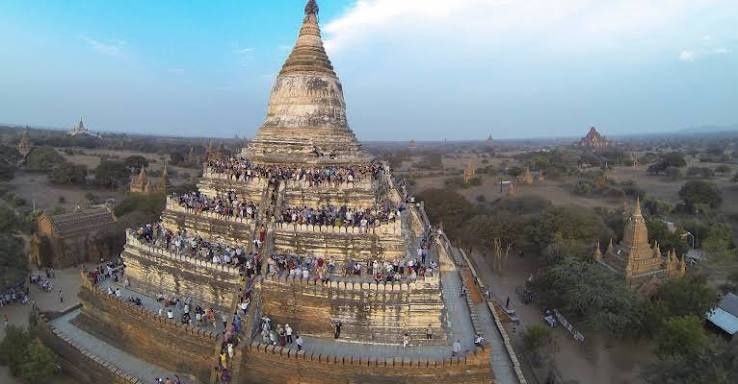
Myanmar's appeal rests primarily upon its cultural and spiritual heritage assets, which remain largely intact despite years of conflict and economic deterioration. Yangon, Mandalay, Bagan, Inle Lake and the Golden Rock Pagoda continue to anchor the country's tourism offerings, drawing visitors interested in Buddhist pilgrimage experiences, ancient temple complexes and relatively unspoilt landscapes. These sites possess substantial competitive advantages in Southeast Asia's regional tourism market, yet their development has stalled significantly since the coup. Aung Aye Han, director general of the Directorate of Hotels and Tourism, characterised the government's approach as emphasising trust-building through transparent engagement with both foreign visitors and international tourism stakeholders.
The country's reopening to regional tourism mirrors broader diplomatic initiatives undertaken by the military administration since President Min Aung Hlaing's inauguration in April. Official state visits to China and India, coupled with intensive efforts to normalise relations with ASEAN neighbours, demonstrate a comprehensive strategy linking tourism recovery to wider geopolitical realignment. Thailand, as both a geographical neighbour and Myanmar's closest economic partner, has begun reciprocal re-engagement activities, with Foreign Minister Sihasak Phuangketkeow conducting an official visit in April. Thai travel influencers, including notable personalities such as Farose and Bas from Go Went Go, have recently created content documenting Yangon and other destinations, exposing Myanmar's tourism potential to substantial regional audiences after years of minimal coverage in major travel media.
Hospitality sector indicators suggest gradual confidence building among operators. Luxury hotels in Yangon have experienced approximately ten per cent occupancy increases since the recent election, according to May Myat Mon Win, general manager of Chatrium Hotel Royal Lake and advisor to the Myanmar Tourism Federation. Notably, guest composition has shifted substantially, with business travellers, religious pilgrimage groups and investment prospectors now comprising the majority clientele rather than leisure tourists. This composition signals that visitors perceive sufficient safety and stability to conduct commercial activities, even if traditional holiday tourism remains constrained by international travel warnings.
Tour operators report emerging demand from Western markets despite severe restrictions on travel to Myanmar. Thet Lwin Toh, managing director of Myanmar Voyages International Tourism Co., noted that enquiries from Europe, the United States and India have increased noticeably, a particularly striking development given Myanmar's severe limitations in international flight capacity and sustained foreign government warnings. This interest suggests that Myanmar's tourism appeal extends beyond neighbouring countries and may reflect growing awareness among experienced travellers about potential investment opportunities accompanying the political transition. The willingness of Western visitors to travel despite official discouragement indicates that some segments view Myanmar's current situation as presenting manageable risk alongside exceptional value propositions.
Severe international travel warnings continue to constrain broader tourism recovery efforts. The United States State Department maintains a "Do Not Travel" advisory citing armed conflict and ongoing unrest, reflecting legitimate concerns about security in many regions. Australian, British and other allied governments maintain comparable warnings. Paradoxically, official figures indicate that United States arrivals rose seventeen per cent during the first five months of 2024, suggesting that official government cautions do not necessarily prevent independent traveller visits. Liam Martinez, a 34-year-old Texan, exemplifies this pattern, having journeyed to Yangon inspired by YouTube travel content despite negative international media coverage, claiming to feel entirely secure despite widespread security concerns.
Myanmar's tourism recovery strategy faces significant headwinds beyond security concerns and infrastructure limitations. The country's integration into regional tourism networks requires sustained confidence building and visible safety improvements, tasks complicated by ongoing civil conflict in peripheral regions. Government statistics reportedly exclude persons trafficked into illegal scam compounds, which have attracted substantial regional law enforcement attention and resulted in thousands of Chinese nationals' repatriation. This hidden dimension of Myanmar's current migration and security landscape underscores the complexity of tourism sector recovery, requiring not merely promotional efforts but fundamental improvements in security and governance.
The broader context reveals that Myanmar's tourism ambitions reflect strategic economic calculations by the military administration seeking visible improvement indicators following political transition. Whilst achieving 1.8 million visitors would represent meaningful recovery, it would still substantially underperform relative to Thailand's 33 million annual arrivals and Myanmar's own pre-coup performance. Success depends upon sustained regional diplomatic normalisation, visible security improvements, and gradual restoration of international confidence in Myanmar's stability and governance. For Malaysian observers, Myanmar's tourism trajectory offers instructive lessons about regional tourism competition, the relationship between political stability and visitor flows, and the mechanisms through which neighbouring countries coordinate travel promotion during periods of political transition.

