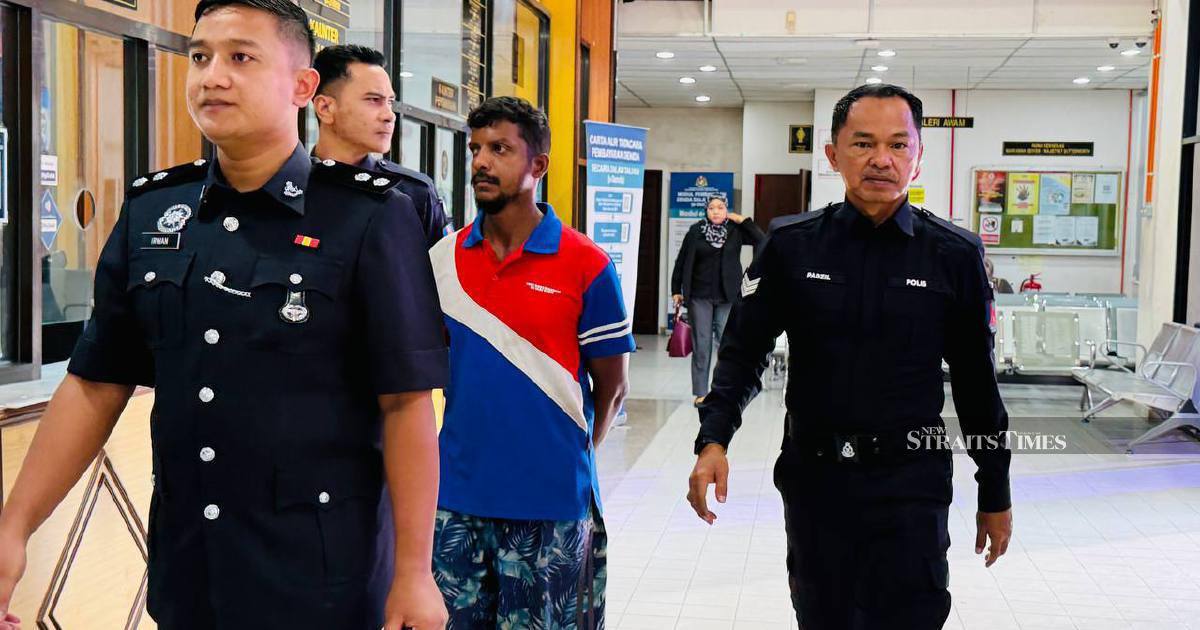
A Myanmar national made his court appearance in Butterworth's Sessions Court today following allegations that he inflicted serious bodily injury on another Myanmar citizen during an incident last week. The accused entered a plea of not guilty to the grievous hurt charge, contesting the allegations brought against him by prosecutors. However, the judicial officer presiding over the case determined that releasing the defendant on bail would be inappropriate at this stage of proceedings, citing the unresolved status of his identification documentation.
The decision to withhold bail reflects judicial concerns commonly encountered in cross-border criminal matters involving foreign nationals in Malaysia. Court administrators frequently encounter complications when accused persons from neighbouring countries lack sufficient or verified identification credentials that would allow authorities to establish their precise legal status and residential ties. These documentation deficiencies can significantly impede the bail determination process, as magistrates and judges require reasonably reliable proof of identity and addresses to assess flight risk and community connections. Without such documentation, the court operates from a position of considerable uncertainty regarding whether conditions for temporary release would be enforceable.
Myanmar nationals have long constituted a substantial migrant population throughout Malaysia, with significant communities in Peninsular Malaysia particularly concentrated in industrial areas of Selangor, Penang, and Johor. While the vast majority engage in lawful employment and commerce, their status as foreign workers sometimes creates complications within the criminal justice system. Language barriers, unfamiliarity with Malaysian legal procedures, and the logistical challenges of verifying documentation from Myanmar add layers of procedural complexity that domestic cases typically avoid. The current case exemplifies how transnational elements can extend even routine criminal proceedings.
The assault incident that prompted this prosecution apparently occurred within the previous seven days, suggesting the arrest and charging process moved relatively swiftly through police investigative channels. The classification of the charge as grievous hurt under the Malaysian Penal Code indicates that the prosecution alleges injuries sufficiently serious to warrant classification beyond simple hurt charges. Grievous hurt cases typically involve fractures, burns, or injuries requiring significant medical intervention—offences that carry substantially heavier sentencing ranges than their minor assault counterparts. This more serious characterisation may have influenced the judicial decision regarding bail, as courts often apply stricter conditions for charges involving demonstrable physical harm.
The lack of identification documentation presents a genuine operational obstacle for Malaysian law enforcement and the courts. Myanmar nationals sometimes travel to Malaysia using temporary passes or work permits that may be incomplete, expired, or difficult to verify through cross-border channels. In some cases, individuals lack documentation altogether, having entered the country irregularly. Attempting to verify someone's claimed identity when their purported documents are unavailable or questionable requires coordination between Malaysian authorities and the Myanmar government—a process that can consume considerable time and may ultimately prove unsuccessful if Myanmar cannot provide verification through normal diplomatic or administrative channels.
Bail decisions in Malaysian criminal proceedings involve judicial discretion exercised within established statutory frameworks. Judges assess factors including the seriousness of the alleged offence, the defendant's character, community ties, employment status, and likelihood of appearing for future proceedings. For foreign nationals, the assessment becomes more stringent, as courts must evaluate whether sufficient anchors exist to compel attendance given the defendant's capacity to depart Malaysia. Without verified identification and confirmed residential address, courts justifiably hesitate to grant bail, viewing the defendant as a higher flight risk. This position has become increasingly standard in Malaysian courts handling transnational cases.
The prosecution's role in this matter involves establishing the factual foundation for the grievous hurt charge through witness testimony, medical evidence, and potentially forensic documentation. Police investigations would typically have collected statements from the alleged victim, any witnesses present during the incident, and the accused himself. Medical reports documenting the victim's injuries constitute critical evidence in grievous hurt prosecutions, establishing the severity of harm inflicted. The timing of the court appearance—occurring within a week of the alleged offence—suggests police completed preliminary investigations sufficiently to warrant immediate prosecution, though the identification document issue created procedural obstacles.
The implications of this case extend beyond the individual defendant's circumstances. It highlights practical challenges facing Malaysia's criminal justice system in managing cases involving foreign nationals, particularly those from neighbouring countries with large migrant populations. Penang, as a major port and industrial zone, regularly encounters similar situations involving Myanmar, Indonesian, Thai, and Bangladeshi workers caught up in criminal matters. Courts in border states and major commercial centres have necessarily developed protocols for addressing documentation deficiencies, yet each case presents unique complications requiring individualised judicial attention.
For the accused Myanmar national, the inability to secure bail pending documentation verification likely means extended detention in a Malaysian lockup facility. This outcome, while procedurally justified from the court's perspective, underscores the vulnerability of undocumented or inadequately documented migrants within Malaysia's criminal justice system. The case will presumably progress toward trial as scheduled unless the defence successfully petitions for bail reconsideration once documentation issues are resolved. Resolution of the identification question remains the critical determinant that could shift the bail assessment, should authorities eventually verify the defendant's identity and establish adequate community ties justifying temporary release pending trial.
This prosecution also occurs within Malaysia's broader immigration enforcement context. Authorities regularly investigate alleged crimes involving foreign nationals, both documented and undocumented workers. The concentration of Myanmar migrants in particular sectors and regions creates specific criminal justice patterns, with assault cases among fellow workers occasionally arising from workplace tensions, personal disputes, or debt-related conflicts. How Malaysian courts manage such cases can carry implications for broader community relations between local and migrant populations, particularly in areas with substantial foreign worker populations.