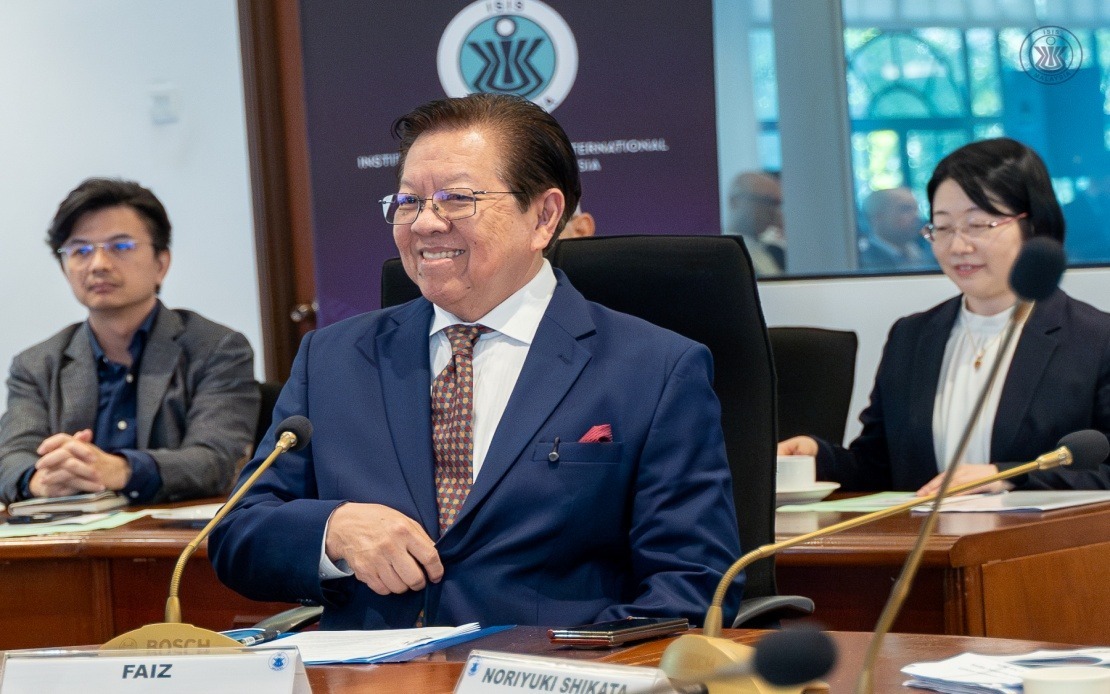
The 39th Asia-Pacific Roundtable (APR) beginning this week in Kuala Lumpur will dedicate substantial analytical firepower to Myanmar's ongoing crisis, addressing what observers view as a significant gap in official regional diplomacy. Datuk Prof Dr Mohd Faiz Abdullah, executive chairman of the Institute of Strategic and International Studies (ISIS) Malaysia, announced that a dedicated caucus will facilitate intensive examination of the Myanmar challenge, bringing together practitioners, strategic analysts, and regional experts for conversations that promise to venture beyond the carefully worded diplomatic positions governments typically maintain.
The decision to create a specialized caucus reflects frustration with the limited substantive discourse on Myanmar during the recent ASEAN Summit in Cebu, Philippines. While Myanmar remains a critical test of ASEAN's collective approach to regional stability, official summit discussions tend to adhere closely to formulaic language that masks deeper divisions among member states about how to address the political and humanitarian catastrophe unfolding since the 2021 military coup. The APR framework, operating as a Track 2 dialogue mechanism, offers a more permissive environment for candid analysis and problem-solving without the constraints of formal interstate relations.
The broader context for this Myanmar focus extends across multiple intersecting regional challenges that will command the roundtable's attention throughout its three-day run until July 2. Territorial disputes in the South China Sea continue to simmer as Beijing asserts its expansive claims, while instability in West Asia reverberates through energy markets and global supply chains affecting every Southeast Asian economy. Trade protectionism, manifesting through rising tariffs and economic nationalism, threatens the region's prosperity model built on open commerce. Simultaneously, artificial intelligence development races forward with uncertain implications for workforce disruption, security, and geopolitical competition in ways Southeast Asia remains inadequately prepared to manage.
The expansion of the APR itself illustrates the roundtable's growing prominence in regional strategic discourse. When first convened 39 years ago, the conference mustered merely 30 to 40 participants, mostly from within ASEAN. This year's edition has swelled to approximately 400 participants representing 30 countries, reflecting heightened international recognition of the need for substantive Track 2 engagement on Asia-Pacific affairs. This growth trajectory underscores the roundtable's relevance at a moment when geopolitical competition intensifies and traditional diplomatic channels struggle to accommodate frank conversation about contentious issues.
Organized by ISIS Malaysia on behalf of ASEAN-ISIS—a network of leading Southeast Asian policy institutes and think tanks—the APR ranks among the world's top 20 strategic-security-focused conferences. It operates as Southeast Asia's foremost Track 2 gathering, positioning itself distinctly apart from official government conferences where diplomatic protocol often constrains candid discussion. The roundtable deliberately creates space for scholars, business leaders, military strategists, former diplomats, and policy experts to engage in what organizers characterize as lively, frank, and constructive conversations without the pressures of formal interstate negotiations.
This year's theme—"Accelerating agency and action"—builds deliberately on previous years' emphasis on interregnum and regional recalibration. The framing suggests organizers perceive the Asia-Pacific at an inflection point where individual state and regional actors must demonstrate substantive leadership in navigating unprecedented complexity. The theme echoes growing anxiety that passive responses to strategic challenges prove inadequate; instead, deliberate, coordinated action is required to manage competition and preserve stability. This imperative extends across Myanmar's internal collapse, great power competition for influence, economic vulnerabilities, and the disruptive potential of emerging technologies.
Myanmar's inclusion as a dedicated discussion theme carries particular significance for Malaysia and the broader ASEAN community. The country's post-coup trajectory has created cascading regional consequences: humanitarian displacement straining neighboring states, economic disruption affecting ASEAN's internal supply chains, and security implications as armed resistance movements fragment state capacity. ASEAN's Five-Point Consensus on Myanmar, adopted in 2021, has demonstrably failed to achieve tangible progress toward democratic restoration or political settlement. The military junta maintains its grip while civilian resistance deepens, leaving ASEAN diplomacy in apparent stasis.
The dedicated Myanmar caucus at the APR will likely probe questions that official ASEAN channels struggle to address directly. What leverage might realistic economic or diplomatic pressure exert on the junta? How should the region manage the humanitarian consequences and potential refugee flows? Can emerging civil society networks and resistance movements be meaningfully supported without violating formal ASEAN non-interference principles? What role might neighboring states, particularly Thailand and China, play in either escalating or de-escalating Myanmar's internal conflict? These conversations, conducted among non-governmental experts, can explore policy alternatives that governments cannot officially endorse.
For Malaysian readers and policymakers, the APR serves as a crucial barometer of emerging regional thinking on challenges directly affecting Malaysia's prosperity and security. The South China Sea discussions will examine practical mechanisms for managing maritime disputes and protecting critical sea lanes through which Malaysian trade flows. Energy discussions will address regional cooperation on diversifying supply sources and managing price volatility affecting Malaysian consumers and industries. The artificial intelligence caucuses will probe workforce readiness in Malaysia's context as digital transformation accelerates across the economy.
The roundtable's effectiveness ultimately depends on whether Track 2 insights translate into policy shifts at the government level. While officially informal, the APR regularly influences regional strategic thinking and occasionally shapes official positions when consensus emerges among the influential experts, academics, and former officials who participate. The Myanmar caucus specifically offers opportunity for the region's finest minds to develop more sophisticated and implementable approaches to a crisis that official diplomacy has struggled to address effectively.
The timing proves significant as regional capitals confront mounting pressure to demonstrate progress on multiple fronts simultaneously. ASEAN itself faces questions about its relevance and effectiveness as great power competition intensifies within the region and its institutions. By hosting such a comprehensive and diverse gathering, Malaysia through ISIS demonstrates commitment to nuanced regional dialogue at a moment when Southeast Asia desperately requires sophisticated strategic thinking about its future trajectory.

