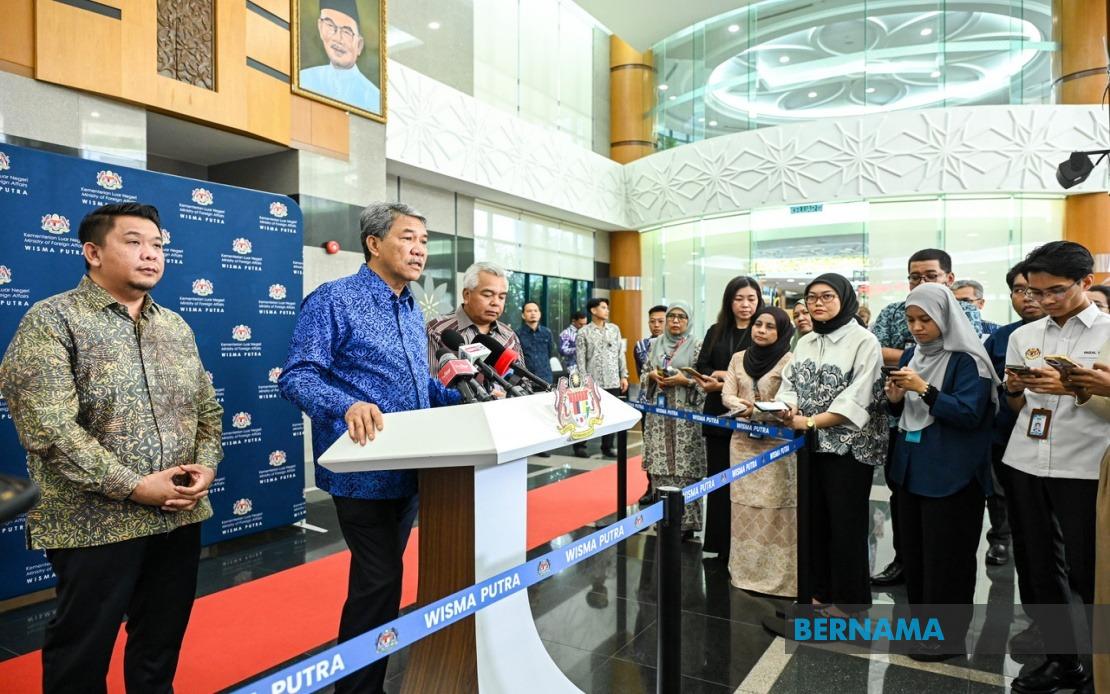
Malaysia's Foreign Minister Datuk Seri Mohamad Hasan disclosed on Monday that Myanmar has indicated its preparedness to transport 5,000 refugees back to the country via maritime vessels, marking a potential breakthrough in efforts to address one of Southeast Asia's most intractable humanitarian crises. The announcement came during a press engagement after Malaysia's celebration of the 59th ASEAN Day in Putrajaya, where Mohamad elaborated on discussions held with Myanmar's newly appointed Foreign Minister Tin Maung Swe.
While the commitment represents progress in repatriation negotiations, Mohamad underscored that the safety and welfare of those being returned remain paramount considerations for Malaysia and other regional stakeholders. The Foreign Minister articulated concerns about the conditions refugees would face upon return, questioning whether maritime repatriation truly guarantees their security and addressing fundamental uncertainties about their reception and treatment in Myanmar. This cautious stance reflects Malaysia's awareness that rapid repatriation without adequate safeguards could exacerbate humanitarian concerns rather than resolve them.
Malaysia has completed identification procedures for the entire cohort of 5,000 individuals earmarked for repatriation, positioning the country to move forward expeditiously once safety parameters are established. However, despite Myanmar's expression of readiness, officials have not yet locked in a specific timeline for the operation. This absence of concrete scheduling suggests that negotiations remain at a preliminary stage, with diplomatic channels continuing to work through implementation details and risk mitigation strategies.
The refugee situation in Myanmar extends far beyond the internationally prominent Rohingya crisis, a distinction Mohamad sought to emphasise in his remarks. The country's internal conflicts and political instability have displaced members of multiple ethnic communities, including the Chin and Karen populations, each facing distinct circumstances and vulnerabilities. By broadening the frame beyond the Rohingya narrative, Mohamad implicitly acknowledged the complexity of Myanmar's displacement crisis and the necessity for comprehensive regional responses rather than narrowly targeted interventions.
ASEAN, as a collective body, has positioned refugee management from Myanmar as a shared institutional challenge requiring coordinated action among member states rather than bilateral arrangements. This multilateral framing reflects the bloc's recognition that the crisis transcends Malaysia's immediate borders and affects stability across the region. Countries including Bangladesh, Thailand, and Indonesia have absorbed significant refugee populations, creating interconnected humanitarian and security concerns that demand collective problem-solving.
The Five-Point Consensus, adopted at an ASEAN summit and endorsed by Myanmar's previous leadership, remains the foundational framework guiding the region's approach to Myanmar's broader political and humanitarian crisis. Mohamad reiterated that this consensus should continue anchoring ASEAN's mechanisms and that any substantive modifications must return to the negotiating table for deliberation by all member states' leaders. This insistence on preserving the 5PC's primacy suggests concern that ad hoc bilateral arrangements or unilateral changes could undermine ASEAN's collective leverage and consistency.
Myanmar's current political environment, shaped by military rule since the 2021 coup, complicates repatriation discussions. The junta's compliance with ASEAN agreements and international standards remains contested, raising questions about whether returned refugees would encounter justice, protection, and integration support or face persecution and marginalisation. Malaysia's emphasis on safety appears calculated to press Myanmar to demonstrate tangible commitments to refugee welfare rather than merely accepting their physical return.
For Malaysia, hosting significant refugee populations has created substantial budgetary and administrative burdens over successive years. The prospect of organised large-scale repatriation would alleviate pressure on domestic resources and infrastructure, though only if returns occur under conditions that prevent future displacement crises. The country's interest in expediting the process must therefore be balanced against its humanitarian responsibilities and credibility as a regional actor committed to refugee protection standards.
The maritime transportation approach proposed by Myanmar potentially offers logistical advantages over overland routes, particularly given border security considerations and the challenges of moving large groups across land. However, sea-based repatriation introduces its own complexities, including maritime safety protocols, vessel capacity constraints, and port coordination. The announcement of this modality suggests both parties have considered practical delivery mechanisms, though operational details remain unresolved.
Regional observers note that successful refugee repatriation serves multiple geopolitical interests beyond immediate humanitarian relief. For ASEAN, demonstrating capacity to resolve internal crises strengthens the bloc's credibility and cohesion. For Myanmar, accepting refugees signals potential rehabilitation of its international standing, though the junta continues facing sanctions and isolation from Western capitals. For Malaysia, facilitating returns bolsters its position as a responsible ASEAN partner while addressing domestic political sensitivities around refugee management.
The timeline for repatriation operations will likely depend on Myanmar's ability to meet international safety benchmarks and ASEAN's confidence in the process. Mohamad's comments suggest Malaysia intends to maintain diplomatic pressure for concrete progress rather than accepting indefinite postponement. The next phase of negotiations will presumably focus on establishing specific departure dates, identifying departure and arrival ports, establishing refugee screening and processing mechanisms, and securing international monitoring arrangements to verify treatment standards.
Sustainable repatriation requires more than logistics and political commitment. Myanmar must demonstrate that returnees will encounter viable economic opportunities, community acceptance, and access to justice mechanisms addressing displacement-related grievances. Without these conditions, repatriation risks merely transferring refugees from Malaysian camps to conditions of precarity within Myanmar, perpetuating humanitarian vulnerability rather than resolving it. Malaysia's measured approach reflects awareness that hastily arranged returns without adequate safeguards could undermine rather than advance regional stability and humanitarian standards.

