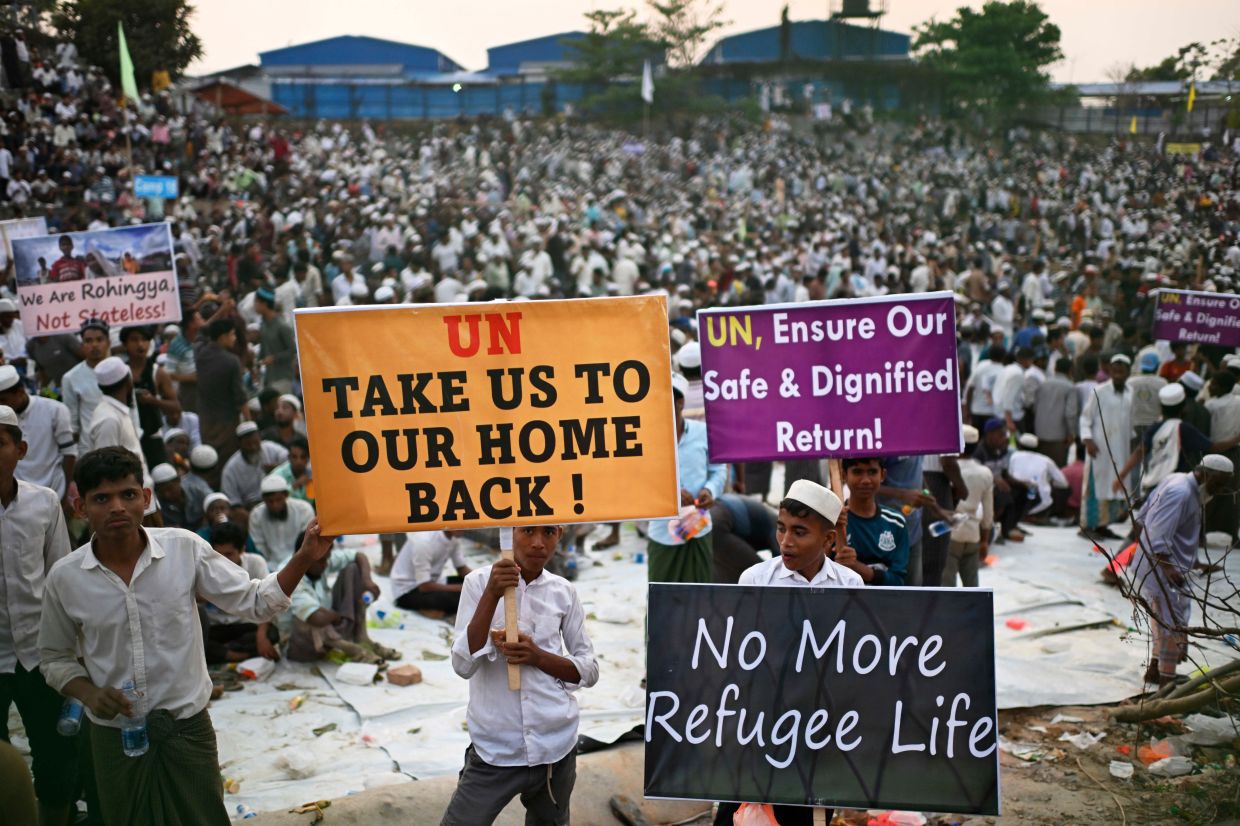
Myanmar's military-controlled Foreign Ministry declared on Saturday that verification has been completed for over 300,000 Rohingya refugees sheltering in Bangladesh camps, designating them as legitimate former inhabitants of the western Rakhine state and indicating willingness to facilitate their homecoming once the security environment stabilises. The announcement arrives as the humanitarian catastrophe that began in August 2017 enters its ninth year, with hundreds of thousands of displaced people still confined to overcrowded camps across the border while the situation in Myanmar's conflict-torn regions deteriorates further.
The 2017 military operation in Rakhine, launched following insurgent attacks on military installations, forced more than 700,000 Rohingya to flee into Bangladesh within months. This exodus compounded an existing refugee population that had accumulated over decades through successive waves of communal violence and systematic displacement. International observers, including the United Nations, characterised the operation as bearing hallmarks of ethnic cleansing and genocide, though Myanmar's government has consistently rejected these characterisations and refused to acknowledge Rohingya as one of the country's recognised ethnic groups, instead labelling them as illegal Bengali settlers from Bangladesh.
According to Myanmar's latest figures, officials examined a list of 828,824 refugees provided by Bangladesh and verified 426,545 individuals by the end of July. Of those verified, the government determined that 308,797 qualified as former Rakhine residents, while identifying 113,507 people it could not verify and claiming that 4,241 had connections to what it described as terrorist activities. These numbers represent Myanmar's most detailed public accounting of the refugee population, though they diverge significantly from humanitarian assessments and underscore ongoing disputes over the scale of displacement.
Myanmar's insistence on a phased verification and security-contingent return process reflects broader anxieties about regional instability rather than merely bureaucratic caution. The country has experienced escalating armed conflict since the military coup in February 2021, which toppled the democratically elected government of Aung San Suu Kyi and sparked sustained resistance across multiple regions. Within Rakhine itself, the situation has deteriorated markedly, with the Arakan Army—a separatist group based in the state—seizing control of substantial territory from the military over recent years. Renewed fighting between these forces in 2023 destabilised civilian populations further and ironically triggered additional refugee movements toward Bangladesh and neighbouring countries.
The repatriation pledge carries particular significance for Malaysia, where approximately 5,000 Rohingya refugees are currently detained in immigration facilities. Prime Minister Anwar Ibrahim announced in late July that Myanmar had agreed to accept this cohort as part of a bilateral arrangement. However, Myanmar's Foreign Ministry official Han Win Aung subsequently clarified to international media that any repatriation programme would target exclusively verified Myanmar nationals held in Malaysian detention centres, deliberately sidestepping the broader question of Rohingya status and wider repatriation commitments. This rhetorical distinction masks deeper disagreements about whether the international community views Rohingya as stateless persons deserving protection or as citizens whose return Myanmar can unilaterally control.
The fundamental barrier to meaningful repatriation remains unchanged since a two-year bilateral agreement signed between Myanmar and Bangladesh in 2018. Myanmar's domestic security crisis has only intensified in the intervening period, making officials reluctant to absorb large populations into a region where armed groups contest military authority and civilian governance has collapsed. The Arakan Army's territorial dominance has proven particularly problematic, as it controls the very areas where Rohingya would theoretically be resettled, and there is no credible mechanism to guarantee their safety or fundamental rights under such conditions.
Conditions within the camps themselves have deteriorated measurably, compounding the refugee crisis. International humanitarian budgets have contracted significantly, creating acute shortages of medical care, educational services, and basic supplies. Simultaneously, the prospect of indefinite confinement without meaningful possibility of return has prompted increasing numbers of Rohingya to undertake perilous maritime journeys toward Malaysia and Indonesia aboard unseaworthy vessels operated by human smuggling networks. These voyages routinely end in tragedy, yet many perceive the risks as preferable to stagnation in congested camps offering no pathway toward rebuilding lives.
For Southeast Asian nations, Myanmar's verification announcement presents complex diplomatic challenges without clear solutions. Malaysia and Indonesia have borne disproportionate burdens as de facto refugia for maritime migrants, yet neither government has capacity or political appetite to absorb hundreds of thousands of additional persons. The region lacks a coordinated mechanism for sharing responsibility, and international pressure on Myanmar to accept repatriates remains politically weak given the country's strategic position between China and India and its minimal economic interdependencies with Western nations capable of imposing meaningful sanctions.
Myanmar's rejection of claims that more than one million people were displaced from Rakhine, instead asserting that roughly 540,000 crossed into Bangladesh while 200,000 remained in the state, reflects persistent gaps between official narratives and documented evidence. Independent surveys conducted by humanitarian organisations consistently identify higher displacement figures and document systematic barriers preventing Rohingya from accessing services or exercising basic freedoms within Myanmar's territory. These statistical disputes matter fundamentally because they shape international policy responses and humanitarian resource allocations.
The ninth anniversary of this crisis arrives with no substantive progress toward the stable, consensual repatriation that Myanmar's government claims it supports. The military's consolidation of power since 2021, rather than facilitating refugee returns, has coincided with further deterioration of governance and security. Without political transformation in Myanmar or meaningful international intervention mechanisms, the hundreds of thousands of Rohingya currently warehoused in Bangladeshi camps face the grim prospect of indefinite displacement. For Malaysia and other regional nations increasingly hosting desperate maritime migrants, Myanmar's verification announcement offers rhetorical cover but no practical pathway toward resolving a humanitarian catastrophe whose roots run far deeper than administrative processes can address.

