Myanmar's law enforcement agencies have dealt significant blows to organised drug trafficking networks operating through the country's central corridor, seizing a combined haul of heroin and prescription stimulants worth millions of kyat and apprehending nine individuals across two separate operations. The narcotics seizures, announced by the Central Committee for Drug Abuse Control (CCDAC), underscore the ongoing struggle against illicit drug movements that continue to flow through Myanmar's territory despite mounting enforcement efforts.
The first major operation unfolded in Amarapura township within the Mandalay region, where anti-narcotics personnel acting on intelligence information conducted a targeted search of four motorcycles on Tuesday. Officers recovered 17.6 kilograms of heroin from the vehicles, a quantity representing a substantial shipment by regional standards. Four individuals were arrested at the scene and now face prosecution under Myanmar's drug control legislation. The use of motorcycles as a transportation method reflects the adaptability of trafficking networks, which often employ two-wheeled vehicles to navigate congested urban areas and evade checkpoints more easily than larger vehicles.
The second enforcement action occurred five days earlier in Lewe township, located within the Naypyitaw Union Territory, where police discovered and confiscated one million stimulant tablets. Five suspects were taken into custody during this raid, which authorities conducted on July 23. The sheer volume of tablets suggests an operation targeting either large-scale local distribution networks or potential onward trafficking to neighbouring regions where demand for such substances remains high. Stimulant tablets, often diverted from legitimate pharmaceutical supplies or manufactured illicitly, have become increasingly prevalent throughout Southeast Asia as users seek affordable alternatives to more expensive controlled substances.
Both sets of suspects have been formally charged under Myanmar's Narcotic Drugs and Psychotropic Substances Law, which carries severe penalties including lengthy prison sentences and substantial fines. The CCDAC's public announcement of these seizures reflects a broader strategy of publicising enforcement successes to demonstrate governmental commitment to drug control, though such announcements also raise awareness among trafficking organisations regarding enforcement capabilities and operational tactics. The timing and scale of these operations suggest coordinated intelligence gathering and resource deployment across multiple jurisdictions.
The concentration of these seizures within central Myanmar's commercial and political heartland deserves particular attention. Mandalay, as the nation's second-largest city and a major commercial hub, has long served as a transit point for narcotics moving between the drug-producing regions of the Golden Triangle and consumer markets throughout Southeast Asia. Naypyitaw, meanwhile, serves as the administrative capital and contains numerous government institutions, making its involvement in trafficking cases politically significant and potentially suggesting infiltration of drug networks into areas with substantial state presence.
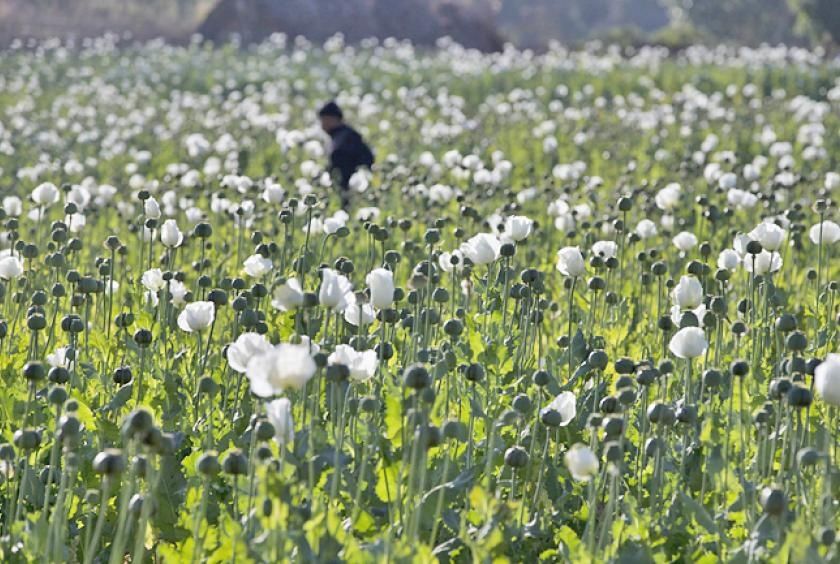
The heroin interdiction specifically reflects ongoing challenges in controlling synthetic opioid flows through Myanmar's borders. The Golden Triangle region, spanning Myanmar, Laos, and Thailand, remains one of the world's largest illicit opium producers, with heroin manufacturing facilities operating across Myanmar's eastern territories. Although international pressure and crop eradication efforts have theoretically reduced opium cultivation, heroin production capacity has either remained stable or diversified into synthetic alternatives including fentanyl and its analogues, creating new enforcement challenges.
The million-tablet seizure presents a different but equally concerning picture of Myanmar's drug problems. Stimulant abuse has emerged as a significant public health issue across Southeast Asia, with particularly high prevalence among truck drivers, factory workers, and young people in urban areas seeking to enhance productivity or achieve recreational highs. The tablets, often branded as legitimate pharmaceutical products or manufactured as counterfeits, frequently contain methamphetamine, MDMA, or other amphetamine-type stimulants. Their relative affordability compared to heroin or cocaine has democratised access to powerful central nervous system stimulants across socioeconomic strata.
These seizures arrive amid Myanmar's broader instability following the military coup in February 2021, which has substantially complicated drug enforcement capacity. The junta's consolidation of security forces has sometimes prioritised counter-insurgency operations over narcotics control, while parallel governance structures and reduced international cooperation have created enforcement gaps. Regional criminal organisations have demonstrably exploited this instability to expand operations, particularly in border areas where state control remains contested or minimal.
For Malaysian readers and regional observers, these Myanmar operations carry important implications. Malaysia remains a significant destination and transit point for Southeast Asian drug trafficking, with criminal networks constantly adapting supply routes and methodologies in response to enforcement pressure. Understanding the scale and nature of Myanmar's drug production and trafficking infrastructure provides crucial context for Malaysia's own interdiction efforts. The volume and consistency of heroin and stimulant seizures in Myanmar suggest that Malaysian authorities should anticipate continued attempts to route these substances through established channels, necessitating sustained cooperation with Myanmar's law enforcement bodies despite political complications.
The cooperation required between Myanmar's CCDAC and international partners including Malaysian authorities faces considerable strain due to geopolitical factors and the junta's international isolation. However, transnational organised crime operates indifferent to diplomatic relations, and Malaysian law enforcement must maintain pragmatic engagement with Myanmar's drug control agencies regardless of political tensions. Intelligence sharing, border monitoring, and coordinated surveillance of major trafficking organisations remain essential to disrupting supply chains before narcotics reach Malaysian markets where they fuel addiction, overdose deaths, and associated criminal activity.
These seizures, while substantial, represent only a fraction of estimated trafficking volumes moving through Myanmar annually. Experts suggest that successful interdictions typically capture ten to twenty percent of illicit flows at best, implying that hundreds of kilograms of heroin and millions of stimulant tablets transit through Myanmar's territory monthly. The CCDAC's enforcement efforts, though notable, require substantially greater resources, training, and international coordination to meaningfully reduce drug availability. Regional cooperation frameworks that include Malaysia, Thailand, Laos, and Cambodia must be strengthened to address trafficking networks that operate across multiple jurisdictions and exploit varying enforcement capacities across borders.

