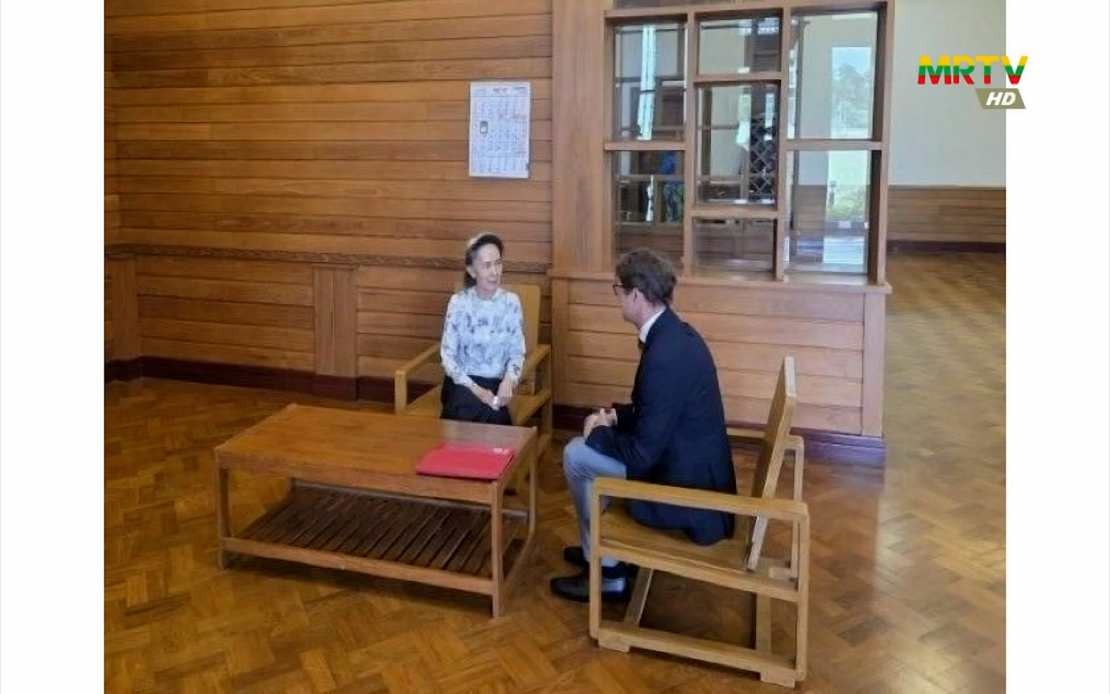
Myanmar's military-backed administration announced on Monday that Aung San Suu Kyi, the country's detained former leader, received a visit from a representative of the International Committee of the Red Cross in the capital Naypyitaw. The meeting marked a significant development in efforts by regional governments to verify the condition of the 81-year-old Nobel Peace Prize winner, who has remained largely isolated from foreign observers since being removed from power in a February 2021 coup d'état. Government spokeswoman Khine Khine Soe disclosed the encounter between Suu Kyi and Arnaud de Baecque, the ICRC's resident representative to Myanmar, through a Telegram statement accompanied by photographs.
Suu Kyi's detention has persisted for over three years following the military takeover that ended Myanmar's decade-long democratic experiment. The coup toppled an elected civilian government led by her National League for Democracy party, triggering widespread civil unrest and economic crisis across the Southeast Asian nation of 51 million people. Throughout her imprisonment, her precise location and medical status have remained obscured from public view, with no foreign dignitaries or international envoys permitted to see her until this latest meeting. The lack of transparency surrounding her welfare has become a flashpoint in regional diplomatic discussions about Myanmar's governance and human rights record.
Following a series of closed-door trials, Suu Kyi was handed a 33-year prison sentence on convictions encompassing corruption allegations, election fraud incitement, and violations of state secrecy statutes. These charges have been widely dismissed by her supporters and international observers as politically motivated mechanisms designed to eliminate her from Myanmar's political landscape. Her legal team subsequently secured reductions in her sentence through successive appeals, bringing her current obligations to 18 years of remaining incarceration. The junta-controlled judiciary's handling of her case has drawn sustained criticism from neighbouring countries and global human rights organisations, with many questioning the legitimacy of the proceedings.
The photographs released by the government show Suu Kyi dressed in traditional Burmese garments meeting with Baecque in a minimally decorated room containing basic furnishings. Additional images provided a glimpse of what authorities described as her residence, capturing her cutting a birthday cake bearing her name and the date June 19, 2026. The release of these images appeared designed to address persistent international concerns about her living conditions and accessibility. However, Reuters was unable to independently confirm the authenticity, location, or timing of the photographs, noting that no earlier versions appeared in public circulation before the Monday announcement.
The Suu Kyi family's communications regarding her health have been severely restricted. Her son, Kim Aris, disclosed to Reuters in December of the previous year that he maintained minimal knowledge of his mother's medical situation, relying only on sporadic and indirect information about heart complications, bone problems, and gum disease. He expressed grave apprehension about potentially losing his mother without opportunity for direct contact, highlighting the emotional toll of her extended isolation on her family. These personal accounts have underscored the humanitarian dimensions of her detention beyond the political ramifications for Myanmar's governance trajectory.
Myanmar's successive military administrations have repeatedly asserted that Suu Kyi enjoys excellent health, though these declarations have been made without independent verification. In April 2026, following a military-orchestrated election that elevated former junta leader Min Aung Hlaing to the presidency, officials announced that Suu Kyi had been transferred to house arrest status. This shift represented a modest change in her confinement arrangements but failed to satisfy regional demands for transparent access to the former Nobel laureate. The Southeast Asian diplomatic community has grown increasingly frustrated by the regime's resistance to independent health assessments of one of the region's most prominent political figures.
ASEAN member states have escalated diplomatic pressure on Myanmar to permit international scrutiny of Suu Kyi's condition. Following bilateral discussions between Myanmar's foreign minister and ASEAN counterparts at a Bangkok gathering last month, Thailand's top diplomat Sihasak Phuangketkeow explicitly called for unobstructed access to Suu Kyi to substantiate official health claims. The Philippines similarly submitted a formal request in May requesting that an ASEAN special envoy be granted an audience with the detained leader. These coordinated regional efforts reflect growing concern among Myanmar's neighbours about the sustainability of the junta's governance and the international community's credibility in validating statements about prominent detainees.
Suu Kyi's political significance extends deep into Myanmar's modern history as the daughter of General Aung San, the revered independence hero credited with liberating the nation from colonial administration. During the previous military era, she spent a cumulative 15 years confined to her residence on Yangon's Inya Lake, where she delivered passionate addresses to assembled supporters gathered beyond the compound's metal gates. This earlier period of house detention established her as a symbol of resistance against authoritarianism, transforming her into arguably the country's most recognisable and beloved political figure among ordinary citizens. Her continued imprisonment under the current regime therefore carries symbolic weight extending far beyond her individual circumstances.
The permitted Red Cross meeting represents a minor concession by the military government to international pressure, though its strategic purpose remains ambiguous. Whether this encounter reflects a genuine shift towards greater transparency or constitutes a calculated public relations gesture designed to deflect regional criticism remains subject to interpretation. The regime's willingness to distribute carefully curated photographs suggests an effort to manage international narratives about Suu Kyi's treatment whilst maintaining strict limits on her communications. The international community will likely scrutinise the ICRC's assessment of her condition and whether the organisation pursues additional access to the detained former leader as part of its broader humanitarian monitoring responsibilities in Myanmar.

