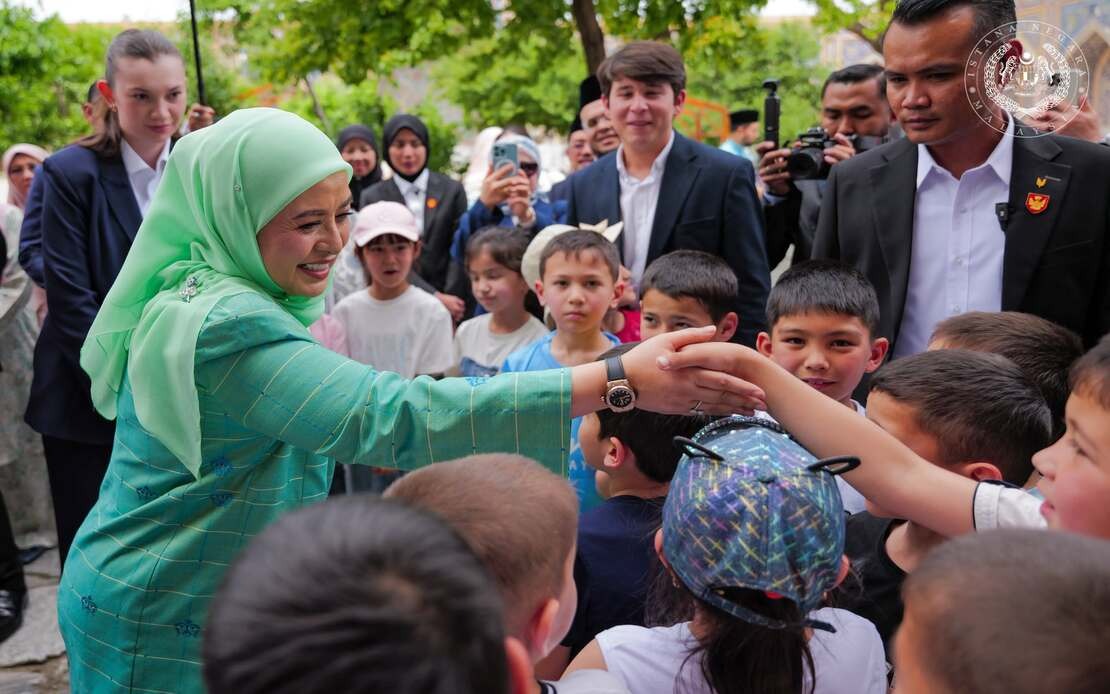
Malaysia's commitment to harmony rests fundamentally on mutual respect, according to Queen Raja Zarith Sofiah, who underscored this principle as central to the nation's identity and cohesion. In remarks shared through the official social media channels of Sultan Ibrahim Sultan Iskandar, Her Majesty drew attention to how this value has historically shaped Malaysian society and continues to underpin the country's stability. The Queen's emphasis on respect reflects an understanding that diverse communities coexist most peacefully when they recognize and honor one another's dignity, a lesson particularly relevant in a multicultural nation like Malaysia.
Her Majesty stressed the practical importance of embedding courtesy and mutual respect into daily interactions, both within households and in broader public spaces. This reminder extends beyond merely domestic conduct—it encompasses how Malaysians engage with one another in communities, workplaces, and international settings. By elevating these principles in public discourse, the Queen reinforced that social harmony is not an abstract ideal but rather the outcome of concrete, everyday choices to treat others with consideration and regard.
To ground her message in religious and moral authority, the Queen referenced Islamic teaching, particularly a hadith documented by Al-Bukhari. The tradition, narrated through Abu Hurairah RA, preserves Prophet Muhammad's instruction on three interconnected ethical obligations for believers: first, to refrain from harming one's neighbor; second, to honor guests with generosity; and third, to maintain speech that is either virtuous or silent. These teachings encapsulate a comprehensive ethical framework emphasizing non-violence, hospitality, and thoughtful communication. For Muslim-majority Malaysia, invoking this classical Islamic guidance carries weight not merely as religious instruction but as a shared cultural touchstone that many Malaysians recognize and respect.
The relevance of these principles to contemporary Malaysia cannot be overstated. As the country navigates complex social dynamics, questions of religious tolerance, and interactions across ethnic and faith lines, the Queen's invocation of mutual respect serves as a gentle but authoritative call for restraint and consideration. The hadith's emphasis on guarding one's tongue—speaking only good or remaining silent—offers practical wisdom in an era of rapid social media communication where inflammatory speech can rapidly divide communities. Similarly, the injunction against harming neighbors speaks to the responsibility citizens bear toward one another regardless of background.
The Queen's comments gain additional significance when viewed against her demonstrated engagement with Malaysia's diverse population. In February, Her Majesty personally welcomed and interacted warmly with more than one hundred tourists representing numerous nations at the main entrance of Istana Negara. This public demonstration of graciousness toward international visitors embodied the very principles she articulated—showing respect, hospitality, and openness to those from different backgrounds. The interaction illustrated that the Queen does not merely advocate these values theoretically but actively lives them through her conduct in official capacity.
This episode of welcoming international visitors carries particular meaning for Malaysia's tourism industry and international standing. When the nation's highest-ranking royal personage personally engages courteously with foreign guests, it sends a clear message about Malaysian values and hospitality standards. Such interactions contribute to positive word-of-mouth, cultural diplomacy, and the reputation Malaysia seeks to cultivate as a welcoming destination. The Queen's evident concern for visitors reflects understanding that respect extended to guests—a principle emphasized in the hadith she cited—directly influences how Malaysia is perceived globally.
The timing of the Queen's remarks appears deliberate, coming at a moment when nations worldwide grapple with rising polarization, social division, and communication breakdowns. Malaysia, with its history of communal tensions punctuated by periods of relative stability, stands to benefit from high-level reminders that mutual respect remains achievable and essential. The Queen's voice carries unique authority—she represents institutional continuity, national dignity, and, for many Malaysians, a symbol of the constitutional framework that protects all citizens. When such a figure advocates for respect and courtesy, the message transcends typical political or religious messaging.
For Southeast Asia more broadly, the Queen's emphasis on mutual respect as a foundation of national harmony offers lessons relevant to the region's diverse societies. Many ASEAN nations share Malaysia's experience of managing multiple ethnic groups, religions, and cultural traditions within single political boundaries. The principle that respect—rather than enforced uniformity or suppression of difference—enables coexistence resonates across the region. In an era when some Southeast Asian countries face challenges of rising extremism or communal violence, Malaysia's institutional articulation of respect-based harmony provides a contrasting model.
The Queen's reference to both Islamic teaching and universal principles of hospitality and non-harm reflects a syncretic approach to ethics that characterizes much of Malaysian public discourse. Rather than presenting Islamic values as specific to Muslims alone, the framing suggests these teachings contain universal wisdom applicable to all Malaysians regardless of faith. This inclusive interpretation supports the constitutional vision of a Malaysia where religious freedom coexists with shared civic values. The emphasis on what believers should not do—harm neighbors, disrespect guests—establishes minimum standards that transcend sectarian boundaries.
Moving forward, the Queen's intervention in public discourse around respect and harmony may influence how these concepts are discussed in Malaysian institutions, schools, and communities. Royal endorsement of such principles can strengthen their standing in national narrative and provide moral authority that political figures sometimes lack. The message that mutual respect has always been central to Malaysian identity, rather than a new or imposed value, resonates with historical memory and collective identity. This framing resists portraying harmony as something that must be constructed or enforced from above, instead presenting it as an authentic expression of Malaysian character that citizens merely need to reaffirm and practice.
%22%2F%3E%3C%2Fpattern%3E%3C%2Fdefs%3E%3Crect%20width%3D%22100%25%22%20height%3D%22100%25%22%20fill%3D%22url(%23ph520m0g)%22%2F%3E%3Crect%20width%3D%22100%25%22%20height%3D%22100%25%22%20fill%3D%22url(%23ph520m0p)%22%2F%3E%3Ctext%20x%3D%2250%25%22%20y%3D%2250%25%22%20text-anchor%3D%22middle%22%20dominant-baseline%3D%22central%22%20fill%3D%22rgba(255%2C255%2C255%2C0.95)%22%20font-family%3D%22Georgia%2C%20'Times%20New%20Roman'%2C%20serif%22%20font-weight%3D%22700%22%20font-size%3D%22226%22%20letter-spacing%3D%22-0.02em%22%3ERussia%3C%2Ftext%3E%3C%2Fsvg%3E)
%22%2F%3E%3C%2Fpattern%3E%3C%2Fdefs%3E%3Crect%20width%3D%22100%25%22%20height%3D%22100%25%22%20fill%3D%22url(%23ph3za67g)%22%2F%3E%3Crect%20width%3D%22100%25%22%20height%3D%22100%25%22%20fill%3D%22url(%23ph3za67p)%22%2F%3E%3Ctext%20x%3D%2250%25%22%20y%3D%2250%25%22%20text-anchor%3D%22middle%22%20dominant-baseline%3D%22central%22%20fill%3D%22rgba(255%2C255%2C255%2C0.95)%22%20font-family%3D%22Georgia%2C%20'Times%20New%20Roman'%2C%20serif%22%20font-weight%3D%22700%22%20font-size%3D%22226%22%20letter-spacing%3D%22-0.02em%22%3EPolice%3C%2Ftext%3E%3C%2Fsvg%3E)
%22%2F%3E%3C%2Fpattern%3E%3C%2Fdefs%3E%3Crect%20width%3D%22100%25%22%20height%3D%22100%25%22%20fill%3D%22url(%23ph2h98gg)%22%2F%3E%3Crect%20width%3D%22100%25%22%20height%3D%22100%25%22%20fill%3D%22url(%23ph2h98gp)%22%2F%3E%3Ctext%20x%3D%2250%25%22%20y%3D%2250%25%22%20text-anchor%3D%22middle%22%20dominant-baseline%3D%22central%22%20fill%3D%22rgba(255%2C255%2C255%2C0.95)%22%20font-family%3D%22Georgia%2C%20'Times%20New%20Roman'%2C%20serif%22%20font-weight%3D%22700%22%20font-size%3D%22226%22%20letter-spacing%3D%22-0.02em%22%3ETengku%3C%2Ftext%3E%3C%2Fsvg%3E)