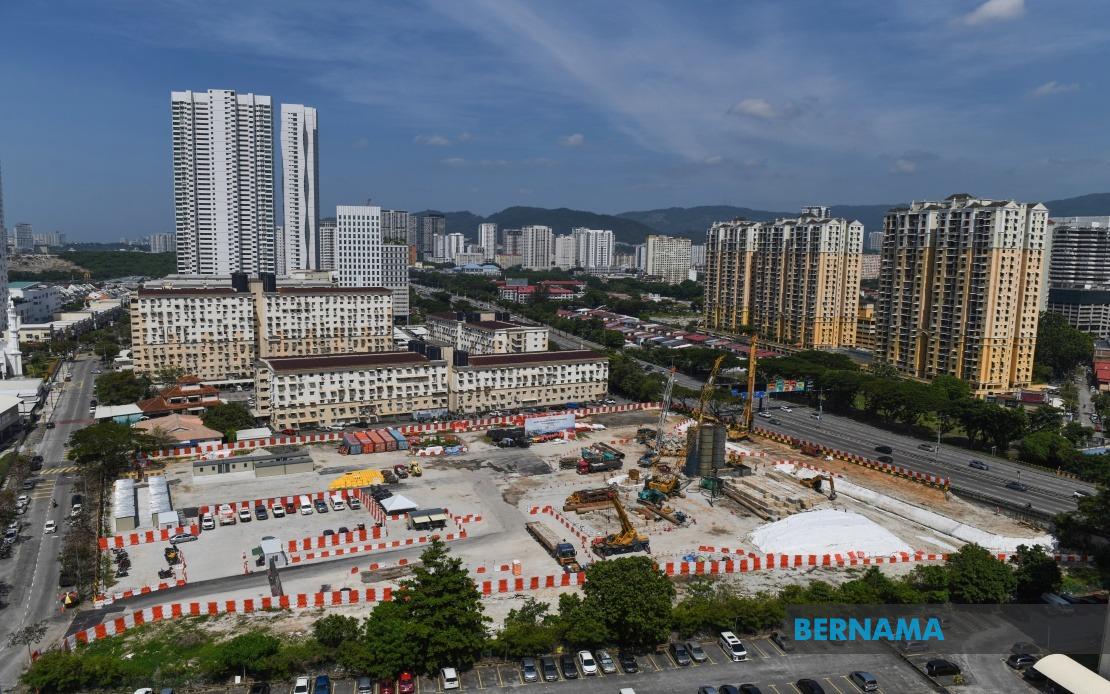
Penang's ambitious Mutiara Line Light Rail Transit project has reached several pivotal development stages, signified by Malaysia Rapid Transit Corporation Sdn Bhd's (MRT Corp) announcement that the Malaysian Resources Corporation Berhad (MRCB) and Theta Edge Berhad joint venture has secured the RM3.028 billion System Turnkey Contract. The contract represents a crucial step forward in delivering integrated rail infrastructure to the island state, enabling parallel progression of railway systems design alongside ongoing civil construction.
The scope of work under this system contract is comprehensive and foundational to the project's long-term operational success. Seven major railway systems packages form the backbone of the agreement, encompassing the supply and installation of electric trains alongside depot maintenance equipment, sophisticated signalling and train control mechanisms paired with automatic platform safety gates, trackwork infrastructure including conductor rails and dedicated maintenance vehicles, and the complete power supply and distribution network required for daily operations.
Beyond these core mechanical and electrical components, the contract extends to critical operational systems that will define the passenger experience and service reliability. Railway supervisory control and data acquisition (SCADA) systems, coupled with computerised maintenance management platforms, will ensure real-time monitoring and efficient asset management. Telecommunications and information technology infrastructure will support network operations, while an automatic fare collection system will streamline passenger transactions and revenue collection—essential considerations for a public transport network targeting high daily ridership.
Civil construction remains on schedule, with the first phase progressing through a design-and-build methodology that allows simultaneous advancement of engineering refinements and on-site works. Within the Civil Main Contract 1 (CMC1) package spanning from Silicon Island to Komtar, construction crews have already completed 45 pile caps and erected 32 pier columns across fourteen of nineteen planned construction sections. This phased approach demonstrates how modern transit projects can compress delivery timelines by avoiding sequential procurement delays.
Parallel to CMC1 activities, tender evaluations for the Civil Main Contract 2 package—extending the alignment from Komtar through to Penang Sentral—are progressing steadily, with contract award anticipated in November 2026. This extension represents the project's next geographical phase, further expanding the network's reach across Penang's urban landscape and linking key transport interchanges.
Land acquisition, often a bottleneck in Malaysian infrastructure projects, has progressed remarkably well. Some 93 percent of required land for the CMC1 section has been secured and made available through coordinated efforts involving the Federal Government, Penang State Government, and relevant agencies. This achievement reflects improved inter-governmental collaboration and land management frameworks, offering valuable lessons for other transit projects navigating similar acquisition challenges across Southeast Asia.
Bumiputera participation within the CMC1 contracting framework has surpassed 20 percent of total contract value, demonstrating the project's commitment to supporting Malaysian enterprises and building domestic industrial capabilities in rail construction and systems integration. This emphasis on local participation creates employment opportunities and facilitates technology transfer within Malaysia's construction and engineering sectors, strengthening competitive advantages in future infrastructure initiatives.
At the proposed depot site on Silicon Island, soil investigation activities have commenced in preparation for facility construction. The Penang State Government's handover of the Tapak Pesta site in April 2026 enabled MRT Corp to complete clearance of existing structures and preparatory earthworks. With this groundwork finished, actual depot construction is poised to commence, a facility essential for train storage, maintenance, and crew operations.
The Mutiara Line represents significant implications for Penang's economic trajectory and regional transport integration. As Southeast Asia's urban corridors become increasingly congested, rail-based public transport provides sustainable alternatives to car dependency, addressing environmental concerns while enhancing urban mobility. For Malaysian stakeholders, this project demonstrates MRT Corp's expanding capacity to manage complex transit infrastructure and establishes precedent for similar developments in other states.
The integration of modern fare collection and SCADA systems positions the Mutiara Line as a technologically contemporary network, competitive with international standards and capable of supporting future operational enhancements and demand fluctuations. From a broader regional perspective, successful delivery of such integrated systems strengthens Malaysia's credentials as a Southeast Asian infrastructure leader and demonstrates technical proficiency that could attract international partnerships.
Stakeholder coordination between federal authorities, state government, and private contractors has proven instrumental in maintaining project momentum. This collaborative framework—addressing land acquisition, system design alignment, and procurement sequencing—offers instructive models for other Malaysian states contemplating transit expansion. As construction intensifies across multiple sections simultaneously, maintaining quality standards, safety protocols, and community engagement will remain critical success factors throughout the Mutiara Line's development.

