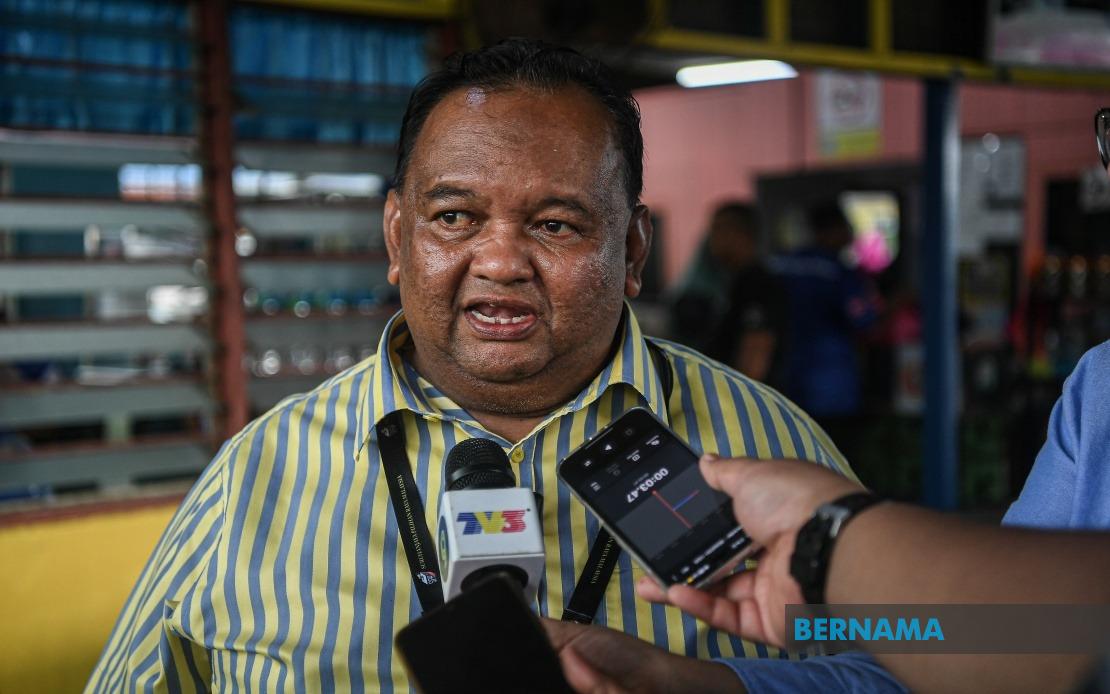
As Johor voters prepare for the July 11 state election, Muszaide Makmor, the Barisan Nasional incumbent seeking re-election for the Sedili state seat, has unveiled an economic development platform centred on modernising agricultural practices across rural Felda settlements. Speaking in Kota Tinggi, he outlined plans to roll out agro-technology initiatives in partnership with Malaysia's leading research universities, positioning farm innovation as the cornerstone of his bid to secure a second mandate from constituents.
The strategy reflects a deliberate attempt to address persistent income disparities in Felda communities, particularly among second-generation land recipients who inherited settlement plots but often lack the capital or technical knowledge to maximise productivity. Muszaide's manifesto emphasises that contemporary farming methods, when properly resourced and guided by academic expertise, can transform subsistence agriculture into commercially viable ventures capable of sustaining families and retaining rural populations. This approach acknowledges a broader challenge confronting Malaysian agriculture: ageing farmer demographics and youth migration to urban centres, where perceived economic opportunities appear more attractive than traditional land-based livelihoods.
Central to Muszaide's proposals are collaborative projects with Universiti Putra Malaysia and Universiti Malaysia Terengganu, leveraging their aquaculture and horticultural research capabilities. Initiatives under development include giant freshwater prawn hatcheries operating in the Sungai Sedili Kecil waterway, mud crab breeding operations in Sungai Sedili Besar, and structured ginger cultivation programmes. These ventures represent a departure from conventional rubber or palm cultivation, introducing diversified value chains that could insulate farmers from commodity price volatility and create supplementary income streams. His recent visit to Aping Timur revealed strong local appetite for such expansion, suggesting that residents view agricultural modernisation as a credible pathway to economic improvement.
Beyond farming innovations, Muszaide has emphasised the imminent establishment of an integrated palm oil mill as a catalyst for employment and regional economic stimulation. The facility is projected to generate over 200 direct job positions for local youth, directly addressing one of the region's most pressing concerns: underemployment and the outmigration of working-age populations seeking better wages elsewhere. The mill's creation would theoretically establish backward linkages to smallholder producers, processing intermediate goods locally rather than exporting raw materials, thereby expanding the value captured within the Sedili economy. For a constituency with historical dependence on primary production, such infrastructure represents meaningful economic diversification and domestic value addition.
However, Muszaide's electoral position is complicated by competition from two formidable challengers. Rasman Ithnain, representing Perikatan Nasional and a former Sedili assemblyman, has advanced a counter-narrative challenging the effectiveness of incumbent governance. Rasman contends that while nearly 3,000 second-generation Felda recipients have obtained land titles through administrative processes over preceding years, they remain unable to construct or inhabit homes on their plots. This disconnect between formal property ownership and functional residential use reflects deeper infrastructure deficits afflicting Felda communities. He has highlighted that monthly loan obligations to Syarikat Perumahan Negara Berhad, typically RM300 per household, burden owners for properties that remain incomplete, a situation he attributes to deliberately delayed approvals for basic development infrastructure allegedly driven by political calculations.
Water supply disruptions constitute the third pillar of Rasman's critique, which he has identified as the most acute infrastructural crisis affecting traditional villages and Felda settlements throughout Sedili, particularly during peak holiday periods when demand surges. This systemic vulnerability undermines quality of life and constrains economic activity, as agricultural development and small-scale industries require reliable water access. Rasman has pledged to petition the Johor state government to pursue aggressive remedial measures, including securing special federal loans dedicated to resolving the utility crisis, a proposal anchored in the assertion that Johor's historical water debt has been extinguished, theoretically freeing fiscal capacity for new infrastructure investment. Such commitments reflect broader frustrations with service delivery standards in rural constituencies, where infrastructure investment has historically lagged urban areas.
The third candidate, Amirul Husni Onn, represents Pakatan Harapan's challenge to both established contenders, though detailed policy positions have not been extensively reported. His inclusion creates a genuinely competitive three-way contest that may fragment support and determine outcomes through plurality mechanics rather than clear majoritarianism. Muszaide's strategy of appealing to voter assessments of his developmental track record suggests confidence in incumbency advantages and prior execution, though this approach risks appearing complacent if opponents successfully frame the incumbent as responsible for existing infrastructure deficiencies.
The Sedili contest encapsulates recurring themes within rural Malaysian electoral politics: competition between modernisation narratives promising technological advancement and traditional grievances emphasising unmet basic service provision. Muszaide positions himself as an innovator introducing contemporary farming methods and employment-generating industry, while Rasman channels frustration with incomplete infrastructure projects and service delivery failures. For Malaysian observers, the election outcome will partly signal voter preferences regarding economic development modalities—whether constituents prioritise speculative future opportunities through new ventures or immediate remediation of existing infrastructure gaps.
The broader Johor election context comprises 172 candidates contesting 56 state seats, with early voting scheduled for July 7 and main polling on July 11. The electoral exercise represents the 16th iteration of Johor state elections, reflecting the state's significance within Malaysian federalism and its role as a key economic hub in the southern peninsula. Campaign dynamics have increasingly emphasised economic management, rural development, and infrastructure delivery, issues that resonate across constituencies regardless of demographic composition. Sedili's contest, representing a microcosm of these national preoccupations, will offer insights into how voters evaluate incumbent performance and alternative policy proposals when faced with credible opposition candidates.

