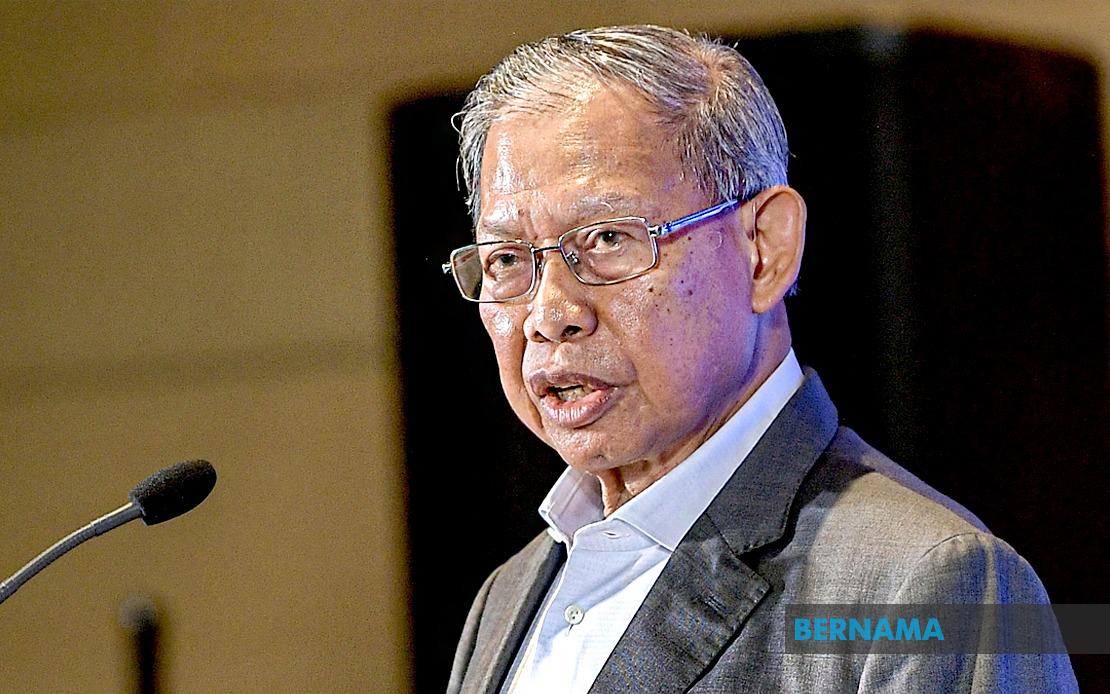
Datuk Seri Mustapa Mohamed has firmly closed the door on a parliamentary comeback, declaring at a public event in Pasir Mas that he will not contest in the 16th General Election and believes it is time for younger, more energetic leaders to step into prominent party and government roles. Speaking after a welcome ceremony honouring his return to UMNO and local Independence Month celebrations organised by the Council of Former Kelantan Elected Representatives, the former Jeli Member of Parliament signalled a decisive generational shift within the party's political hierarchy.
At 76 years of age, Mustapa acknowledged the physical limitations that come with advancing years, framing his withdrawal from active electoral competition not as a retreat but as a necessary adjustment that reflects fairness to emerging political talent. His comments carry particular significance given UMNO's ongoing efforts to rebuild credibility and organisational strength following years of internal turmoil and electoral setbacks. The former Minister of International Trade and Industry emphasised that sidelining capable younger politicians would be detrimental to any party's interests and to Malaysia's broader governance landscape.
Mustapa's political trajectory has itself embodied the complexities of contemporary Malaysian politics. He departed UMNO in September 2018 to join Bersatu during the tumultuous period following the 2018 general election, when the party experienced significant organisational fractures. His reaffiliation with UMNO in June this year represented a homecoming for a figure with decades of legislative and ministerial experience, signalling perhaps a broader stabilisation within the party as it recalibrates its direction and messaging ahead of the next electoral cycle.
The timing of these remarks matters considerably. With GE16 expected within the coming years—though no specific date has been announced—UMNO faces the challenge of refreshing its candidate slate while simultaneously retaining institutional knowledge and experienced voices. Mustapa's explicit endorsement of generational renewal suggests the party recognises that relying on established figures risks perpetuating voter perceptions of stagnation and disconnection from younger Malaysians' aspirations and concerns.
Despite stepping away from electoral frontline duties, Mustapa outlined plans to remain influential within UMNO through alternative channels. He intends to leverage his extensive experience in trade, diplomacy, and party matters by mentoring younger colleagues, providing strategic counsel, and strengthening the party's grassroots connectivity. This distinction—between abandoning electoral politics and withdrawing entirely from party affairs—reflects a sophisticated understanding of how seasoned politicians can transition their influence without clinging to formal positions that might be better filled by representatives more in touch with contemporary voter sentiments.
Another significant dimension of his continued contribution involves academia. Mustapa signalled his intention to share accumulated knowledge and insights with university students across both public and private institutions of higher learning. This educational engagement represents a potentially underutilised avenue through which senior political figures can shape younger Malaysians' understanding of governance, economics, and strategic thinking without requiring electoral mandates. For a figure with Mustapa's background in international commerce and policy formulation, such work could yield meaningful influence over an emerging generation of professionals and potential future leaders.
The broader context of UMNO's regeneration cannot be overlooked. The party has spent several years recovering from the shock of the 2018 election, during which voters decisively rejected its dominance following decades of electoral hegemony. Subsequent internal contestation, the COVID-19 pandemic, and shifting coalitional arrangements have complicated UMNO's path to recovery. Mustapa's pronouncements about leadership succession therefore resonate beyond simple biographical detail; they suggest the party is consciously addressing perceptions that it remains captive to ageing elites unwilling to accommodate fresh political voices.
For Malaysian voters and observers, particularly those concerned about democratic vitality and institutional renewal, such statements carry weight primarily to the extent they translate into actual organisational practice. Whether UMNO and other established parties genuinely empower younger candidates and allow them substantive decision-making authority remains an open question. Historical patterns suggest considerable reluctance among entrenched power centres to surrender control, even when publicly endorsing the principle of youth leadership. Mustapa's credibility on this matter will ultimately depend on how systematically UMNO implements generational turnover in candidate selection and internal party structures.
The regional dimension also warrants consideration. Across Southeast Asia, political parties confront similar tensions between institutional continuity and the imperative for renewal. Malaysia's experience with generational transition in major political organisations may offer instructive lessons—both positive and cautionary—for neighbouring countries grappling with comparable challenges around democratic representation, institutional legitimacy, and the cultivation of next-generation political leadership capable of addressing distinctly contemporary governance challenges.
Mustapa's explicit refusal to seek another parliamentary term, coupled with his articulation of alternative contributions to party and national life, represents a form of political statesmanship that deserves recognition even as observers remain appropriately sceptical about whether such pronouncements translate into systemic organisational change. The challenge for UMNO and Malaysia's broader political ecosystem involves converting rhetorical support for youth leadership into structural opportunities that genuinely expand younger politicians' horizons and agency, rather than relegating them to nominal positions while decision-making authority remains concentrated among older figures.

