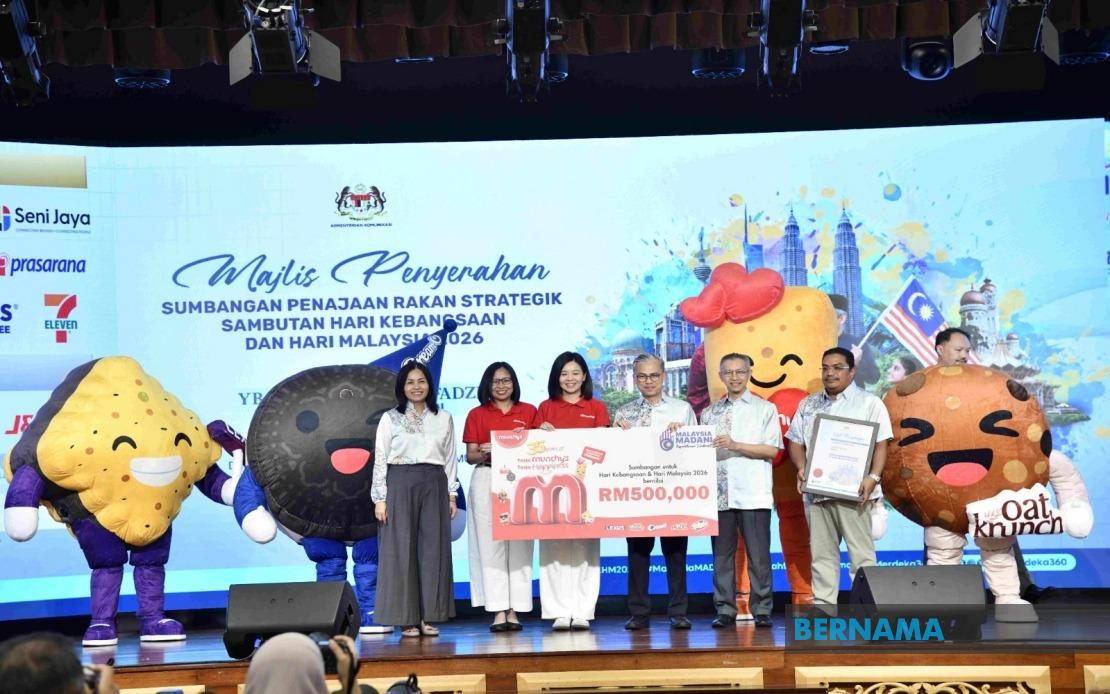
Munchy's Malaysia has made a substantial commitment to the nation's patriotic calendar by pledging RM500,000 worth of products for the 2026 National Day and Malaysia Day (HKHM) celebrations. The contribution, formally presented to Communications Minister Datuk Seri Fahmi Fadzil at a ceremony held at Menara Komunikasi in Putrajaya, represents the confectionery manufacturer's most generous donation to date in support of these significant national observances.
The donation underscores the company's deepening involvement in Malaysia's most important national celebrations. By making this commitment for the third consecutive year, Munchy's has signalled its intention to remain a consistent partner in initiatives that bring Malaysians together across ethnic, religious, and regional lines. The timing of the pledge—coinciding with the company's own 35th anniversary—reflects a deliberate alignment between corporate milestone and national sentiment, effectively positioning the brand as a stakeholder in Malaysia's collective identity and social cohesion efforts.
Rodney Wong, chief executive officer of Munchy's Malaysia, articulated the reasoning behind the expanded contribution in his statement, emphasizing that the HKHM celebrations hold particular resonance for Malaysians seeking to reaffirm their sense of belonging and shared purpose. He framed the donation not merely as corporate philanthropy but as a reciprocal gesture—an opportunity for the company to acknowledge the domestic market and consumer base that has sustained its operations across three-and-a-half decades. This framing transforms a commercial gesture into a narrative of gratitude and mutual investment in the nation's social fabric.
The escalating value of Munchy's contributions year-on-year suggests either rising corporate confidence in Malaysia's economic trajectory or a calculated decision to increase brand visibility during peak consumption periods aligned with national celebrations. The HKHM festivities, occurring in August and September respectively, traditionally witness elevated consumer spending on food and beverage products, making them strategically opportune moments for companies to distribute goods while garnering goodwill and media attention simultaneously.
From a broader corporate social responsibility perspective, Munchy's approach demonstrates the evolving expectations placed on Malaysian enterprises to demonstrate patriotism and social commitment beyond profit generation. In an increasingly competitive consumer landscape, companies that can authentically connect their commercial activities with national values and public welfare initiatives often enjoy competitive advantages in brand perception and customer loyalty. For a snack manufacturer operating in a commoditized market, such strategic positioning becomes particularly valuable in differentiating the brand from competitors.
The distribution mechanism outlined—channelling products through selected programmes and activities linked to the HKHM celebrations—suggests a partnership framework whereby Munchy's products will reach diverse demographics and geographic areas throughout Malaysia. This approach ensures broad visibility for the brand while genuinely extending the reach and appeal of official national celebrations to communities that might otherwise have limited access to organized festivities. The partnership model between corporate donors and government agencies organizing national events has become increasingly sophisticated in Malaysian public administration.
For Communications Minister Datuk Seri Fahmi Fadzil's portfolio, securing such corporate support streamlines the logistical and financial burden of organizing nationwide celebrations, allowing government resources to be allocated toward other dimensions of the festivities. The acceptance of private sector contributions to public celebrations, however, also raises questions about the appropriate balance between state-led commemoration and commercialized patriotism—concerns that Malaysian policymakers have grappled with as corporate involvement in national events has expanded.
The significance of Munchy's' contribution extends beyond the immediate utility of the products being distributed. It reflects a broader trend wherein Malaysian corporations increasingly view alignment with national symbols and celebrations as integral to their corporate identity and market positioning. For multinational or diversified companies operating in Malaysia, such localized expressions of patriotism serve to counterbalance perceptions of foreign ownership or international orientation, effectively anchoring the company within Malaysian society and consumer consciousness.
Looking toward the 2026 celebrations, the visibility that Munchy's gains through this partnership may influence consumer perception and purchasing decisions during a period when emotional attachment to national symbols runs high. The festive season amplifies receptiveness to patriotic messaging, and products distributed during these occasions benefit from positive associative effects—consumers linking the brand with national pride, unity, and celebration. This psychological dimension of strategic corporate involvement in public ceremonies represents a sophisticated understanding of how commercial interests and national sentiment can be productively aligned.
The three-year continuity of Munchy's participation also suggests the establishment of an institutional relationship with government bodies organizing HKHM celebrations. Such sustained partnerships can evolve into formal frameworks or memoranda of understanding, potentially extending beyond the immediate donation cycle to encompass broader collaboration on health, nutrition, or community development initiatives. For the snack industry in Malaysia, building credibility and legitimacy through such public-spirited gestures becomes increasingly important given mounting consumer and regulatory scrutiny regarding product composition, marketing practices, and health impacts.
As Malaysia prepares for the 2026 celebrations, corporate contributions like Munchy's will likely constitute an expanding share of the financial and material resources deployed to make the festivities accessible and enjoyable for citizens across the nation. The interplay between public funding, corporate partnership, and voluntary community participation increasingly characterizes how Malaysia organizes its most important national observances, reflecting both the practical efficiencies gained and the subtle reframing of patriotism as a collaborative endeavour between state, business, and society.

