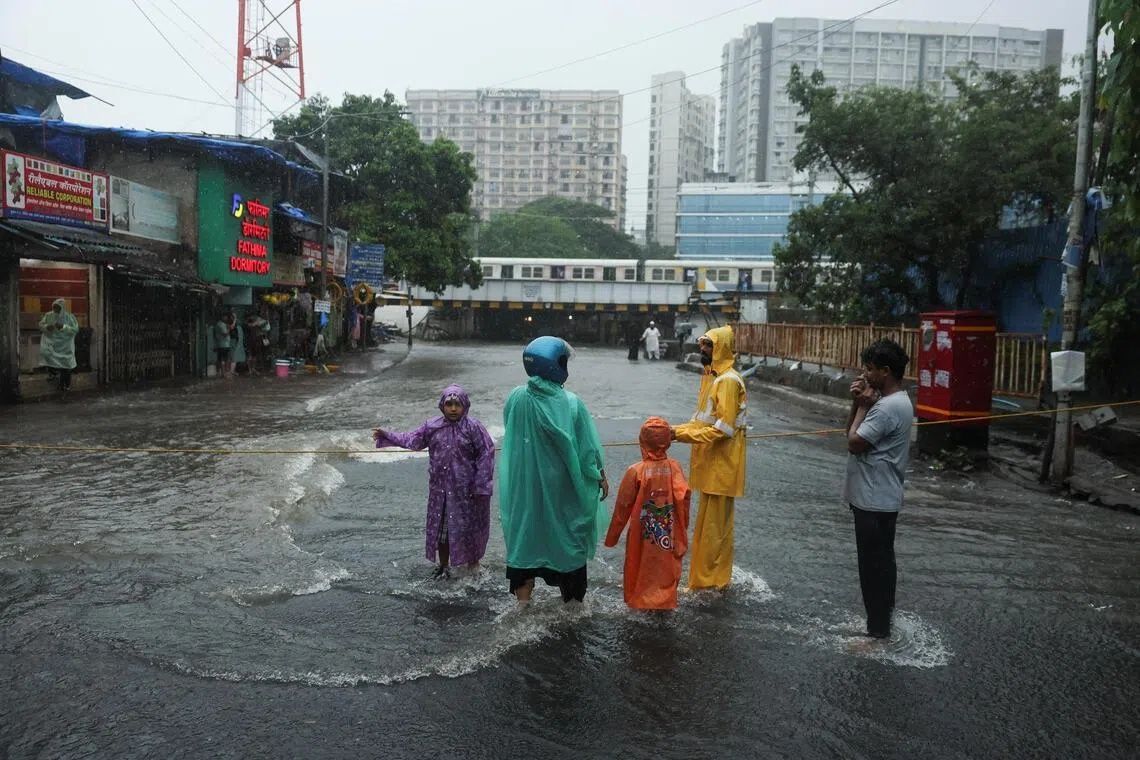
Mumbai is confronting a mounting crisis as days of unrelenting monsoon rainfall have claimed two lives, disrupted the city's transportation networks and exposed troubling shortcomings in civic infrastructure management. The India Meteorological Department's orange alert issued for July 3 underscored the severity of conditions expected to persist, with authorities warning residents to curtail all non-essential movement as the deluge continued through the night. The twin tragedies have ignited fierce political scrutiny, with legislators demanding systemic accountability rather than the conventional practice of penalising lower-ranking officials whilst senior management escapes consequences.
The first fatality occurred on June 30 in Chembur, where violent winds uprooted a substantial tree that crashed directly onto a school bus transporting pupils from Universal High School and Tilak Nagar School. The collision trapped multiple children within the vehicle, necessitating emergency responders to deploy cutting apparatus to extract them from the wreckage. Among the injured was eleven-year-old Vihan Shrivastav, whose condition deteriorated sufficiently to require hospitalisation at both Zen Hospital and Jain Hospital. Despite medical intervention, the child succumbed to his injuries, transforming what should have been an ordinary school commute into a preventable tragedy that has devastated his family.
The incident immediately drew responses from state leadership, with Maharashtra minister Ashish Shelar characterising the event as deeply regrettable and asserting that both the state administration and the Brihanmumbai Municipal Corporation bore joint responsibility for supporting the bereaved family. Shelar pledged that appropriate action would be initiated against personnel deemed accountable for the structural or maintenance failures that contributed to the tree's collapse. However, this standard formula of administrative responsibility failed to satisfy local legislators who visited the victim's parents. Maharashtra Legislative Assembly member Rohit Pawar drew particular attention to the emotional dimension of the loss—the child was his parents' sole offspring—whilst simultaneously articulating a broader institutional critique.
Parwar's intervention signalled a shift in the tenor of accountability discussions, moving beyond perfunctory condemnations to question the entire pre-monsoon inspection regime that is theoretically designed to prevent such catastrophes. He argued that the continued recurrence of similar incidents suggested systemic negligence rather than isolated oversights, and explicitly rejected the political convention of sacrificing junior officials to deflect scrutiny from senior management. His insistence that punishment must extend throughout the administrative hierarchy reflected growing public frustration with the cyclical nature of monsoon-related deaths in India's financial capital, where seasonal flooding and falling debris claim lives with depressing regularity.
Scarcely two days later, a second tragedy unfolded in Sakinaka, where Aslam Isak Shaikh, a sixty-year-old resident, fell into an exposed manhole during heavy downpours on July 2. The drainage opening had been unsealed for maintenance operations, yet those responsible had failed to implement adequate safety barriers or warning systems. Shaikh, who was reportedly conducting a telephone conversation whilst navigating the rain-soaked street, was swept away by the forceful flow of water accumulating in the drainage system. Recovery teams required approximately three hours to locate and retrieve his body, adding to the trauma experienced by his family and community.
The manhole incident proved even more inflammatory than the tree collapse because it represented a clear, documented maintenance procedure conducted without basic safety precautions—a failure of administrative process rather than an act of nature. Maharashtra Legislative Assembly member Vijay Wadettiwar responded by demanding criminal prosecution rather than administrative discipline, contending that the absence of proper barricading during inclement weather constituted gross negligence. He explicitly identified ward officers and affiliated officials as culpable and called for the initiation of a formal first information report, signalling the potential for criminal charges rather than merely departmental action.
Mumbai Mayor Ritu Tawde, tasked with managing the immediate crisis response, characterised the manhole incident as an administrative lapse and announced compensation of ten lakh rupees—approximately US$10,455—for Shaikh's family. Whilst the monetary gesture acknowledged civic responsibility, it could not address the underlying systemic vulnerabilities that permitted such preventable deaths to occur with disturbing frequency. Speaker of the Maharashtra Legislative Assembly Rahul Narwekar confirmed that the House had deliberated on the tragedy and that detailed investigative reports had been commissioned, yet such procedural responses typically precede minimal substantive reforms.
Beyond the specific fatalities, Mumbai's monsoon has created widespread paralysis across urban transport systems. Waterlogging has rendered major commercial and residential zones inaccessible, with areas including Dadra East and Sion Gandhi Market experiencing severe congestion as commuters navigated submerged thoroughfares. A heavy truck overturned near the Kharghar Toll Plaza on the Sion-Panvel Highway, obstructing multiple lanes and creating bottlenecks that extended journey times significantly during peak morning travel periods. Emergency response teams laboured to clear debris and restore traffic flow, yet their efforts merely addressed symptoms rather than the underlying drainage and infrastructure deficiencies that have plagued Asia's most densely populated metropolitan region.
For Malaysian observers, Mumbai's monsoon crisis carries sobering implications regarding regional urban infrastructure resilience. Both India and Malaysia experience intense seasonal rainfall patterns, yet the consequences in Mumbai—preventable deaths resulting from maintenance failures and inadequate pre-event preparation—suggest that even wealthy metropolitan authorities struggle to implement consistent safety protocols. The political dynamics evident in Mumbai's response, wherein legislators demand greater accountability from senior officials rather than accepting ritualistic punishment of junior staff, reflect broader questions about governance quality and institutional responsibility that resonate across South and Southeast Asia.
The structural vulnerabilities exposed by the Chembur and Sakinaka incidents—unattended trees prone to uprooting, unmaintained drainage systems, inadequately secured maintenance operations—constitute systemic rather than episodic challenges. The India Meteorological Department's ongoing orange alerts and continued heavy rainfall forecasts suggest that additional incidents remain probable unless comprehensive remedial action is undertaken immediately. Authorities have instructed residents to refrain from unnecessary travel whilst civic teams work to clear flooded roadways and remove fallen vegetation, yet such advisories function as temporary palliatives rather than solutions to the underlying infrastructure deficit.
Mumbai's current crisis reflects the tension between metropolitan growth, seasonal climatic intensity, and governmental capacity to maintain essential infrastructure to acceptable safety standards. The fatalities of eleven-year-old Vihan Shrivastav and sixty-year-old Aslam Isak Shaikh represent quantifiable human costs of this systemic failure, yet they also serve as catalysts for accountability discussions that extend beyond conventional bureaucratic responses. As the monsoon continues its relentless assault on India's financial capital, the focus now turns to whether the political pressure evident in legislative interventions will translate into substantive institutional reform or whether Mumbai will, as in previous monsoon seasons, document the tragedies and resume normal operations once the rains subside.

