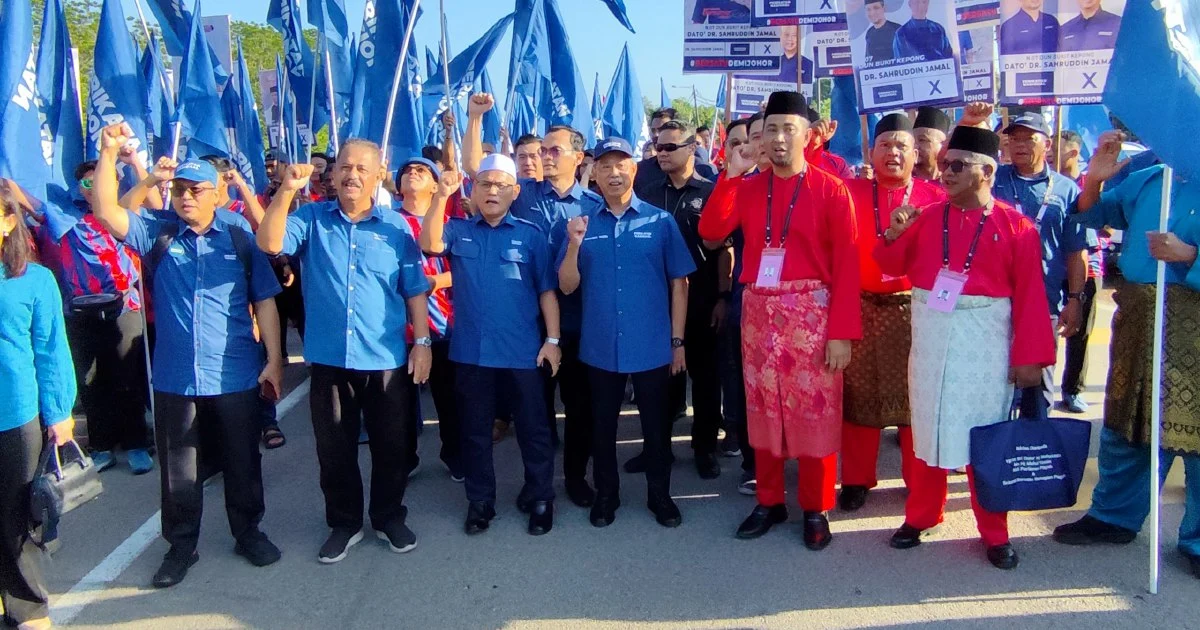
Tan Sri Muhyiddin Yassin's appearance at the Pagoh Sports Complex Hall on Tuesday morning underscored Bersatu's consolidated messaging as the party fields candidates across Johor in what promises to be a closely contested election cycle. The Bersatu president's arrival at 8.45 am to stand alongside Sahruddin during the nomination process reflected the party's strategy of projecting internal cohesion and leadership visibility during a critical electoral window.
The Bukit Kepong constituency represents one of several seats where Bersatu has positioned itself competitively in Johor, a state where political realignments have repeatedly reshaped the electoral landscape. By ensuring his personal attendance at the nomination centre rather than delegating the responsibility to other senior figures, Muhyiddin emphasised the significance his party places on this particular contest and the candidate representing it.
Muhyiddin's direct involvement in the campaign mechanics carries particular weight within Malaysian political culture, where the physical presence of party leadership at key moments often signals confidence and commitment. This ritualistic aspect of electoral engagement—the public show of unity between national leadership and individual candidates—serves multiple constituencies: it reassures grassroots supporters of the party's seriousness, provides visual material for campaign communications, and demonstrates to voters that the candidate enjoys backing at the highest organisational levels.
The Pagoh Sports Complex setting itself is worth noting, as such venues have historically served as gathering points for political nominations across Malaysia. The choice of location and timing suggested Bersatu had coordinated logistics carefully, ensuring media presence and public visibility for what might otherwise be a procedural administrative event. In Malaysia's electoral environment, managing the narrative around nominations—ensuring orderly processes, clear symbolism, and unified messaging—has become as important as the nominations themselves.
Bukit Kepong's electoral dynamics reflect broader tensions within Johor politics, where competition between Bersatu, UMNO, and the broader Pakatan Harapan coalition has intensified following national political shifts of recent years. The constituency represents a battleground where parties must appeal to voters whose allegiances have become increasingly fluid. By positioning Sahruddin as a candidate worthy of presidential-level support, Muhyiddin attempted to frame the race as more than a local contest but rather a referendum on Bersatu's governance credentials and political direction.
For Southeast Asian observers watching Malaysian electoral dynamics, the significance of Muhyiddin's gesture extends beyond Bukit Kepong itself. Bersatu has gradually repositioned itself from a party on the political periphery to one claiming a central role in Malaysia's political future. The party's performance in Johor will provide measurable indication of whether this repositioning resonates with voters beyond urban centres and younger demographics where Bersatu previously found most traction.
The nomination process in Malaysia, while ostensibly administrative, carries considerable symbolic weight. When party presidents or senior figures appear to conduct the formalities, observers interpret such presence as confidence in the candidate and the party's wider electoral prospects. Muhyiddin's 8.45 am arrival ensured he would be visible during peak nomination hours, maximising both media coverage and candidate morale during a moment when such visibility matters for campaign momentum.
Johor elections occupy a distinctive place in Malaysian politics due to the state's size, economic importance, and the political diversity of its constituencies. Any party seeking to claim national relevance must demonstrate competitive strength in Johor. For Bersatu, which emerged relatively recently as an independent political force compared to UMNO or DAP, each Johor contest offers an opportunity to consolidate support and build electoral infrastructure for future contests. Muhyiddin's decision to personally accompany Sahruddin reflected an appreciation of these stakes.
The broader context matters here too. Malaysian voters increasingly evaluate parties not merely on historical records but on demonstrated organisational competence, unity of messaging, and the calibre of candidates fielded. By ensuring top-level visibility during the nomination phase, Bersatu signalled to the Bukit Kepong electorate that it was taking the race seriously and that party resources would be deployed strategically. Such displays of organisational discipline, whatever their actual correlation with governance capability, influence voter perceptions of party viability.
For political analysts tracking Bersatu's trajectory, Muhyiddin's appearance at Pagoh offered additional clues about the party's resource allocation and strategic priorities within Johor. The decision to personally oversee nomination procedures suggests headquarters assessments of Bukit Kepong's winnability and importance within the state's broader electoral arithmetic. In Malaysia's proportional representation context, controlling even modest numbers of seats can yield disproportionate influence over government formation and policy direction.
The nomination process itself represents a formal democratic mechanism, yet in Malaysian political culture it frequently becomes theatre through which parties communicate confidence, unity, and intent to both their supporters and opponents. Muhyiddin's presence transformed a routine administrative procedure into a leadership statement about Bersatu's commitment to the Johor election and Sahruddin's candidacy specifically. Such moments, replicated across dozens of constituencies during any general election, accumulate to shape voter perceptions of party momentum and leadership seriousness.

