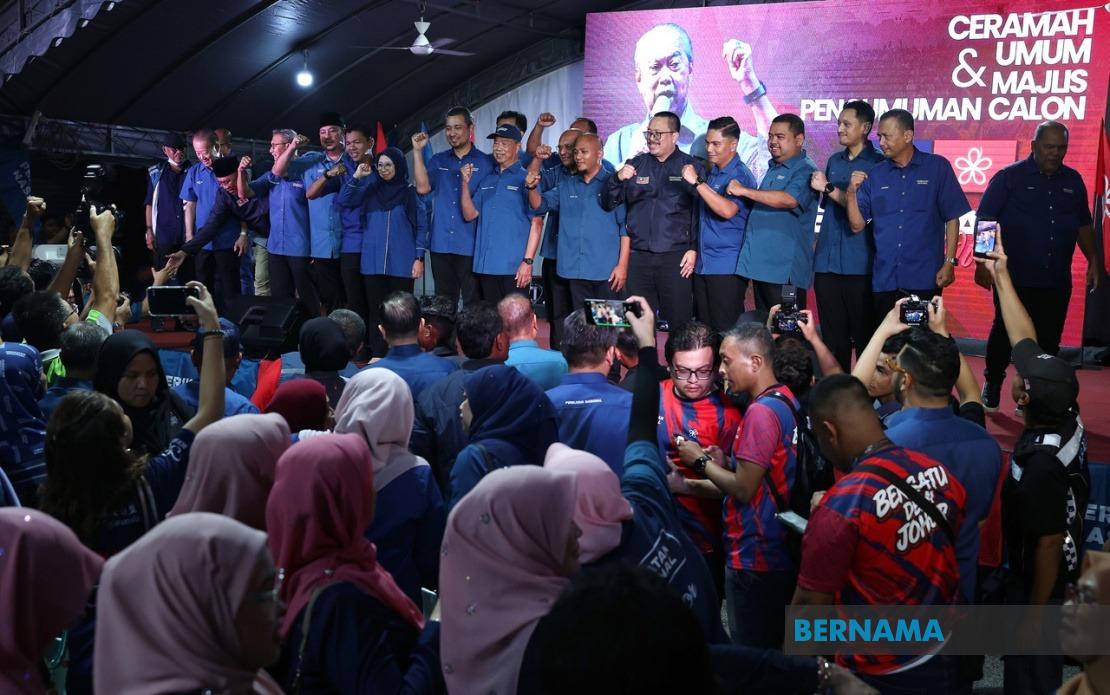
Parti Pribumi Bersatu Malaysia (Bersatu) president Tan Sri Muhyiddin Yassin unveiled the party's slate of 16 candidates for the forthcoming Johor State Election at an event in Muar on June 25, signalling the party's determination to make gains in the southern state's political landscape. The candidate announcement took place during a public ceramah session at the Pagoh Parliamentary Service Centre in Taman Pagoh Jaya, where party supporters and media gathered to hear the leadership's electoral strategy.
The timing of the announcement comes as the political calendar accelerates ahead of the contest. The Election Commission has designated June 27 as nomination day, providing candidates with just two days to formally register their candidacy before the official campaign period commences. This compressed timeline underscores the urgency with which political parties must mobilize their machinery, ensuring that campaign operations are already well underway by the time nomination papers are submitted.
Voters in Johor will head to the polls on July 11, marking the 16th state election for the southern state. The election was necessitated by the dissolution of the Johor State Assembly, which occurred on June 1, clearing the way for fresh electoral contests across all 56 state seats. The dissolution followed political developments within the state, reflecting the fluid nature of coalition politics in Malaysia where state-level fortunes often shift based on party alignments and public sentiment.
Bersatu's participation in the Johor contest reflects its status as a significant political player in Malaysian electoral politics. The party, which has experienced considerable fluctuations in political fortunes since its formation, views the Johor election as an opportunity to strengthen its presence in one of Malaysia's most economically developed states. The party's headquarters in Putrajaya and its leadership's involvement in federal governance has provided it with resources and visibility to contest at the state level.
The 16-candidate lineup demonstrates Bersatu's strategic focus on winnable seats. Among those announced was Mohd Idzharruddin Mohd Nasirruddin, who will contest in the N8 Bukit Pasir constituency. The selection of candidates typically reflects a party's assessment of demographic trends, voter preferences, and the strength of existing ground organization in particular electoral divisions.
Johor's political significance extends beyond its size as an electoral arena. As a border state adjacent to Singapore, Johor plays a crucial role in regional economics and security, making its governance matters of interest to federal planners and neighbouring nations alike. The state's development trajectory, particularly in areas such as port operations, manufacturing, and tourism infrastructure, depends partly on stable governance and coherent policy implementation at the state level.
The election comes during a period of broader political realignment across Malaysia. Coalition dynamics have shifted considerably in recent years, with parties recalibrating their federal and state-level strategies. Bersatu's decision to field candidates across the full complement of seats demonstrates confidence in its electoral machinery and reflects its commitment to challenging competing coalitions for control of the state government.
The ceramah format employed for the candidate announcement serves a dual purpose within Malaysian electoral tradition. Beyond merely introducing the slate of candidates to the public, such events allow party leadership to articulate the party's platform, critique opposing coalitions, and energize the party faithful. Muhyiddin's direct involvement in the announcement emphasizes the party's commitment to the Johor contest and signals to supporters that state-level elections retain the serious attention of federal party structures.
For Malaysian voters in Johor, the election presents an opportunity to assess party performance and consider alternative governing arrangements at the state level. The conduct of these elections shapes not only state-level administration of healthcare, education, and local infrastructure but also influences the broader political climate that affects federal politics. Strong state-level showings can translate into momentum and negotiating leverage at the federal level, making even seemingly localized contests matters of nationwide political consequence.
The two-week campaign period between nomination day and the actual vote provides candidates and parties with sufficient time to conduct ground operations, hold public forums, and engage with voters on substantive policy matters. In recent Malaysian elections, this period has often witnessed intense activity, with candidates covering their constituencies systematically to secure voter pledges and address constituent concerns.
Bersatu's 16-candidate strategy suggests the party views itself as a competitive force capable of challenging for state government control. The outcome of this election will provide indicators of the party's electoral health, its ground organization capacity, and voter receptiveness to its political messaging. These results will likely influence calculations about coalition positioning ahead of the next federal election cycle.
As the Johor electorate prepares for the July 11 poll, the competing visions offered by different political coalitions will become increasingly visible through campaign activities, media engagement, and direct candidate interactions with voters. The election represents not merely a contest for 56 state seats but a broader referendum on political direction, governance quality, and the electorate's appetite for change or continuity in how Johor is managed during a period of significant economic transformation across Southeast Asia.

