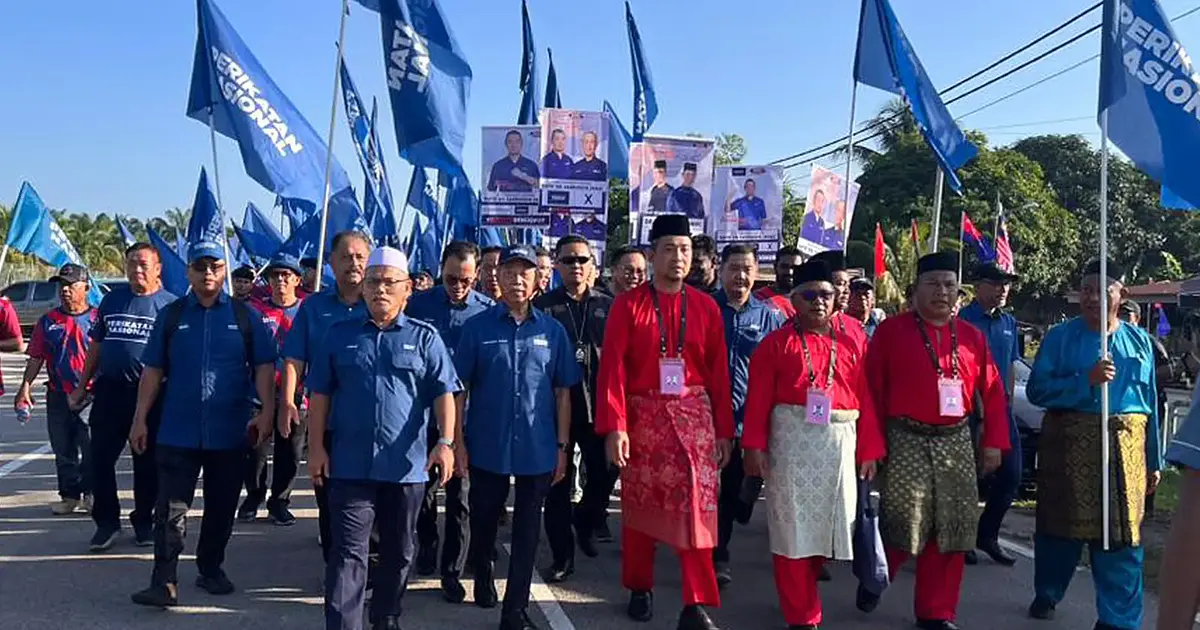
Former Prime Minister Muhyiddin Yassin demonstrated Perikatan Nasional's commitment to Selangor's Bukit Kepong constituency by appearing alongside hundreds of party faithful at a major campaign event, lending his political weight to the re-election effort of two-term assemblyman Dr Sahruddin Jamal, who carries Bersatu's banner into the contest.
The gathering underscored the importance of the Bukit Kepong seat within the broader political calculations of Perikatan Nasional, the coalition that Muhyiddin leads. By deploying his considerable political profile at the event, Muhyiddin signalled that the coalition views this suburban Selangor constituency as a critical battleground where momentum and voter confidence could prove decisive in the lead-up to elections.
Dr Sahruddin Jamal's candidacy represents continuity for Bersatu in Bukit Kepong. His two terms as assemblyman have established him as an incumbent with a track record in the constituency, though the political landscape across Selangor has shifted considerably since the last electoral cycle. The presence of Muhyiddin and the mobilisation of party supporters suggests Bersatu intends to defend this seat aggressively rather than treating it as merely secure.
The large turnout of Perikatan Nasional supporters reflects the coalition's strategy of building visible momentum ahead of any electoral contest. In Malaysian politics, the ability to marshal supporters for public events carries symbolic weight, demonstrating organisational capacity and voter enthusiasm to both supporters and critics alike. The Bukit Kepong rally thus served multiple purposes: energising the grassroots, providing media coverage, and sending a signal about Perikatan's competitive intent in Selangor's suburban constituencies.
For Dr Sahruddin Jamal, Muhyiddin's presence represented a significant endorsement from the highest echelons of his party. As a two-term incumbent seeking to extend his tenure, he needed to refresh his mandate with voters while also navigating the increasingly fragmented political landscape that has characterised Malaysian elections in recent years. The high-profile appearance suggested that Perikatan Nasional's leadership had confidence in his ability to retain the seat despite potential headwinds.
Selangor remains politically contested territory, with no single coalition commanding overwhelming dominance. The state's suburban constituencies, particularly those around the Klang Valley and Kuala Lumpur's periphery, frequently determine overall electoral outcomes. Bukit Kepong, situated in this crucial zone, attracts significant political attention and resources from competing coalitions seeking to expand or maintain their presence in Malaysia's most economically developed state.
Muhyiddin's involvement in grassroots campaign events reflects his continued role as the public face of Perikatan Nasional despite no longer holding the office of Prime Minister. His ability to draw crowds and command media attention remains a valuable asset for his coalition, particularly in constituencies where he can bolster local candidates' campaigns. The Bukit Kepong event exemplified this pattern of senior leadership directly engaging with voters in support of specific candidates.
The rally also highlighted Bersatu's strategy within Perikatan Nasional's broader coalition framework. As the leading Malay-Muslim party within the partnership, Bersatu must demonstrate that it retains the capacity to contest seats independently and secure electoral support based on its own platform and personalities. Events like the Bukit Kepong gathering served to reinforce this message to both party members and voters.
Politically, the timing and scale of the rally suggested that Perikatan Nasional anticipated a competitive electoral environment in Selangor. Rather than assuming Dr Sahruddin Jamal would coast to victory as an incumbent, the coalition's leadership appeared to treat the seat as requiring significant campaign effort and high-level attention. This strategic posture indicated confidence tempered by realism about the volatility of contemporary Malaysian electoral politics.
The hundreds of supporters who attended the event represented the human dimension of political mobilisation in Malaysia. These individuals—many of whom likely travelled to attend, took time from work or family commitments, and participated in public displays of political allegiance—formed the foundation upon which electoral success ultimately rests. Their presence at the rally illustrated the continued capacity of established political parties to activate their support networks for major campaign events.
For observers across Southeast Asia, the Bukit Kepong rally offered insights into how Malaysian political coalitions operate at the grassroots level. The mobilisation of supporters, the deployment of senior leaders, and the strategic focus on specific constituencies reflected patterns of political engagement common throughout the region, where personal networks, party infrastructure, and charismatic leadership remain central to competitive electoral politics despite the growing importance of digital platforms and social media campaigning.

