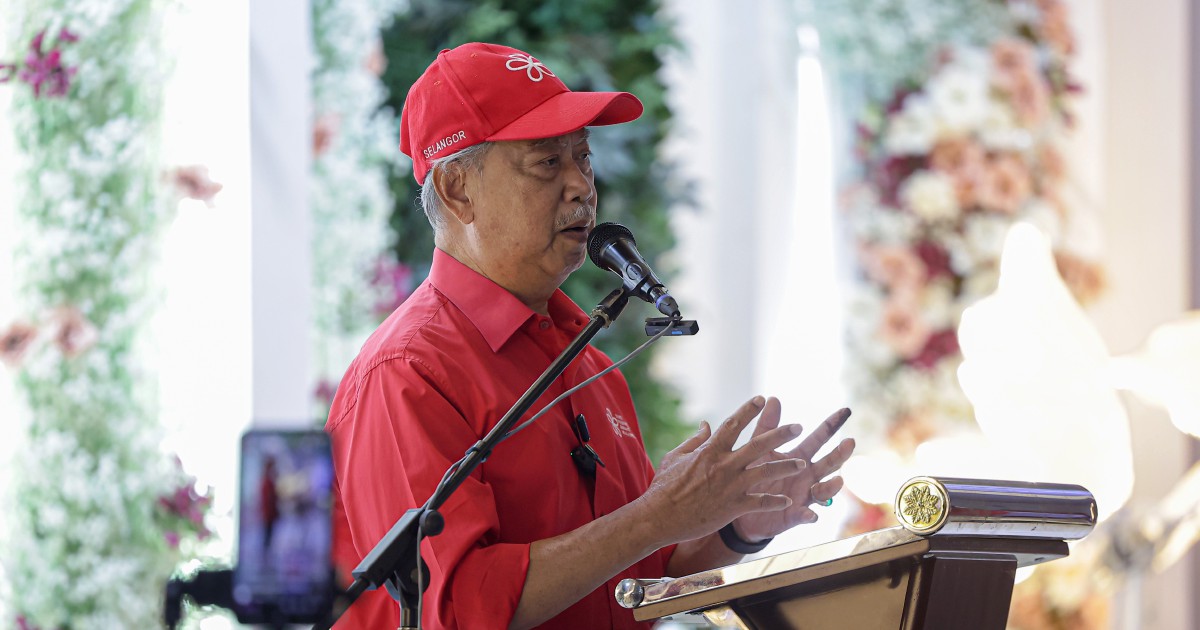
The simmering tensions within Malaysia's governing coalition have surfaced publicly in Seremban, where Bersatu president Tan Sri Muhyiddin Yassin has forcefully rebutted accusations from Umno vice-president Datuk Seri Mohamed Khaled Nordin that his party functions as a destabilising force in the Negri Sembilan state election. The exchange represents a rare moment of open disagreement between coalition partners and underscores growing friction over power-sharing arrangements and electoral strategy as political parties jostle for territorial advantage ahead of crucial state contests.
Muhyiddin's response came after Khaled's characterisation of Bersatu's electoral participation as disruptive to the broader coalition's prospects in the contest. The Bersatu leader dismissed this framing outright, defending his party's right to field candidates and challenge for representation across Negri Sembilan constituencies. This public contradiction reflects deeper anxieties within the alliance about resource allocation, candidate selection, and the distribution of electoral gains—issues that have repeatedly tested the cohesion of parties supposedly united under a common political banner.
For observers of Malaysian politics, the Negri Sembilan election serves as a microcosm of broader coalition dynamics that have persisted since the formation of the current government. Bersatu, which emerged from dissidents within Umno and other parties, has consistently struggled to establish itself as a credible standalone political force. Its participation in state elections often draws criticism from larger alliance partners who worry that vote-splitting may undermine their own candidates, particularly in constituencies where victory margins are razor-thin. This anxiety has created a perpetual tension between Bersatu's aspiration for recognition and expansion versus the strategic interests of established powerhouses like Umno.
Khaled's "spoiler" remark, despite its sharpness, reflects a calculation increasingly common among Umno strategists. Some within Malaysia's largest Malay-Muslim party view Bersatu's autonomous electoral behaviour as inconsistent with genuine coalition discipline. They argue that parties claiming membership in the same alliance should coordinate efforts to avoid fragmenting the anti-opposition vote. Conversely, Bersatu leadership maintains that denying their members the right to contest seats amounts to subordination incompatible with a democratic coalition framework. This philosophical divide has never been fully resolved and periodically erupts into public disputes.
The timing of the row carries particular significance for Negri Sembilan voters and the broader electorate watching these dynamics. State elections function as barometers of national sentiment and provide important signals to party leaderships about public acceptance of their respective strategies and alliances. If Bersatu's participation genuinely fragments the vote and costs the coalition seats, the political ammunition generated will echo through subsequent contests. Conversely, if Bersatu candidates perform credibly, it vindicates their claim to legitimate representation within the coalition structure.
For Malaysia's opposition coalition, the infighting presents an opportunity. PH and other opposition blocs typically benefit from disunity within the government camp, as voters dissatisfied with one ruling partner may swing towards alternative options rather than simply redistributing their votes within the established coalition. The very public nature of the Muhyiddin-Khaled exchange therefore carries strategic implications extending well beyond Negri Sembilan's borders, potentially influencing voter behaviour across multiple upcoming state contests.
Historically, Bersatu has struggled with legitimacy questions that Khaled's remarks implicitly invoke. The party was forged primarily through recruitment of defectors rather than grassroots mobilisation, and sceptics have long questioned whether it represents genuine organisational strength or merely a repository for ambitious politicians seeking leverage. Muhyiddin's vigorous defence of his party's electoral participation suggests he recognises the existential stakes—allowing himself and Bersatu to be marginalised would undermine the party's relevance within coalition negotiations over cabinet positions, procurement opportunities, and legislative agenda-setting.
The coalition's broader challenge lies in reconciling genuine federative principles with the practical requirements of electoral competitiveness. Formal agreements exist governing candidate selection and resource allocation, yet these frameworks have proven insufficient to prevent recurrent disputes. Neither Umno nor Bersatu appears willing to yield ground substantially, each calculating that maintaining maximum flexibility serves their long-term interests better than accepting permanent subordination. Until this fundamental tension is resolved through genuine institutional reform or dramatic realignment, similar public clashes seem inevitable.
Regional observers in Southeast Asia watch these domestic Malaysian disputes with particular interest, as they reveal patterns of coalition maintenance and elite negotiation applicable across the broader region. Countries from Thailand to Indonesia have grappled with analogous challenges involving multi-party coalitions attempting to maintain coherence whilst balancing constituent parties' distinct organisational interests. How Malaysia's coalition partners ultimately navigate these tensions may offer instructive lessons for other democracies managing complex alliance politics.
Looking ahead, the Negri Sembilan election itself will provide definitive evidence regarding whether Khaled's "spoiler" characterisation holds empirical weight. Vote tallies and seat distributions will reshape calculations within the coalition about optimal power-sharing arrangements. Beyond this particular contest, however, the underlying structural issues remain unresolved, suggesting that further public disputes between coalition partners should be anticipated rather than viewed as aberrations from normal coalition functioning.

