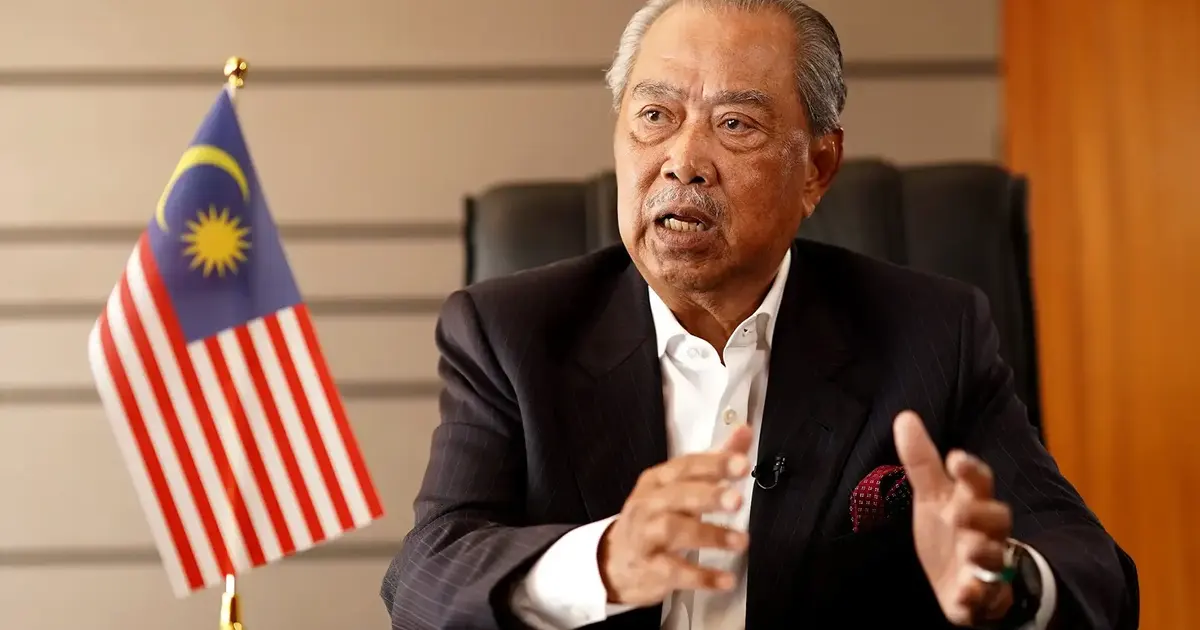
Bersatu president Muhyiddin Yassin has mounted a forceful rebuttal against Finance Minister Annuar Musa, disputing claims that his party suffered marginalisation within the Perikatan Nasional coalition despite being instrumental in its formation. The exchange marks an escalation in festering tensions between the two political heavyweights, exposing fractures within an opposition bloc that has struggled to maintain unity since Malaysia's political upheaval in recent years.
Muhyiddin's counter-attack suggests that Annuar's allegations about Bersatu's diminished standing carry implications that strike at the heart of power-sharing arrangements within PN. By challenging these assertions directly, the Bersatu supremo is defending not only his party's historical contributions to the coalition but also staking claim to continued relevance in opposition politics. The dispute underscores how founding members of any political alliance expect recognition and commensurate influence in decision-making structures.
The PN coalition itself emerged from significant political realignment, bringing together various parties seeking to counter the Pakatan Harapan government that had gained power following the 2018 general election. Bersatu's founding status carries weight in these negotiations, as the party provided crucial parliamentary support and legitimacy to the broader opposition movement. Annuar's characterisation of sidelining directly challenges the premise that all coalition partners enjoy equitable treatment regardless of their foundational role.
For Malaysian observers, this public bickering highlights how fragile opposition coalitions remain when personal ambitions and party interests diverge. PN has repeatedly presented itself as a unified alternative to the ruling government, yet these internal disputes reveal vulnerability to fracturing under pressure. When senior figures like Annuar and Muhyiddin engage in public disagreements, it signals to voters that the coalition may lack the cohesion necessary to govern effectively should it return to power.
The substance of the disagreement—whether Bersatu was genuinely sidelined or whether Annuar overstated the case—matters significantly for coalition credibility. If Bersatu truly held founding membership but received minimal voice in strategic decisions, it suggests a hierarchical structure where some partners wielded disproportionate influence. Conversely, if Annuar's claims are exaggerated, it raises questions about why such grievances were aired publicly rather than resolved through internal mechanisms, indicating a breakdown in coalition discipline.
This row also carries implications for Bersatu's strategic positioning ahead of future electoral contests. The party must demonstrate that remaining within PN serves its interests and those of its membership. Should Muhyiddin conclude that the coalition no longer offers adequate returns, he has shown willingness to shift political allegiances previously, a factor that could destabilise the entire opposition structure. Other coalition members may feel emboldened to pursue their own calculations about optimal positioning.
Regionally, Malaysia's opposition dynamics remain closely watched, particularly by observers tracking how South-East Asian democracies manage competitive politics. The PN experience illustrates challenges that arise when ideologically or regionally disparate parties must maintain unity without shared governance experience. Unlike ruling coalitions that cement bonds through patronage distribution and shared responsibility, opposition alliances lack such binding mechanisms, making them perpetually vulnerable to defection.
Annuar's intervention itself deserves scrutiny, as Finance Minister rank suggests he operates within the broader ruling establishment or at minimum has institutional advantages. His public characterisation of Bersatu as sidelined could be interpreted as an attempt to peel away that party from PN, fragmenting opposition ranks further. Whether calculated or spontaneous, his statements have achieved the effect of drawing Muhyiddin into public dispute, potentially damaging both figures' standing among their respective support bases.
The timing of these exchanges also warrants consideration. Political cycles, shifts in government stability, and internal party pressures can all trigger such public disputes. If Bersatu faces membership concerns or internal challenges, Muhyiddin might leverage this coalition dispute to demonstrate strength and defend his leadership. Similarly, Annuar's positioning could reflect broader calculations within his own party or the ruling coalition about optimal opposition fragmentation strategies.
Moving forward, the resolution of this dispute will signal much about PN's viability as a cohesive political force. Should Muhyiddin and Annuar find common ground and issue joint statements reconciling their positions, coalition unity might stabilise temporarily. However, should acrimony deepen, it could accelerate existing centrifugal forces threatening to splinter the opposition into competing factions, each pursuing independent trajectories. Malaysian political observers will monitor whether party leaders can contain this dispute or whether it presages broader coalition ruptures.

