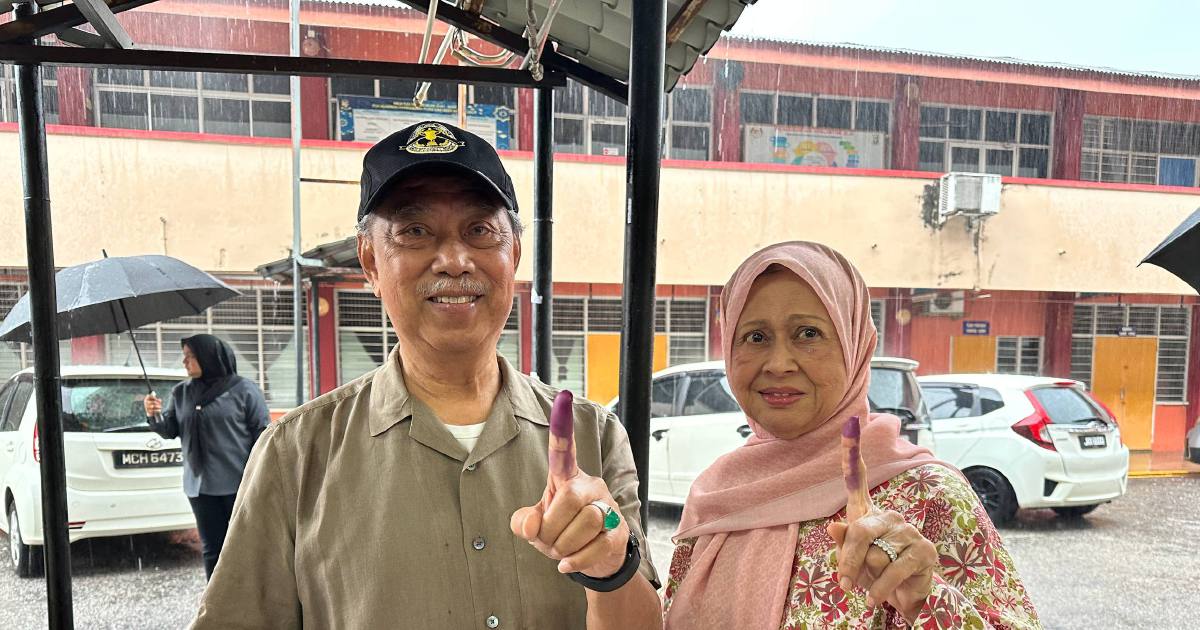
Political observers are watching closely as Johor voters head to the polls today, with Bersatu president Muhyiddin Yassin projecting strong participation despite weather challenges. Speaking from Muar, Muhyiddin voiced confidence that the electorate would deliver a turnout surpassing the 70 per cent mark—a benchmark that would indicate robust public engagement with the democratic process. His remarks come as significant rainfall has swept across multiple districts in the southern state during the morning hours, raising questions about whether adverse conditions might suppress voting numbers.
The significance of achieving above 70 per cent turnout extends beyond mere numerical achievement. In Malaysian electoral politics, turnout figures carry considerable weight as indicators of voter enthusiasm and mandate legitimacy. A result exceeding this threshold would provide the winning coalition with a stronger claim to public endorsement, particularly important given Johor's political significance as home to multiple constituencies and a substantial portion of Malaysia's population. For Bersatu specifically, strong turnout could translate into validation for the party's positioning ahead of potential future electoral contests at state and federal levels.
Weather conditions present a genuine variable that could influence final participation numbers. Heavy rain, while not unprecedented during Malaysian election days, does create friction that discourages some voters—particularly elderly citizens, those with mobility limitations, and people balancing multiple commitments throughout the day. The concentration of wet weather in several districts suggests potential geographic variation in turnout, with some areas potentially experiencing lower participation than others. Election officials have prepared contingencies for wet conditions, but the ultimate impact depends on how voters themselves respond to the inconvenience.
Bersatu's focus on the turnout metric reflects strategic thinking about how electoral results will be interpreted and contested. Malaysian political culture tends to scrutinise not only which coalition wins seats but also the apparent strength of that victory as measured through participation. A lower turnout might lead opposition groups to question the legitimacy of the outcome, claiming that many voters abstained due to dissatisfaction or boycott intentions. Conversely, turnout above 70 per cent would make such arguments considerably harder to sustain, providing the winning party with stronger footing to govern.
Historical context matters here as well. Previous Johor elections have recorded varying turnout levels depending on circumstances, weather conditions, and the level of competition among parties. Muhyiddin's public projection of the 70 per cent figure suggests that internal party polling or organisational assessment indicates reasonable confidence in achieving this level. The statement also serves a communicative function, potentially encouraging Bersatu supporters who might be swayed by rain to overcome the weather and cast their votes.
The Johor state election carries broader implications for the Malaysian political landscape. As one of the most economically significant states in the federation and a crucial demographic centre, political control of Johor influences national political calculations. Strong turnout and clear results in Johor could send signals about broader voter sentiment that resonate through subsequent state elections or national political developments. For this reason, both government and opposition camps invest heavily in Johor electoral contests.
Bersatu's messaging around turnout also reflects lessons from previous Malaysian elections where weather became a narrative element. By pre-emptively addressing the rain and expressing confidence about overcoming its impact, Muhyiddin frames any eventual shortfall as having occurred despite party efforts to mobilise voters, rather than reflecting organisational weakness. This narrative preparation is a standard element of Malaysian political practice, where leaders attempt to shape how election outcomes will be interpreted.
The practical challenge facing election management agencies involves maintaining smooth polling operations despite wet conditions. Ballot boxes, polling stations, and voter identification processes all require protection from moisture and flooding. Officials must balance accessibility for voters with protection of electoral materials. Longer queue times are common when weather necessitates additional security measures, which can itself influence turnout as some voters abandon attempts to vote when facing substantial delays.
From a Southeast Asian perspective, Malaysia's democratic institutions continue to function through regular electoral exercises at both federal and state levels. Johor's election forms part of this broader pattern of democratic participation across the region. Strong turnout despite weather challenges would further reinforce the legitimacy of Malaysia's electoral system and demonstrate continuing public willingness to engage in the democratic process. For regional observers, such participation levels contribute to understanding how Southeast Asian democracies maintain public engagement with formal electoral procedures.
The eventual outcome will likely reveal whether Muhyiddin's optimism about the 70 per cent threshold proves justified. Weather data throughout polling day will provide objective measures of rainfall intensity and duration, allowing analysts to correlate precipitation with final turnout figures. If the projected figure is achieved despite rain, it would suggest that voter commitment to participating in democratic exercises substantially outweighs inconvenience from climatic conditions. If turnout falls significantly short, the weather factor will provide a ready explanation for political actors on both sides.

