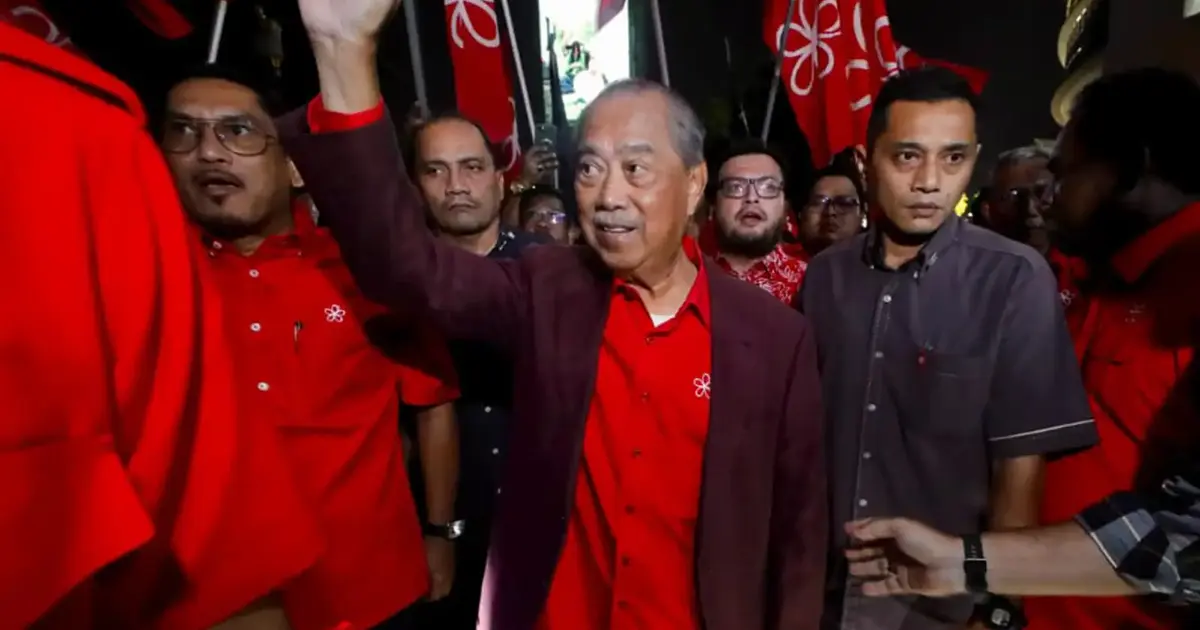
More than 200 members of Bersatu assembled to demonstrate backing for party chairman Muhyiddin Yassin on the eve of a significant internal gathering that will shape the party's electoral strategy and political alliances in the coming months. The show of solidarity underscores the former prime minister's continued grip on the party machinery, even as Bersatu navigates complex coalition dynamics and prepares for competitive state-level contests that could reshape the political landscape in two crucial Malaysian regions.
The forthcoming meeting holds particular significance for Bersatu's future direction, as party leaders will deliberate on campaign readiness for both the Johor and Negeri Sembilan state elections. These contests represent critical battlegrounds where Bersatu seeks to strengthen its electoral footprint and consolidate gains made since its formation as a breakaway faction in 2016. The party's performance in these states will serve as a barometer for its broader viability as a political force in Malaysian politics, especially given the competitive environment shaped by longer-established rivals and the complex coalition mathematics that characterise contemporary Malaysian electoral contests.
A particularly delicate item on the agenda involves Bersatu's evolving relationship with PAS, the Islamist party that has emerged as a significant political actor in recent years. The two parties have maintained an occasionally fraught partnership within the broader Perikatan Nasional coalition framework, yet tensions over parliamentary support, ministerial positions, and ideological direction have periodically surfaced. How the parties calibrate their collaboration—whether they contest jointly or pursue separate strategies in certain constituencies—carries profound implications not only for their respective electoral prospects but also for the composition of potential state governments and the broader political equilibrium at the federal level.
Muhyiddin's capacity to mobilise such a substantial gathering reflects the organisational infrastructure he has cultivated within Bersatu since assuming its leadership. The turnout suggests that despite periodic speculation about internal dissent or erosion of party unity, a substantial membership base remains receptive to his direction. For Malaysian political observers, such demonstrations of intra-party cohesion matter considerably, as they signal whether a party possesses the organisational coherence necessary to translate its electoral ambitions into tangible results. A fractured or demoralised membership base would substantially diminish Bersatu's prospects regardless of its strategic positioning.
The timing of this rally and the subsequent meeting arrives as Malaysian politics enters a phase where state elections assume heightened importance. With federal parliamentary boundaries remaining relatively stable, state governments increasingly serve as vehicles for political renewal and as proving grounds for emerging leaders. Johor and Negeri Sembilan carry particular weight: Johor has long been considered a political bastion of significant symbolic and practical importance, while Negeri Sembilan represents a smaller but strategically valuable arena where coalition dynamics can shift rapidly based on localized factors and community concerns.
For Bersatu, the Johor contest especially demands careful calibration. The state has traditionally favoured the United Malays National Organisation, which despite recent electoral setbacks remains a formidable presence. Bersatu must determine whether its best path forward involves challenging UMNO directly, collaborating within a broader opposition coalition, or negotiating power-sharing arrangements that might yield influence even without commanding a majority of seats. Each approach carries distinct risks and rewards, and the party's internal deliberations will likely reflect disagreement among factions with different strategic preferences.
The PAS dimension adds further complexity. While both Bersatu and PAS have cooperated within Perikatan Nasional and share certain electoral constituencies, they also compete for overlapping voter bases. The Islamist party's substantial parliamentary presence and organisational reach mean that any coordination failures between the two parties could result in vote-splitting that benefits their rivals. Conversely, tight coordination might alienate voters uncomfortable with PAS's religious positioning, particularly in urban and non-Malay majority areas where Bersatu has attempted to build broader appeal.
Regional implications extend beyond Malaysia's borders. Southeast Asia's established democracies and those transitioning toward greater democratic participation watch Malaysian electoral dynamics with interest, as the region continues navigating questions about power consolidation, coalition stability, and the institutional health of electoral competition. Bersatu's trajectory—whether it strengthens as an institutionalised political actor or gradually fragments—carries relevance for broader questions about the viability of new political movements and the adaptability of Malaysia's party system to changing political circumstances.
The rally also demonstrates Bersatu's capacity to mobilise its membership base for symbolic purposes, a capability that translates into campaign energy and grassroots activity during electoral contests. Politicians and analysts know that electoral victory depends not merely on strategic brilliance at the leadership level but on the willingness of party members to undertake the unglamorous work of canvassing, community engagement, and voter mobilisation. A membership energised by confidence in its leadership and convinced of the party's electoral viability constitutes a significant competitive asset.
Looking ahead, the outcomes of the meeting will likely determine whether Bersatu contests the Johor and Negeri Sembilan elections from a position of strategic confidence or defensive consolidation. The decisions reached regarding PAS coordination will ripple through constituencies across both states, influencing candidate selection, campaign messaging, and resource allocation. For Malaysian voters in these states, these behind-closed-doors deliberations will ultimately shape their electoral choices and the political futures of their respective regions.