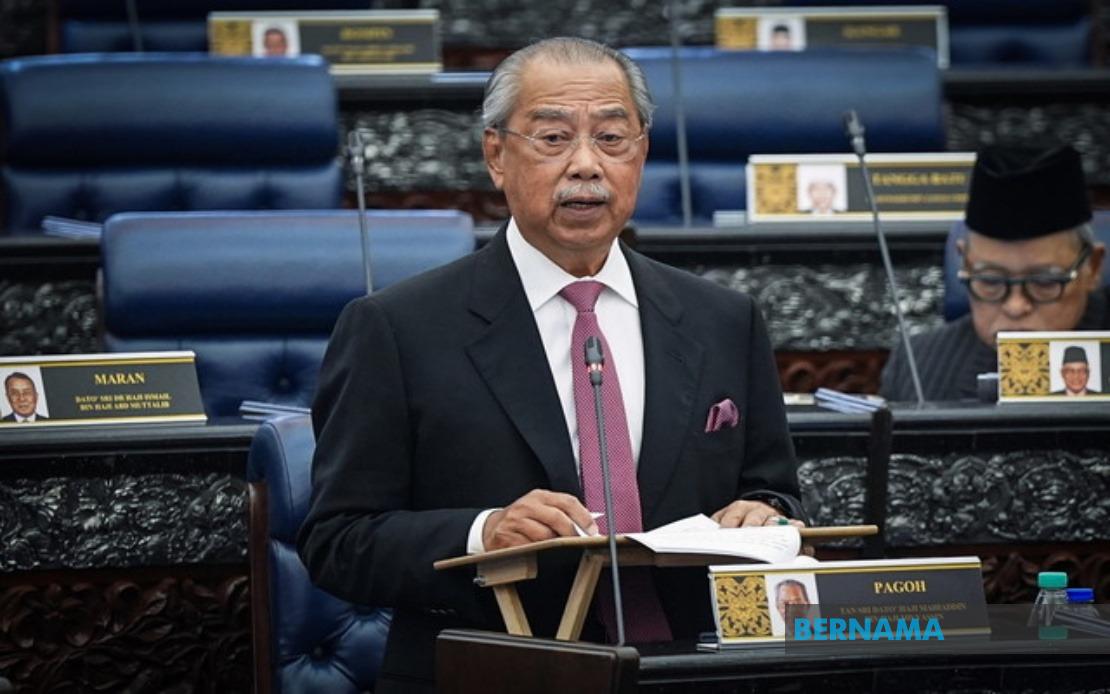
Tan Sri Muhyiddin Yassin, the Pagoh MP and Bersatu president, has pressed the government to launch a swift and transparent forensic audit into the management of Lembaga Tabung Haji (TH) funds, with completion targeted within twelve months. His intervention follows the release of a Royal Commission of Inquiry report that exposed significant deficiencies in how the pilgrimage fund's assets have been administered and overseen in recent years.
The former prime minister's call carries particular weight given his previous tenure as the nation's chief executive and his ongoing influence within the Malay-majority opposition coalition. During debate on the RCI findings in Parliament, Muhyiddin underscored that the governance failures uncovered must not be treated lightly or allowed to fade from public attention. The comprehensive nature he advocates would involve tracing the complete movement of financial resources, identifying where fraudulent activities may have occurred, establishing whether officials exceeded their authority, and determining if carelessness contributed to losses.
According to the RCI report made public on July 29, Tabung Haji accumulated estimated cumulative losses ranging between RM10 billion and RM12.6 billion across the period from 2014 to 2020. These figures represent a substantial erosion of the institution's value and, more importantly, the retirement savings and religious endowment contributions of Malaysian Muslim pilgrims. The scale of these losses demands rigorous investigation to establish accountability and, where warranted, ensure those responsible face appropriate legal consequences.
Muhyiddin stressed that responsibility for financial damage—whether stemming from dishonest conduct, misuse of authority, or neglect of duties—must result in prosecution. This stance reflects growing public concern over how major national institutions have managed public resources. His emphasis on accountability without compromise suggests frustration with historical patterns where corporate and institutional scandals have sometimes resulted in delayed or lenient consequences.
Beyond Muhyiddin's intervention, fellow parliamentarian Syed Saddiq Syed Abdul Rahman from MUDA representing Muar proposed establishing a Multi-Agency Task Force to examine the fourteen specific investments that the RCI identified as problematic. This targeted approach would differ from a broader audit by focusing investigative resources on transactions and asset acquisitions that have demonstrably underperformed or generated losses.
The Multi-Agency Task Force concept, as articulated by Syed Saddiq, would incorporate enforcement bodies including the Malaysian Anti-Corruption Commission, the Royal Malaysian Police, and the Inland Revenue Board. The involvement of multiple agencies signals recognition that TH's difficulties may involve not only mismanagement but potentially criminal conduct spanning corruption, tax evasion, and other financial crimes. Coordinating investigations across agencies rather than conducting them independently reduces the risk of jurisdictional gaps or duplicated effort.
Syed Saddiq extended his proposal to encompass forensic audits of the fourteen problematic investments themselves, not merely investigations into their origins. He additionally flagged concerns regarding Felda, FGV (Felda Global Ventures), and Eagle High, suggesting that similar scrutiny should extend to these organizations, many of which operate within overlapping government or government-linked structures. The implication is that issues affecting TH may reflect systemic vulnerabilities across multiple major national institutions.
BN-Simpang Renggam MP Datuk Seri Hasni Mohammad added another procedural dimension by recommending that enforcement agencies—MACC, police, and relevant bodies—furnish regular updates on investigations within a clearly defined schedule. This mechanism would create public accountability for investigative progress and prevent inquiries from disappearing into bureaucratic processes without transparent outcomes. Transparency regarding timelines and findings would satisfy parliamentary and public expectations.
Hashni also proposed that Parliament establish continuous, cross-party, and institution-focused oversight mechanisms to monitor implementation of all 25 recommendations contained in the RCI report. This suggestion acknowledges that forensic audits and investigations, while essential, represent only one component of institutional reform. Sustained parliamentary engagement would ensure that structural improvements recommended by the commission are actually executed rather than shelved after initial announcements.
The special parliamentary sitting examining the RCI report represents a rare instance of focused legislative scrutiny of institutional governance. The report itself, released after government decided the public should access its contents, documents weaknesses in TH's operational and administrative frameworks between 2014 and 2020. Of the 25 recommendations advanced by the commission, approximately 75 percent had been implemented by TH as of July 30, suggesting the institution has begun responding to findings, though the adequacy of these measures remains subject to parliamentary evaluation.
For Malaysian depositors and pilgrims whose life savings rest within Tabung Haji, the intensity of calls for forensic auditing and investigation signals that institutional guardians are finally examining the fund's governance comprehensively. The convergence of demands from opposition figures like Muhyiddin and Syed Saddiq, alongside government-aligned MPs such as Hasni, indicates that concerns about TH's administration transcend normal partisan divides. This bipartisan consensus suggests that public pressure and the RCI's damning findings have created sufficient political space for substantive action.
The implementation of Muhyiddin's proposal for a complete forensic audit within one year, coupled with Syed Saddiq's Multi-Agency Task Force and Hasni's parliamentary oversight framework, would collectively represent Malaysia's most comprehensive examination of TH's fund management. Whether such measures will proceed, and with what urgency, will test the government's commitment to institutional accountability and the restoration of public trust in mechanisms that safeguard Malaysians' religious and retirement savings.

