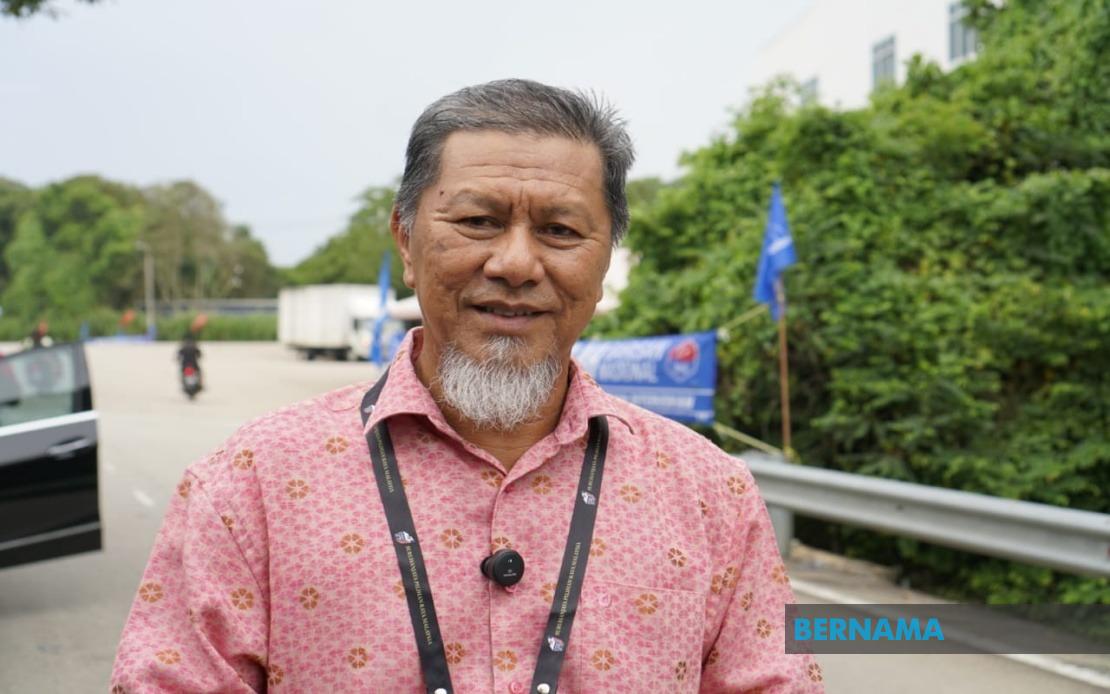
Muhd Najib Lep, the Pakatan Harapan candidate for Bukit Pasir in the upcoming Johor state election, has outlined an ambitious vision to unlock the untapped potential of Bandar Universiti Pagoh, arguing that the township should serve as a catalyst for broader socio-economic advancement across the constituency. Speaking in Pagoh on July 8, the candidate stressed that meaningful development of the education hub is essential to ensure that economic opportunities reach everyday residents, local entrepreneurs, and small and medium enterprises rather than remaining confined to campus boundaries.
The township's significance stems from its concentration of four higher education institutions, including the Universiti Tun Hussein Onn Malaysia (UTHM) Pagoh campus and the Universiti Teknologi Malaysia (UTM) Pagoh campus, which collectively represent substantial human capital and intellectual resources. Yet Muhd Najib contends that this institutional wealth has not translated into visible community benefits, with the surrounding area lagging in essential service provision. His diagnosis identifies critical infrastructure deficits that inhibit growth: the absence of adequate banking services, gaps in healthcare accessibility, and insufficient commercial facilities that would naturally cluster around a major education precinct.
Central to Muhd Najib's platform is the conviction that comprehensive urban development of Bandar Universiti Pagoh would generate cascading economic benefits throughout the locality. By improving amenities and creating a more vibrant township environment, he argues, the area would attract investment, foster entrepreneurship among residents, and create employment pathways linked to the universities. This approach reflects an understanding that university towns function most effectively when they are economically integrated with their surrounding communities rather than serving as isolated academic enclaves.
Beyond infrastructure expansion, affordable housing emerges as a cornerstone of the candidate's developmental agenda. Muhd Najib positions adequate, reasonably priced residential options as foundational to nurturing a thriving younger generation, asserting that financial stability and a conducive home environment directly enhance educational outcomes and life trajectories. This emphasis on housing aligns with mounting affordability concerns across Malaysia, where young families increasingly struggle with property costs relative to incomes, a challenge that resonates particularly in smaller urban centres like Pagoh where wage levels may lag major metropolitan areas.
Drawing on nearly 13 years of service in the Malaysian Armed Forces (MAF), Muhd Najib brings a secondary policy focus to veteran welfare. As chairman of the Pagoh Malaysian Armed Forces Veterans Association (PVATM), he has identified a particularly contentious disparity: the pension differential between military retirees who left service prior to 2013 and those who departed thereafter. This structural inequity, which he characterises as substantial, has generated ongoing grievance among the veteran community and represents an area where federal policy requires recalibration to ensure equitable treatment across service cohorts.
Muhd Najib's electoral history provides context for his candidacy. Having won the seat during the 14th General Election (GE14), he brings incumbent experience and demonstrated grassroots engagement to his campaign. His narrative emphasises continuity between his previous tenure as state assemblyman and his current community work, positioning himself as someone whose commitment to constituency service has deepened rather than waned during his time away from formal office. The positive reception he reports from door-to-door voter outreach suggests his message resonates with portions of the electorate.
The electoral context is notably competitive. The Bukit Pasir contest is a three-cornered affair, with Muhd Najib facing Mohamad Fazli Mohamad Salleh, the incumbent Barisan Nasional (BN) assemblyman, and Mohd Idzharruddin Mohd Nasirruddin representing Perikatan Nasional (PN). The 2022 state election result showed Mohamad Fazli retaining the seat with a majority of just 198 votes, indicating a closely contested constituency where victory margins are narrow and voter sentiment potentially fluid. This razor-thin margin suggests significant receptiveness to alternative narratives and suggests the seat remains genuinely competitive.
The broader Johor state election, scheduled for July 11, involves 172 candidates competing across 56 state assembly seats, with 2,727,926 eligible voters determining the outcome. This statewide contest occurs against Malaysia's evolving political landscape, where traditional party alignments face ongoing recalibration. For the PH coalition, seat gains in Johor would represent meaningful progress in a state where Barisan Nasional has historically maintained dominance, though recent years have witnessed shifting voter preferences and increased willingness to consider opposition alternatives.
Muhd Najib's platform reflects broader trends in Malaysian electoral politics, wherein candidates increasingly emphasise tangible, locally-focused development priorities over abstract ideological appeals. The emphasis on upgrading Bandar Universiti Pagoh, improving housing affordability, and addressing specific veteran grievances demonstrates sensitivity to material concerns that directly affect household welfare. His framing also implicitly challenges the incumbent's stewardship, suggesting insufficient priority has been accorded to constituency-level development despite the presence of significant institutional assets.
For regional observers, the Bukit Pasir contest and the broader Johor election provide insight into electoral dynamics across Southeast Asia's second-largest economy by population. Johor's political trajectory influences Malaysia's overall governance direction, and constituency-level contests like Bukit Pasir reflect the granular competition through which national political outcomes ultimately emerge. The township development agenda articulated by Muhd Najib also resonates with Malaysia's broader urbanisation trajectory, as secondary cities and education hubs increasingly serve as focal points for economic decentralisation strategies that policymakers hope will distribute prosperity beyond the Klang Valley and Penang.
The outcome on July 11 will determine whether voters in Bukit Pasir embrace Muhd Najib's vision for Bandar Universiti Pagoh's transformation or prefer continuity under the incumbent BN administration. Either way, the elevation of township development concerns into campaign prominence reflects constituency demands for material improvements and economic opportunity creation, dynamics that will likely persist across Malaysia's ongoing electoral cycle regardless of which coalition ultimately governs Johor.

