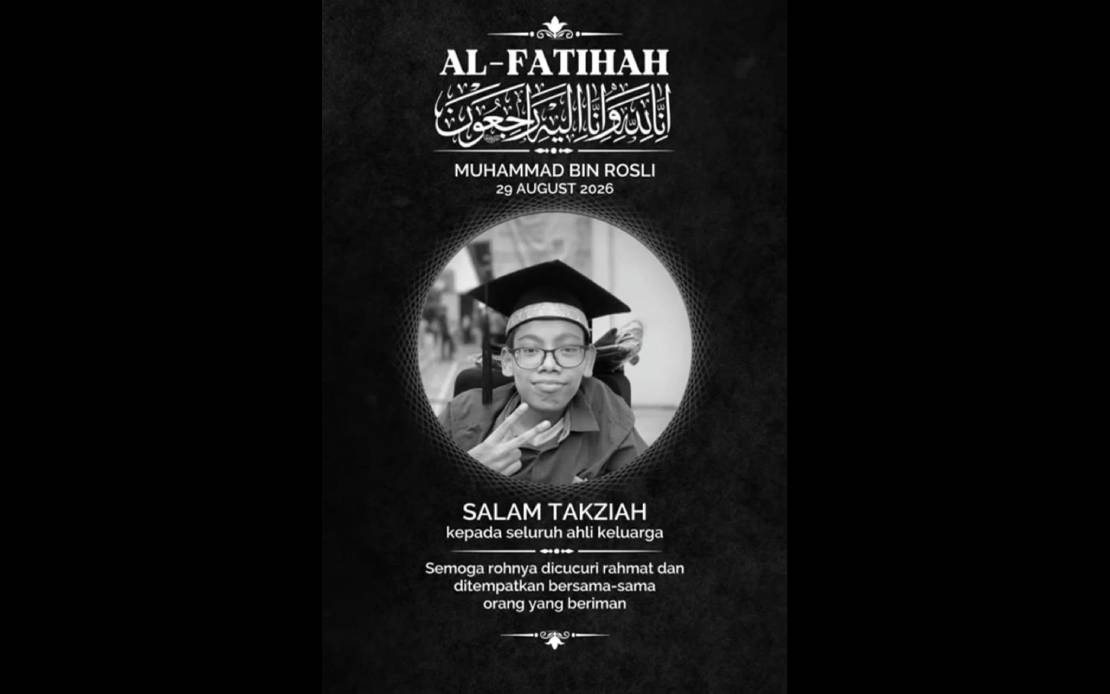
Muhammad Rosli, one half of the conjoined twins whose successful surgical separation became a defining medical achievement in Malaysia's healthcare history, died this morning at Chancellor Tuanku Muhriz Hospital in Cheras, Kuala Lumpur. The 23-year-old passed away at 10:45 am, with news of his death announced by his twin brother Ahmad through a social media post. The announcement marked the end of a remarkable but ultimately tragic journey that began more than two decades ago when the brothers underwent one of the most complex and high-stakes surgical procedures ever attempted in the region.
Ahmad's announcement expressed gratitude for the prayers and support the family had received throughout Muhammad's medical ordeal. In a heartfelt message, he thanked well-wishers for their continuous compassion and invoked Allah's blessing upon those who had shown kindness to the family during this difficult period. Muhammad's remains were laid to rest the same day at USJ 22 Muslim Cemetery in Subang Jaya at approximately 6:00 pm, concluding a chapter in Malaysian medical history that had captivated public attention for more than two decades.
The twins' medical saga began in the early 2000s when they underwent initial assessment and preparation at the University Malaya Medical Centre in 2001. The following year, in September 2002, Muhammad and Ahmad underwent an extraordinarily complex surgical procedure lasting 22 hours and 45 minutes at King Fahd National Guard Hospital in Riyadh, Saudi Arabia. The operation, which involved separating shared organs and reconstructing their individual bodies, represented a pinnacle of contemporary surgical expertise and required coordination between teams of specialists. The successful separation was celebrated as a triumph of modern medicine and brought international recognition to the attending medical teams and Malaysia's healthcare capabilities.
Muhammad's final illness emerged in 2025 when he was diagnosed with bladder cancer, a development that required aggressive treatment at the same hospital in Riyadh where his life-defining surgery had taken place decades earlier. Beginning in July 2025, he underwent multiple therapeutic interventions in an attempt to combat the disease. Medical records indicated that he endured five separate surgical procedures and completed five sessions of chemotherapy as part of his treatment regimen. Despite the intensity of these interventions, Muhammad's condition remained unstable, reflecting the inherent challenges of managing advanced malignancy even in a sophisticated medical setting.
The deterioration in Muhammad's health accelerated in the days immediately preceding his death. His brother Ahmad disclosed that Muhammad's medical situation had become increasingly grave when blood acid levels—a critical physiological indicator—reached dangerously elevated concentrations. This metabolic derangement left Muhammad in a semi-conscious state from which he could not recover. The cascade of complications suggests that the cumulative burden of cancer progression, despite aggressive medical intervention, had overwhelmed his body's capacity to sustain vital functions.
The twins' story holds profound significance within Malaysia's medical and cultural consciousness. Their separation surgery represented not merely a technical achievement but a symbol of national capability and medical progress. The procedure required unprecedented coordination, meticulous planning, and extraordinary surgical skill, positioning Malaysia on the global stage of advanced medicine. Media coverage at the time celebrated the brothers as symbols of hope and resilience, and their survival through such a perilous intervention captured the imagination of a nation proud of its healthcare system's accomplishments.
Yet Muhammad's death at a relatively young age introduces a sobering counterpoint to the optimistic narrative surrounding the original separation. While the surgery itself succeeded dramatically, enabling both brothers to survive and lead independent lives for more than two decades, the long-term health trajectory reveals the enduring complications that conjoined twins may face. The development of bladder cancer, while not necessarily causally linked to the separation procedure, represents the kinds of serious health challenges that survivors of such extraordinary interventions must navigate throughout their lives.
The case also illustrates the complex intersection of medical triumph and human mortality. The successful separation in 2002 was celebrated as a victory against formidable odds, yet it could not inoculate Muhammad against the diseases that affect the general population. The contrast between the dramatic life-saving intervention two decades ago and the inability to overcome cancer in 2025 underscores the limits of even the most advanced medical science when confronted with certain conditions, particularly malignancies in advanced stages.
For Malaysian readers and the broader Southeast Asian medical community, Muhammad's passing serves as a reminder of several interconnected realities. First, it acknowledges the genuine achievements of the region's medical professionals, whose expertise enabled such a groundbreaking procedure to succeed. Second, it recognises that surgical success, however remarkable, does not guarantee lifelong immunity from disease. Third, it highlights the ongoing challenges in managing complex malignancies, even with contemporary chemotherapy and surgical options. Finally, it underscores the profound human dimension of medical practice—where statistics and survival rates ultimately translate into individual lives, families grieving, and communities reflecting on both accomplishments and losses.
The twins' journey, from their separation as infants through Muhammad's recent passing, will continue to occupy an important place in Malaysia's medical heritage. Their story exemplifies both the possibilities and limitations inherent in modern medical science, and serves as a testimony to the resilience and determination of patients, families, and medical professionals who collectively navigate extraordinary circumstances.

