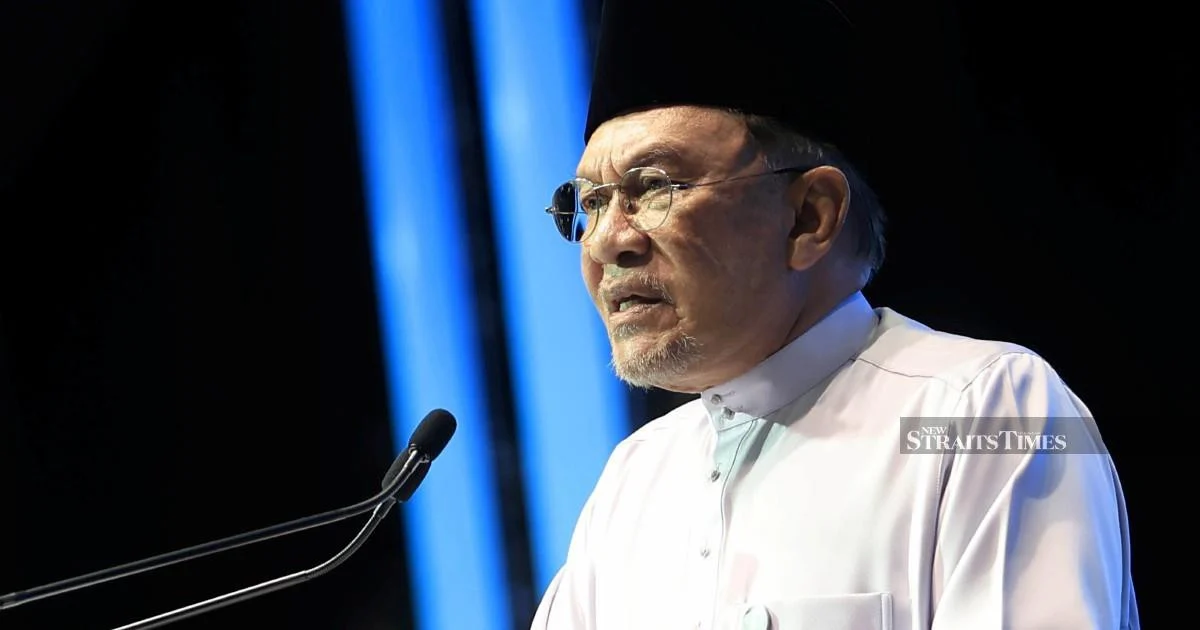
The Muar district office has moved swiftly to dismiss reports suggesting that Prime Minister Datuk Seri Anwar Ibrahim encountered restrictions when attempting to use the Penghulu Mukim Sungai Balang Complex for a community outreach initiative during the previous month, as political tensions surrounding the Johor state elections continue to simmer across the southern state.
The denial marks another flashpoint in what has become an increasingly contentious campaign period in Johor, where questions about administrative neutrality and equitable access to public facilities have emerged as recurring issues. Claims regarding differential treatment of political figures in the use of government infrastructure have dogged numerous state elections across Malaysia, raising broader concerns about the operational independence of district-level bureaucracies during contentious electoral periods.
Such disputes over venue access typically gain traction in the weeks before polling, when various political camps jockey for platforms to address voters. The allegation that a sitting Prime Minister might face restrictions at a government facility strikes many as particularly significant, given that it would suggest either administrative dysfunction or potential partisan interference in the allocation of public resources. The prompt response from the Muar district office indicates awareness of how such narratives can quickly acquire political momentum if left uncontested.
For Malaysian readers, incidents of this nature carry wider implications about institutional impartiality during electoral contests. Public facilities funded by taxpayer money are theoretically neutral spaces available to political actors across the spectrum, yet operational realities on the ground sometimes diverge from this principle. The distinction between genuine administrative constraints and deliberate obstruction often remains murky, particularly when local officials operate under multiple layers of instruction from state-level political leadership.
The timing of this dispute matters considerably within the broader context of Johor politics. The state has long been viewed as a political heavyweight in national calculations, and conduct during its electoral cycle frequently generates wider commentary about democratic health. Events at the district level in Muar, though seemingly localised, acquire amplified significance in this environment.
For opposition figures and PAS-aligned administrators operating in Johor, the episode illustrates enduring tensions between federal and state power structures. While the Prime Minister's office wields considerable national authority, district administrators ultimately answer to state governance frameworks, potentially creating situations where conflicting loyalties generate administrative friction. These fault lines become particularly visible during electoral campaigns when party affiliations sharpen.
The Penghulu Mukim Sungai Balang Complex itself is a grassroots-level facility typically designed to serve community functions across a broad spectrum of local stakeholders. Its accessibility during election periods becomes symbolically significant, as it represents the democratisation of public space for political discourse. When access disputes arise, they often reflect deeper anxieties about whose narratives receive institutional amplification.
Government facilities throughout Malaysia face genuine operational challenges during campaign seasons. Maintenance schedules, prior bookings, and logistical constraints sometimes legitimately conflict with political events. Distinguishing between genuine administrative complications and motivated denial of access requires careful scrutiny of documentation and consistency in how different political actors are accommodated. The district office's denial presumably rests on such technical justifications.
The broader pattern of venue access complaints during Johor's elections warrants attention from electoral oversight bodies and civil society observers. While individual incidents may have straightforward explanations, cumulative patterns across multiple venues and actors can illuminate whether systemic bias exists or whether complaints merely reflect the inevitable friction inherent to conducting major political events within constrained physical and administrative environments.
For Southeast Asian observers watching Malaysian electoral dynamics, such incidents provide windows into how federalised systems manage tensions between national and sub-national political actors. Many regional democracies grapple with similar questions about institutional neutrality and administrative autonomy during campaign periods. Malaysian approaches to managing these tensions influence regional perceptions of institutional maturity.
Moving forward, clarification of the specific circumstances surrounding this venue access situation could prove instructive. Written records of booking requests, official responses, and stated reasons for any restrictions would provide factual grounding for ongoing discussion. Without such transparency, disputes over administrative decisions during elections tend to calcify into partisan narratives rather than yielding lessons about institutional improvement.
The Muar district office's public denial suggests confidence in its administrative record on this matter, yet the persistence of such allegations across multiple venues and campaigns indicates potential systemic vulnerabilities in how neutrality is maintained and perceived. Whether future Johor electoral contests can avoid similar friction will depend partly on whether current administrative practices evolve to address underlying structural issues. For Malaysian democracy's credibility, perceived fairness in access to public facilities during campaigns matters nearly as much as formal voting procedures.

