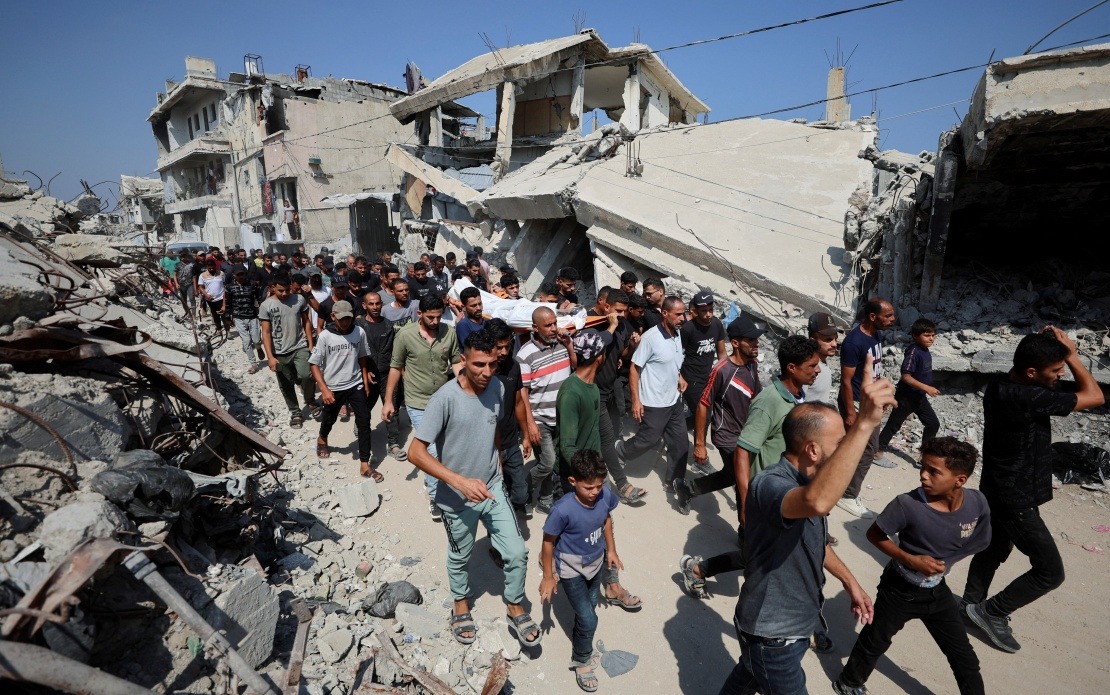
Doctors Without Borders (MSF) has issued a sharp rebuke to the Israeli military establishment for terminating investigations into the deaths of its personnel and their family members in Gaza, refusing to launch formal criminal proceedings in any of the cases. The humanitarian organisation's condemnation underscores deepening tensions between international aid groups operating in conflict zones and military forces, raising critical questions about mechanisms for accountability when civilians and aid workers become casualties of armed conflict.
The case closures represent a significant setback for MSF after the organisation spent nearly two years pursuing formal inquiries into the incidents. The group had escalated its efforts by petitioning Israel's High Court, seeking intervention after the Military Advocate General's office failed to respond to repeated requests for investigation. Rather than opening criminal cases, the military has simply terminated its review process, a decision MSF characterises as fundamentally incompatible with justice and accountability standards expected in democratic societies.
For Malaysian readers accustomed to functioning legal systems and independent judiciary mechanisms, the situation illustrates how military self-regulation in conflict environments creates structural barriers to accountability. MSF's core assertion—that a military institution investigating itself cannot fairly examine potential violations by that same institution—reflects a principle universally recognised in rule-of-law frameworks: investigations must be conducted by independent bodies free from institutional bias. The absence of such independence, particularly regarding allegations potentially amounting to war crimes, represents a systemic failure that concerns not only humanitarian organisations but international legal scholars and human rights monitors.
MSF provided Israeli forces with detailed information about its personnel and operations, including specific names and locations of staff members, along with comprehensive vehicle identification measures. This transparency was intended to prevent precisely the kinds of incidents that subsequently occurred. The organisation's argument that these precautions demonstrate intentionality or negligence by Israeli forces carries weight in evaluating military responsibility—the fact that soldiers possessed advance knowledge of where and whom to avoid, yet fatalities still occurred, suggests either deliberate targeting or reckless disregard for civilian protection obligations under international humanitarian law.
The specific incidents illustrate the devastating personal dimensions of such strikes. In November 2023, an MSF convoy came under attack, resulting in the deaths of two individuals related to staff members. One victim, Alaa Al Shawa, had been actively volunteering with MSF medical teams at Al-Shifa Hospital, meaning the organisation had established professional relationships with those killed. Several months later, in February 2024, another MSF shelter in Khan Younis sustained an attack that resulted in the deaths of an MSF employee's wife and daughter-in-law, with six additional people wounded, predominantly women and children. These incidents reveal patterns affecting not only aid workers themselves but their families, complicating any narrative about collateral damage in military operations.
Since October 2023, Israeli forces have been responsible for 15 MSF staff deaths across Gaza according to the organisation's accounting. Within the same timeframe, approximately 1,700 healthcare workers have perished throughout the enclave—a figure that contextualises MSF's losses within the broader humanitarian catastrophe affecting Gaza's medical infrastructure. For Southeast Asian healthcare professionals and administrators, these numbers underscore the extreme vulnerability facing medical personnel in active conflict zones and the inadequacy of international protections for workers maintaining essential services.
MSF's conclusion that the Israeli legal system offers no meaningful pathway to accountability for these deaths represents a watershed moment in civil-military relations and institutional legitimacy. When an organisation dedicated to providing impartial medical care concludes that a military establishment cannot fairly judge its own conduct, questions arise about the viability of continued cooperation and the sustainability of humanitarian operations under such circumstances. The decision to cease investigations without opening criminal cases suggests to MSF that the military has determined these incidents require neither prosecution nor disciplinary action—an outcome that fundamentally contradicts accountability principles.
The organisation explicitly rejects the notion that internal military review mechanisms can substitute for genuine, independent investigation. MSF advocates for cases involving its personnel to be transferred to impartial investigative bodies operating outside military command structures. This position aligns with international best practice in high-stakes civilian casualty investigations, where independence and impartiality are considered essential to establishing factual accuracy and ensuring proportionate responses. The absence of such mechanisms in the current context represents a departure from evolving standards in military accountability.
MSF's assertion that no legitimate military objective justifies indiscriminate civilian casualties reflects humanitarian principles codified in international law. The organisation implies that targeting patterns or operational methods causing deaths among aid workers with known locations and identifiable vehicles cannot be reconciled with lawful military conduct. This framing challenges military necessity arguments that sometimes justify civilian harm in asymmetric conflict scenarios. For policymakers and defence officials in Malaysia and the region, such debates highlight the importance of establishing clear operational protocols that distinguish combatants from protected personnel including medical workers and humanitarian staff.
The closure of these cases without criminal investigation occurs within a broader humanitarian crisis that has claimed over 73,000 Palestinian lives since October 2023, with additional thousands wounded. Ceasefire violations have reportedly contributed to a supplementary 1,283 deaths and over 4,000 injuries according to Gaza's Health Ministry. These figures contextualise the fate of MSF staff deaths within a vastly larger pattern of civilian casualties, yet the absence of investigation into individual cases—particularly those involving international humanitarian workers—suggests systematic avoidance of accountability mechanisms even in less ambiguous situations. For the international community and multilateral organisations, the implication is troubling: if cases with documented international witnesses and clear organisational records cannot trigger criminal investigations, smaller incidents affecting Palestinian civilians may face even lower investigative priority.
The implications for humanitarian access extend beyond MSF to other international organisations operating in Gaza and similar conflict environments. When aid organisations conclude that military forces investigating themselves will not hold themselves accountable for casualties among their personnel, organisations face difficult decisions about deployment safety, insurance coverage, staff recruitment, and operational sustainability. These factors collectively influence the volume and quality of humanitarian assistance reaching affected populations, creating cascading consequences that extend far beyond the immediate incidents under investigation.

