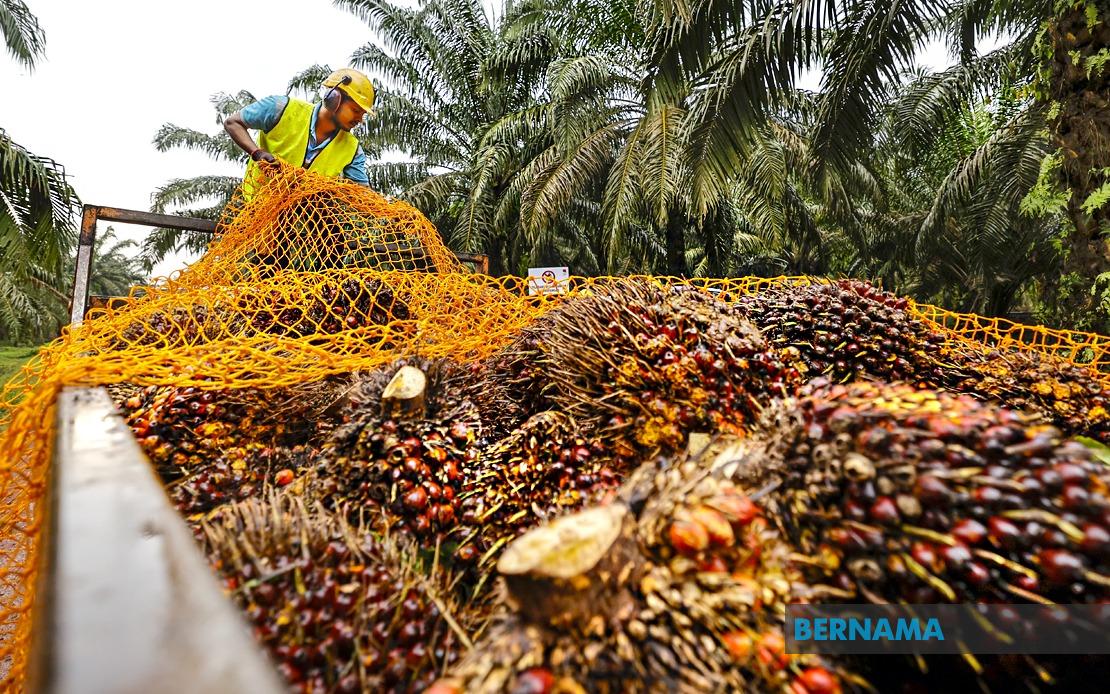
The Malaysian Palm Oil Board (MPOB) will establish a comprehensive research station in Seri Mendapat, Sungai Rambai, representing a significant investment in Melaka's agricultural modernisation. The facility, budgeted at between RM20 million and RM25 million, will occupy a 40.47-hectare site allocated by the state government and forms part of broader initiatives outlined in the 13th Malaysia Plan. According to Melaka Chief Minister Datuk Seri Ab Rauf Yusoh, this development reflects the state's strategic commitment to elevating its commodity sector beyond traditional production into a knowledge-driven economic engine.
The research station will be comprehensively equipped to serve multiple functions within the palm oil value chain. The facility will incorporate a functional model plantation demonstrating best practices in cultivation, a dedicated research and development centre for innovation, modern laboratory infrastructure for quality assurance and product testing, and formal training facilities to develop industry skills. The station will also provide accommodation and administrative support for TUNAS advisory officers and enforcement personnel, ensuring continuous technical support and regulatory oversight throughout the operational year. This integrated approach creates a self-contained ecosystem designed to address production challenges while simultaneously raising industry standards across Melaka.
Beyond physical infrastructure, the research station represents a strategic repositioning of Sungai Rambai as a regional hub for knowledge exchange and innovation in the palm oil sector. The facility will serve not merely as a research outpost but as a catalyst for broader economic transformation within the locality. By concentrating expertise, equipment, and advisory services in a single accessible location, the station aims to reduce information asymmetries that traditionally disadvantage smallholders and marginal producers. This concentration of resources should facilitate the rapid dissemination of improved cultivation techniques, modern pest management protocols, and sustainability practices across Melaka's dispersed farming communities.
The employment and skills development dimension of the project addresses critical capacity gaps within Melaka's agricultural workforce. As the facility becomes operational, it will generate direct employment through research positions, laboratory roles, advisory posts, and administrative functions. More significantly, the training facility will provide structured professional development opportunities for farmers seeking to transition from conventional practices to more sophisticated, yield-enhancing methodologies. For a region where nearly 45 per cent of the Sungai Rambai population engages in farming or smallholding activities, access to formalised skills training represents a pathway toward improved productivity and income stability.
Complementary to the research station, the state government is addressing infrastructure bottlenecks that constrain smallholder productivity. A five-kilometre private farm road at Ladang Lembah Kesang, financed through an RM400,000 allocation, will directly benefit over 200 smallholders by enabling faster produce delivery to markets and reducing transportation costs. While seemingly modest, this infrastructure intervention tackles a tangible barrier facing rural producers. In the Southeast Asian context, where geographic dispersion and inadequate rural connectivity persistently undermine agricultural competitiveness, such targeted road development projects yield disproportionate economic returns. The streamlined logistics will allow smallholders to access fresher market prices and reduce post-harvest losses, directly translating infrastructure investment into farmer income.
The MPOB's Smallholder Oil Palm Replanting Financing Incentive Scheme 2.0 provides the financial scaffolding necessary for technology adoption. Eligible participants can access up to RM14,000 per hectare to replace ageing, low-yielding palm trees with superior cultivars, a critical modernisation step given that tree age directly correlates with declining productivity. The scheme's staggered repayment structure, commencing only in the fifth year, addresses the cash flow constraints that typically deter smallholders from undertaking capital-intensive replacement cycles. For many farmers operating on marginal profit margins, this deferred payment arrangement removes a significant adoption barrier, potentially unlocking substantial productivity gains across Melaka's smallholder base.
Ab Rauf's emphasis on transforming the commodity sector from mere income generation into a sophisticated, competitive economic driver reflects broader aspirations across Southeast Asia for agricultural modernisation. The framing explicitly rejects a purely extractive approach to natural resource exploitation, instead positioning the palm oil sector as capable of delivering sustainable rural development. This philosophical reorientation, when coupled with concrete infrastructure and research investments, signals serious intent to move beyond commodity price dependence toward value-addition and productivity enhancement. For Malaysian policymakers, this model potentially offers a template for similar interventions in other agricultural regions facing demographic and competitive pressures.
Community resilience considerations also feature prominently in the state government's agenda. The Jeti Sebatu watergate upgrade, requiring RM200,000 in federal funding, and the RM350,000 drainage works along a 300-metre Sungai Sebatu outlet address flooding vulnerability that impacts both the fishing community and agricultural producers. These interventions, emerging from direct consultation with local stakeholders, demonstrate how agricultural development planning must integrate climate adaptation measures. In the Malaysian context, where precipitation patterns are intensifying and flood frequency is increasing, incorporating water management infrastructure into rural development strategies represents prudent long-term planning.
The convergence of research infrastructure, smallholder finance, connectivity improvements, and flood mitigation suggests a holistic approach to rural economic development. Rather than compartmentalised sector initiatives, Melaka's strategy attempts to address interconnected constraints simultaneously. Smallholders cannot fully benefit from improved varieties without adequate road access to markets; rural communities remain vulnerable to climate hazards without proper water management; productivity improvements require both knowledge access and investment capital. This comprehensive framework, if properly executed and adequately resourced, provides a potentially more effective development model than traditional point-intervention approaches.

