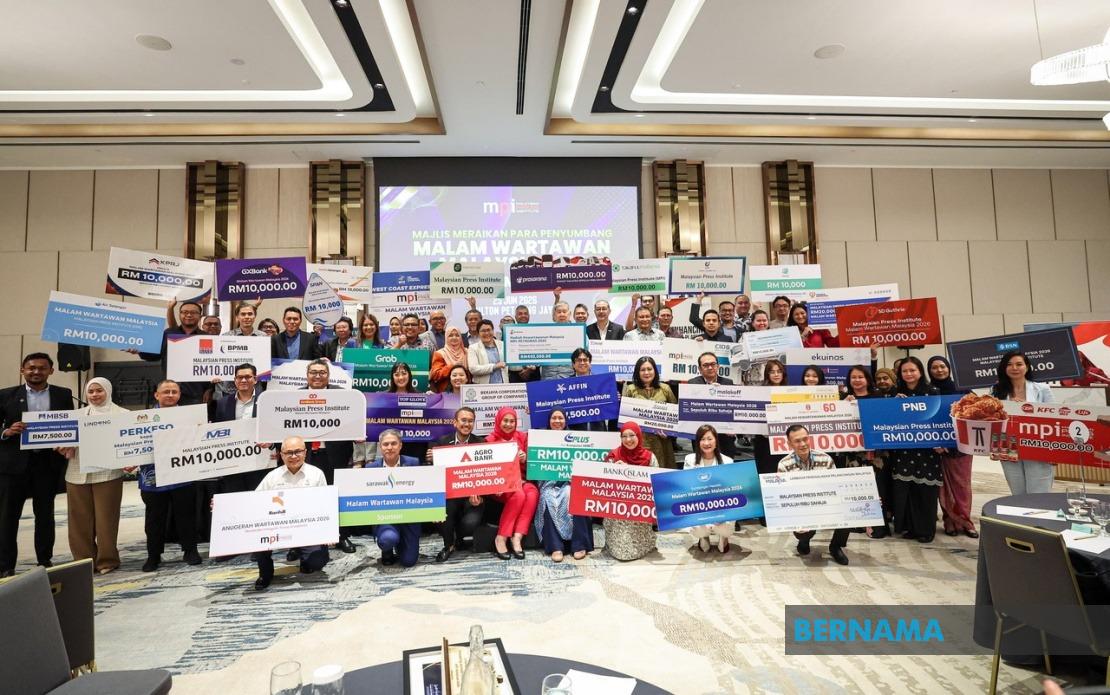
The Malaysian Press Institute has successfully assembled over RM1 million in financial backing for its flagship Malaysia Press Night event scheduled for next month, marking a strong endorsement of the media industry's commitment to professional standards and ethical journalism. The fundraising milestone reflects growing recognition among the corporate sector and civil society organisations of the critical role that professional journalism plays in Malaysia's democratic institutions and informed citizenry.
Dr Ainol Amriz Ismail, the MPI's chief executive officer, revealed the complete funding picture during remarks at the Contributors' Appreciation Ceremony held in Kuala Lumpur. The RM1.037 million in total support comprises two distinct components: direct contributions totalling RM587,000 pledged by 60 different organisations across the business, media and public sectors, alongside a substantial RM450,000 sponsorship commitment from PETRONAS. This multisector backing demonstrates how Malaysia's major corporations and industry players view investment in journalism excellence and industry development as integral to broader national interests.
PETRONAS's ongoing commitment to the Malaysian Journalism Awards, which the company has underwritten since 1994, underscores a three-decade relationship between Malaysia's national oil company and professional media standards. The petroleum giant's continued sponsorship signals consistent corporate confidence in the value proposition of recognising and rewarding excellence in journalism across the country. This long-standing partnership has become foundational to how the media industry celebrates outstanding reporting and investigative work.
Dr Ainol Amriz contextualised the fundraising success within the broader mission of strengthening journalism in Malaysia, emphasising that the contributions signify more than mere financial support for an annual gala dinner. Instead, he characterised the backing as evidence of a shared institutional commitment to preserving professional integrity, ethical conduct and trustworthiness in information dissemination. In an era of heightened concern about misinformation and media credibility, such unified backing from diverse stakeholders sends a powerful signal about journalism's enduring importance to Malaysian society.
The upcoming Malaysia Press Night event has acquired additional significance through confirmation that Prime Minister Datuk Seri Anwar Ibrahim will attend on July 17, elevating the occasion into a major showcase of government recognition for the media profession. The prime ministerial presence signals political acknowledgment of journalism's essential role in national discourse and democratic functioning. Such high-level attendance typically amplifies the event's prominence and underscores official commitment to press freedom and professional standards within Malaysia's governance framework.
MPI president Datuk Yong Soo Heong, deputy president Farrah Naz Abd Karim, and other governing council members joined celebrations of this year's fundraising success, reflecting institutional-wide satisfaction with the level of stakeholder engagement. The presence of Bernama's chief executive officer Datin Paduka Nur-ul Afida Kamaludin highlighted the interconnected nature of Malaysia's national news infrastructure, where the country's primary wire service collaborates closely with the professional press institute in advancing journalism standards. PETRONAS's Strategic Communications, Channels and Media Relations general manager Jalina Joheng's participation underscored corporate sector dedication to these initiatives.
MPI has leveraged the Malaysia Press Night as a vehicle for recognising media practitioners whose daily work involves the often-unglamorous but essential tasks of fact-gathering, information verification and accurate reporting. Dr Ainol Amriz characterised these professionals as working tirelessly in service to the public interest and national wellbeing, often under challenging circumstances and with limited resources. By providing formal recognition through an annual gala dinner, the institute reinforces professional identity and morale within journalism's ranks across television, print, digital and radio platforms.
The institute's utilisation of sponsorship and contributions extends beyond event hosting; MPI leverages such financial backing to fund professional development programmes, industry-specific training initiatives and broader capacity-building activities that benefit Malaysia's entire media ecosystem. These investments in human capital development help ensure that the journalism profession maintains technical competence, ethical grounding and professional standards even as technological and business model disruptions reshape the industry. Such infrastructure of continuous learning and professional improvement distinguishes serious journalism from the proliferation of unverified information and rumour-mongering that plagues digital spaces.
The Contributors' Appreciation Ceremony also featured intellectual content addressing contemporary challenges facing Malaysian journalism. A panel discussion drew participation from Malaysian Journalism Icon Datuk A. Kadir Jasin, bringing decades of experience in news leadership and professional journalism standards. Karangkraf Group chief executive officer Firdaus Hussamuddin represented Malaysia's established print media industry, while TV AlHijrah chief executive officer Namanzee Harris contributed perspectives from the broadcast sector. Vanakkam Malaysia editor-in-chief Thiaga Rajan Muthusamy represented newer media ventures and multilingual journalism approaches. Ally Iskandar's role moderating the discussion ensured structured exploration of issues relevant to contemporary Malaysian media practice.
This gathering of senior industry figures, government officials and corporate sponsors reflects the multifaceted ecosystem supporting professional journalism in Malaysia. Unlike countries where media development depends primarily on either government patronage or unregulated market forces, Malaysia's approach involves collaborative engagement among state institutions, private enterprise, civil society and the professional media community itself. Such arrangements, when functioning transparently and with appropriate checks against undue influence, can create conditions where professional journalism flourishes despite economic pressures and technological disruption affecting global media industries.
The successful fundraising for Malaysia Press Night 2026 arrives at a moment when journalism globally faces existential challenges from artificial intelligence, shifting audience preferences toward social media platforms, and declining advertising revenue that traditionally subsidised news operations. Malaysian journalism confronts these universal pressures alongside country-specific challenges including regulatory uncertainty, market concentration in media ownership and varying levels of digital literacy among audiences. Events like Malaysia Press Night, and the professional development infrastructure they support, represent deliberate institutional investments in sustaining journalism quality amid such headwinds.
Moving forward, the confirmed attendance of Prime Minister Anwar Ibrahim and the robust fundraising success position Malaysia Press Night 2026 as a significant moment for the media profession to reassert its centrality to democratic governance and public information needs. The event will provide a platform for the government and private sector to reaffirm their shared stake in maintaining professional standards while media practitioners themselves gain recognition for their contributions. Such moments of institutional validation matter significantly for professional morale and for signalling to the broader public the importance of distinguishing professional journalism from the cacophony of unverified digital content that increasingly competes for audience attention.

