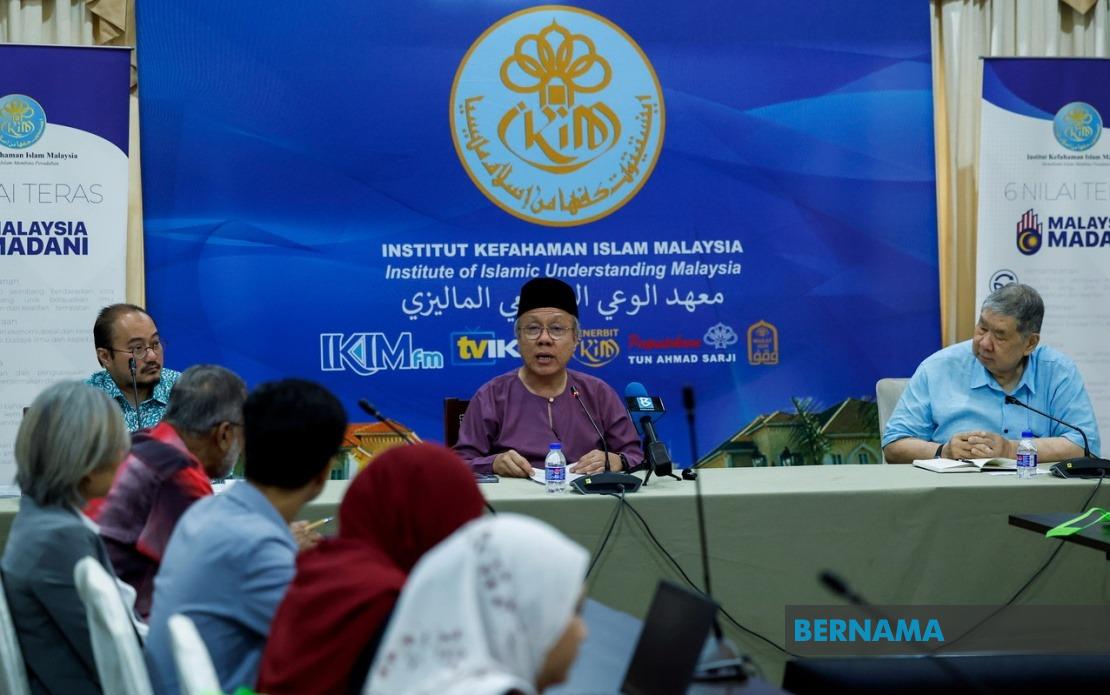
A collaborative effort between Malaysia's premier press body, a leading Islamic research institution, and Tabung Haji has culminated in a specialized media literacy programme designed to deepen journalistic understanding of the pilgrimage fund's recent Royal Commission of Inquiry. Held at the Institute of Islamic Understanding Malaysia's premises in Kuala Lumpur, the initiative brought together more than twenty media practitioners with senior officials including Tabung Haji Group Managing Director and Chief Executive Officer Mustakim Mohamad, Malaysian Press Institute president Datuk Yong Soo Heong, and IKIM Director-General Associate Professor Datuk Dr Mohamed Azam Mohamed Adil to discuss the complexities surrounding the RCI and its implications.
The closed-door session extended nearly two hours, during which Mustakim provided media representatives with comprehensive briefings on the RCI proceedings while fielding detailed questions about the inquiry's scope and the fund's response strategies. This format allowed for substantive dialogue that moved beyond the typical press conference setting, enabling journalists to probe deeper into institutional responses and the concrete measures being undertaken to address concerns raised during the inquiry.
The Malaysian Press Institute positioned the programme as a critical platform for practitioners to access verified information about Tabung Haji's recovery trajectory and confidence-restoration initiatives. Datuk Yong emphasized that the collaboration between MPI and IKIM represented a meaningful institutional partnership, noting that journalists required access to nuanced, in-depth analysis on issues of such national significance. He underscored that the briefing aimed to facilitate the accurate transmission of information about Tabung Haji's strategic direction to the broader Malaysian public, ensuring media narratives reflected the fund's genuine reform efforts rather than speculation or incomplete understanding.
Beyond the immediate session, Yong suggested that this model could be replicated across Malaysia's states through additional dialogue platforms and town hall-style engagements. Such an expansion would democratize access to accurate information among regional media communities, potentially reducing geographic disparities in journalistic capacity to cover complex institutional matters. This scalability reflects recognition that misinformation or incomplete coverage in smaller markets could fragment public perception, particularly among communities with significant pilgrimage fund participation.
A particularly significant framing came from IKIM's leadership, which sought to redirect discourse surrounding the Tabung Haji situation. Associate Professor Datuk Dr Mohamed Azam Mohamed Adil explicitly cautioned against interpreting the RCI through sectarian or communal lenses, instead positioning it as fundamentally a governance and accountability matter. This reframing carries substantial weight in Malaysia's polarized media environment, where complex institutional failures sometimes become politicized or racialized. By emphasizing management integrity as the core issue, IKIM attempted to establish a shared analytical framework transcending factional divisions.
The emphasis on trust represents the strategic heart of the initiative. Mohamed Azam articulated that Tabung Haji's unique position as an Islamic financial institution managing assets tied to one of Islam's five pillars creates distinctive stakeholder expectations. Depositors are not simply financial customers but religious community members who have entrusted the fund with spiritually significant savings. The RCI's findings, therefore, potentially damaged this relationship in ways extending beyond conventional institutional credibility damage. Restoring confidence required not merely operational improvements but also persuasive communication reestablishing the moral covenant between the fund and its depositors.
Journalists were explicitly positioned as intermediaries in this confidence restoration project. Mohamed Azam urged media practitioners to internalize and disseminate a narrative emphasizing institutional rehabilitation, accountability mechanisms, and management reform. This request reveals the implicit recognition that media framing shapes public perception more powerfully than official statements alone. By educating journalists about the RCI's governance dimensions, the three institutions attempted to influence the media ecosystem's baseline understanding and thus its eventual coverage patterns.
The programme reflects broader patterns in institutional communication strategy across Southeast Asia, where organizations facing credibility crises increasingly invest in media education and relationship cultivation. Rather than adversarial engagement with journalists, institutions now frequently adopt partnership models, providing access and information in exchange for more sympathetic or contextualized coverage. For Malaysian media practitioners, participation in such programmes presents both opportunity and ethical complexity—access to authoritative information and insider perspectives must be balanced against potential institutional capture or subtle pressure toward favorable narratives.
Tabung Haji's particular vulnerability stems from its dual nature as both commercial financial operator and custodian of religious community trust. The RCI examined serious governance lapses that undermined both dimensions simultaneously. Recovery therefore requires demonstrating simultaneous competence in financial stewardship and fidelity to Islamic principles. The media literacy programme represented an effort to ensure that coverage reflected this nuanced institutional reality rather than reducing the scandal to either purely financial mismanagement or faith-based betrayal.
The timing and composition of the initiative also warrant consideration. By convening journalists before extended RCI recommendations become public knowledge, the three organizations sought to establish initial interpretive frameworks. Media practitioners arriving at the IKIM session with education about institutional reform efforts, stakeholder considerations, and complexity may subsequently produce more differentiated coverage than journalists encountering RCI findings without such context. This agenda-setting function—shaping how issues are initially conceptualized—often proves more influential than direct editorial persuasion.
For Malaysian readers and the broader Southeast Asian region, this institutional initiative signifies several developments. First, it demonstrates how complex governance crises increasingly become media management challenges requiring sophisticated institutional coordination. Second, it reflects recognition that public confidence restoration demands investment in communicative infrastructure, not merely operational reform. Third, it reveals implicit tensions between providing journalists with authoritative information and preserving editorial independence—tensions that remain perpetually unresolved in contemporary practice.
The collaboration's success will ultimately manifest in subsequent media coverage of Tabung Haji and the RCI recommendations. Whether journalists who participated maintain skeptical independence while employing improved institutional knowledge, or whether the briefing subtly influenced coverage toward greater institutional sympathy, remains to be observed. For media ethics and institutional accountability, this distinction proves consequential.

