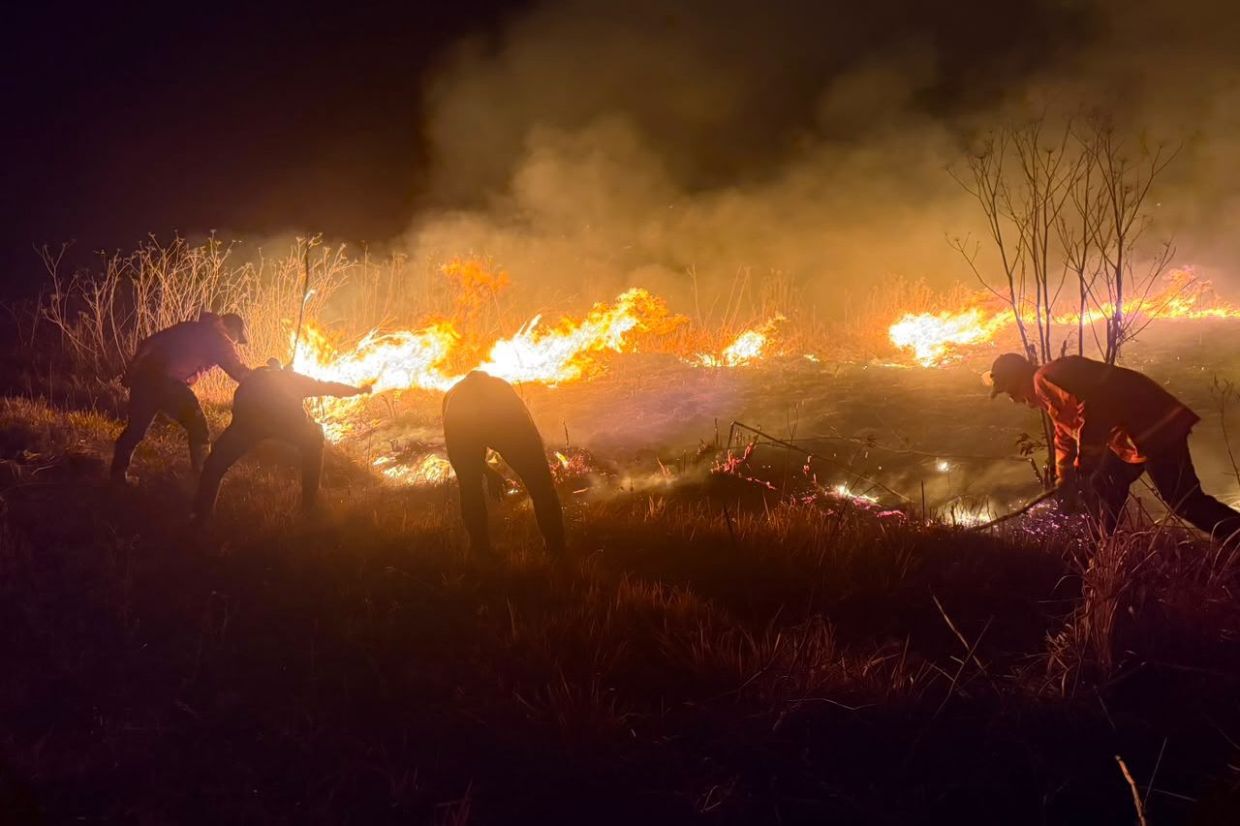
The situation at Mount Bromo has deteriorated markedly over the past 48 hours, with the wildfire ravaging the slopes and grasslands of East Java's iconic volcano spreading across roughly 520 hectares as of Sunday, according to park management. The dramatic expansion came after flames reignited on Saturday evening, demonstrating how quickly such fires can escalate in high-altitude environments where vegetation remains parched and environmental conditions prove treacherous.
Rudijanta Tjahja Nugraha, who heads the Bromo Tengger Semeru National Park Authority, attributed much of the fire's rapid advancement to meteorological factors. He explained that fairly strong winds that had persisted since Saturday afternoon provided an almost perfect conduit for the flames, allowing them to advance from higher elevations down towards lower terrain with alarming speed. The wind acted as an accelerant across the mountain's numerous slopes, carrying embers and igniting fresh patches of vegetation in its path.
Environmental conditions have created an unusually hazardous scenario for fire suppression. The grass and vegetation across the affected zones had already desiccated to dangerous levels, rendering the entire landscape highly combustible. This dryness transforms even modest fires into substantial threats, as Nugraha noted, since the fuel load across the savanna and slopes burns with minimal resistance. The convergence of dry conditions, wind, and expansive grassland created textbook conditions for uncontrolled fire spread.
In response to the escalating emergency, the national park authority implemented sweeping access restrictions beginning at 10pm on Saturday. All entrances to Mount Bromo have been closed indefinitely to visitors, a measure designed to protect tourists from danger while simultaneously freeing up park personnel and emergency resources to concentrate exclusively on containment efforts. The decision underscores how seriously officials regard the current situation and the risks posed to anyone attempting to visit or remain within the affected zone.
The park management has addressed visitor concerns with pragmatic solutions. Those who had bookings for the period during which Mount Bromo remains closed may elect to reschedule their trips for a later date once conditions normalise, or alternatively request full refunds. Such measures, while financially consequential for tourism operators, reflect the authorities' prioritisation of safety over revenue generation during this crisis period.
Forestry Minister Raja Juli Antoni addressed the investigation aspect of the disaster during his statement on Sunday, delegating responsibility for determining precise cause to law enforcement bodies. Rather than oversee the investigative process himself, the minister reiterated the government's stern position on those responsible for vegetation and land burning, declaring that perpetrators would face consequences commensurate with their actions. This messaging appears calibrated both to warn potential arsonists and to reassure the public that accountability mechanisms exist.
Authorities had tentatively attributed the fire's origins to human activity based on preliminary findings released on Friday. This assessment carries significant implications, as it suggests the disaster may have resulted from negligence, accident, or deliberate arson rather than natural causes such as lightning strikes. The distinction proves crucial for both legal and policy purposes, since human-caused fires indicate potential criminal liability and raise questions about enforcement of existing regulations governing land management practices.
The Mount Bromo incident reflects broader challenges facing Indonesia's approach to wildfire management, particularly across vulnerable ecosystems during dry seasons. East Java, despite its substantial economic and cultural importance, remains susceptible to such catastrophes when human activity intersects with environmental conditions. The national park's status as a major tourist destination adds complexity to the response, as authorities must balance emergency operations with economic and social considerations.
For Malaysian observers and the broader Southeast Asian region, the Mount Bromo situation serves as a cautionary example of how quickly environmental disasters can escalate when conditions align unfavourably. The transboundary nature of air pollution from such fires has historically affected neighbouring countries, including Malaysia, meaning the successful containment of Indonesian wildfires carries direct relevance to regional air quality and public health. The incident underscores the importance of cross-border cooperation on environmental management and the costs—both environmental and economic—of inadequate prevention measures.
As investigations proceed into the human factors behind the fire, Indonesian authorities face pressure to demonstrate both effective crisis response and credible accountability mechanisms. The closure of Mount Bromo, while necessary, represents substantial economic impact for local communities dependent on tourism revenue. The resolution of this disaster will likely influence policy discussions around land management, fire prevention infrastructure, and penalties for vegetation burning across Indonesia and potentially throughout the region.

